







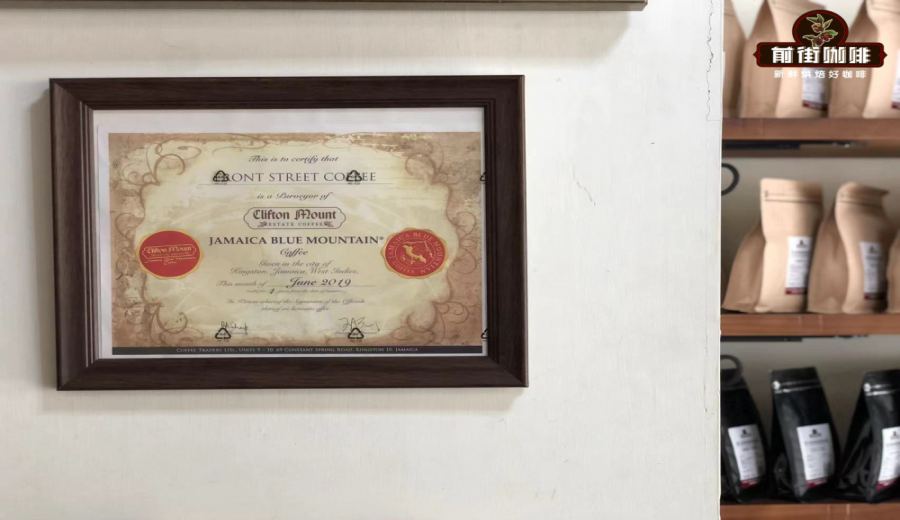
Introduction:The market is flooded with various coffees labeled as "Blue Mountain," but authentic Jamaican Blue Mountain coffee — officially certified by the CIB — is actually extremely rare. This article delves into the historical background, growing environment, and rigorous grading system of Jamaican Blue Mountain coffee, highlighting the two top-tier estates of Wallenford and Clifton. It will help you identify genuine Blue Mountain coffee and understand its unique flavor profile and brewing recommendations.
When it comes to Blue Mountain coffee, many people may only associate it with high prices and mythical flavors. However, many products labeled as "Blue Mountain" are simply ordinary coffees blended to mimic similar flavors. So, where does real Jamaican Blue Mountain coffee come from? Why is it so expensive and in such high demand? This article will explore its history, growing environment, and official certification standards, while focusing on two renowned estates — Wallenford and Clifton — to help you recognize what truly qualifies as certified authentic Blue Mountain coffee by the CIB (Jamaica Coffee Industry Board).
The fame of Jamaican Blue Mountain coffee dates back to the 18th century when British colonists introduced Typica coffee trees to the Blue Mountains of Jamaica. Nestled at high altitudes, perpetually shrouded in mist, and blessed with fertile volcanic soil and ideal temperatures, the region offers unparalleled conditions for coffee cultivation. As a result, Blue Mountain coffee became a prized favorite among European royalty and nobility as early as the beginning of the 19th century.
Around the year 1800, there were as many as 686 coffee plantations in the Blue Mountain region. In 1814, Jamaica’s coffee exports exceeded 15,000 tonnes, making it one of the major coffee producers in the Western Hemisphere. However, after the abolition of the slave trade in 1807, plantations lost their stable labor force, and production declined year by year. By 1838, with the full emancipation of slaves, many former workers left the estates, further causing production to shrink. By 1850, the number of coffee plantations had dwindled to 186, with exports dropping to just 1,486 tonnes — the golden era of Blue Mountain coffee had come to an end.
From the 19th century through the mid-20th century, Blue Mountain coffee production shifted from large plantations to smallholder farming. However, the lack of unified management and technical guidance led to inconsistent quality. In 1943, it was even rejected by major importing countries such as Canada and the United States. To salvage its reputation and quality, the Jamaican government established a central pulping factory in 1944 under the leadership of A.J. Wakefield. This initiative unified the purchasing, processing, grading, and exporting processes, gradually restoring Blue Mountain coffee to its former peak of excellence.
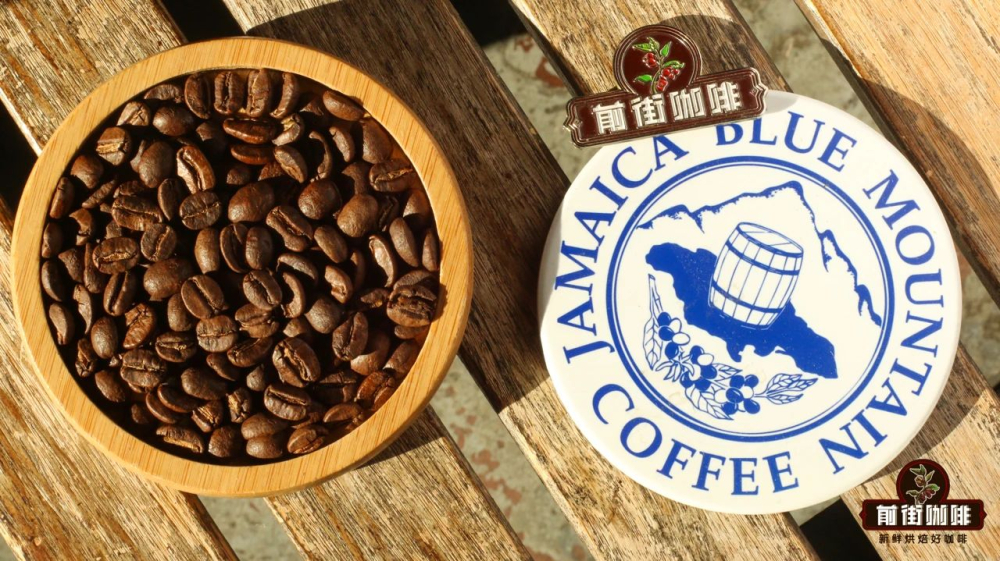
Founded in 1950, the Jamaica Coffee Industry Board was responsible for establishing and enforcing strict quality standards, as well as issuing official seals for exported green and roasted beans. In 1969, Jamaica was hit by a hurricane, and Japanese UCC Ueshima Coffee introduced eco-friendly cultivation techniques to aid recovery. The Jamaican government then signed an agreement with Japan in 1971, committing to export 90% of its annual production to Japan. The remaining less than 10% was mostly pre-booked by premium markets or royal families — which is also the main reason why Blue Mountain coffee is so rarely seen on the market.
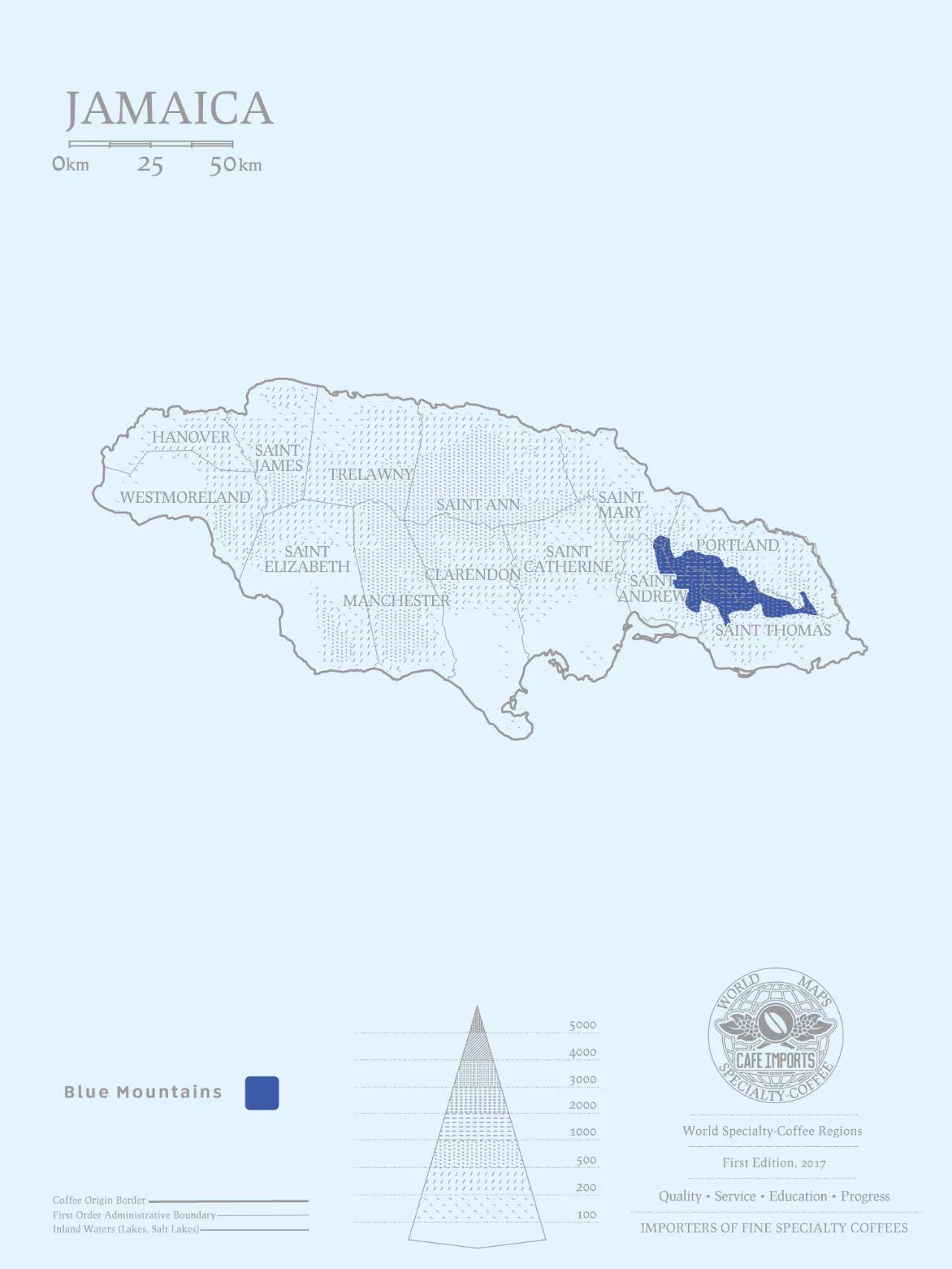
It wasn’t until the 1980s that the Jamaican government invested in expanding coffee cultivation across a significant area of land. However, today the total area of the Blue Mountain growing region is only about 6,000 hectares, divided into three categories: Blue Mountain coffee, High Mountain Supreme coffee, and Jamaica Prime coffee. It’s important to note that Jamaica is the only country in the world with an official coffee regulatory body — the CIB — whose members are primarily large estate owners (currently defined as owning estates of at least 50 hectares or more). The CIB explicitly stipulates that only coffee grown at elevations above 2,200 feet (approximately 670 meters) within specific areas of the Blue Mountains can be called "Jamaican Blue Mountain Coffee." This is the key to its rarity and high price.
Regarding grade classification, relevant authorities strictly control factors such as bean size, defect rate, and moisture content. Blue Mountain coffee is divided into NO.1, NO.2, NO.3, and PB (Peaberry). Among them, NO.1 is the highest grade, requiring bean size of 17 mesh or above, a defect rate below 3%, and a moisture content of around 13%. A certain brand’s “Blue Mountain No.1” falls into this grade. Its uniformly plump beans, after roasting, emit a rich aroma and are representative of the classic Blue Mountain flavor.
When talking about authentic Blue Mountain coffee, two representative estates must be mentioned: the Wallenford Estate and the Clifton Estate. The Wallenford Estate is located at an altitude of about 7,000 feet. Nurtured by the moist sea breezes and frequent fog of the Caribbean, it produces Blue Mountain coffee with intricate layers and complex flavors. It is one of the oldest and most consistently high-quality sources in the Blue Mountain region, with a planting history dating back over 250 years.
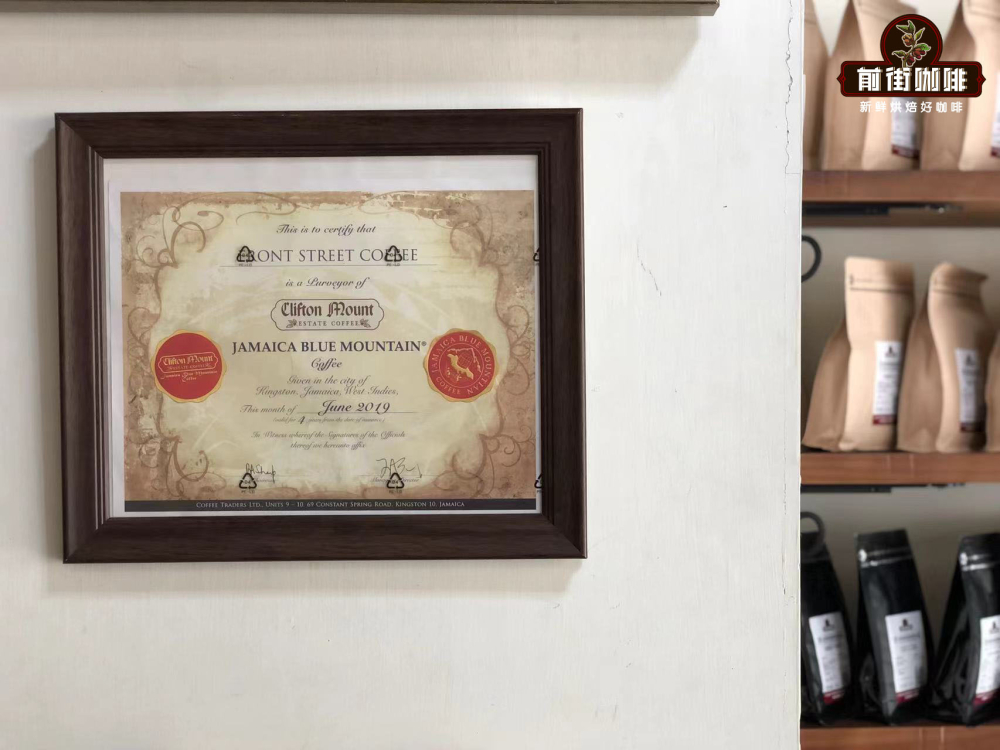
Another well-known estate — the Clifton Estate — is the oldest continually operating coffee-growing area in Jamaica. Situated at an altitude of about 4,300 feet on the eastern foothills of the Newcastle area, it is worth mentioning that Clifton Farm is one of the few agricultural units on the island to have received “Rainforest Alliance” certification. This estate not only maintains traditional and refined processing methods but, thanks to its high elevation and microclimate, adds a hint of subtle floral notes to its coffee. These nuances complement the typical roundness and richness of Blue Mountain No.1, adding further depth to the flavor profile.
In summary, to taste genuine Jamaican Blue Mountain coffee, it’s essential not only to look for CIB certification and NO.1 grade, but also to understand its origin and estate background. The Wallenford and Clifton estates not only represent the history and quality of Blue Mountain coffee, but are also among the rarest sources of authentic Blue Mountain available on the market. If you’re a coffee enthusiast, use this guide as a foundation to further explore the profound world of Blue Mountain coffee and experience the boundless charm of truly top-tier brews.
The above content is compiled by CoffeeHunters, a coffee news website.


