








Introduction:Ethiopia is not only the birthplace of coffee but also boasts a unique coffee culture and diverse regional flavor profiles. This article will take you on an in-depth journey to explore the country’s coffee ceremonies, traditional farming methods, nine renowned coffee-growing regions, as well as the differences between washed and natural processing methods. It also provides flavor characteristics and practical pour over parameters for classic regions such as Yirgacheffe, making it a comprehensive beginner’s guide to exploring fine African coffee.
Ethiopia is hailed as the homeland of coffee. Here, coffee is not just a daily necessity but is deeply intertwined with local culture and religious beliefs. From the ancient legend of the shepherd’s discovery to the meticulously preserved three-round coffee ceremony still practiced today, Ethiopians’ reverence and passion for coffee have preserved the most original purity and sense of ritual in this beverage.
In the legend of coffee’s origin, a shepherd named Kaldi noticed his goats acting unusually energetic after eating red berries from a certain tree on the Ethiopian plateau. After trying them himself and experiencing a similar boost, he shared them with villagers, thus introducing coffee into people’s lives and eventually leading it to the Arabian Peninsula and beyond on its global journey. Though it remains a legend, Ethiopians’ deep appreciation for coffee is undeniable. Regardless of wealth, every household conducts solemn coffee ceremonies, making it an indispensable part of social life.

Ethiopia’s traditional coffee ceremony is highly distinctive. First, raw beans are lightly roasted in a pan until they emit a slightly burnt aroma, then manually crushed with a mortar and pestle. The grounds are then slow-brewed in a traditional clay pot called a “Jebena.” When the coffee boils together with the coffee grounds, it is considered ready. The entire ceremony is divided into three rounds: the first, “Abol,” symbolizes blessing and is usually tasted first by the eldest family member; the second, “Tona,” is a time for chatting with friends and family; and the final round, “Beraka,” brings joy and completion. Once finished, the ceremony is complete. Interestingly, the word “bunn” or “buna” in Amharic means coffee, while “Kaffa bunn” refers to coffee from the region of Kaffa, believed to be the origin of the English word “coffee.”
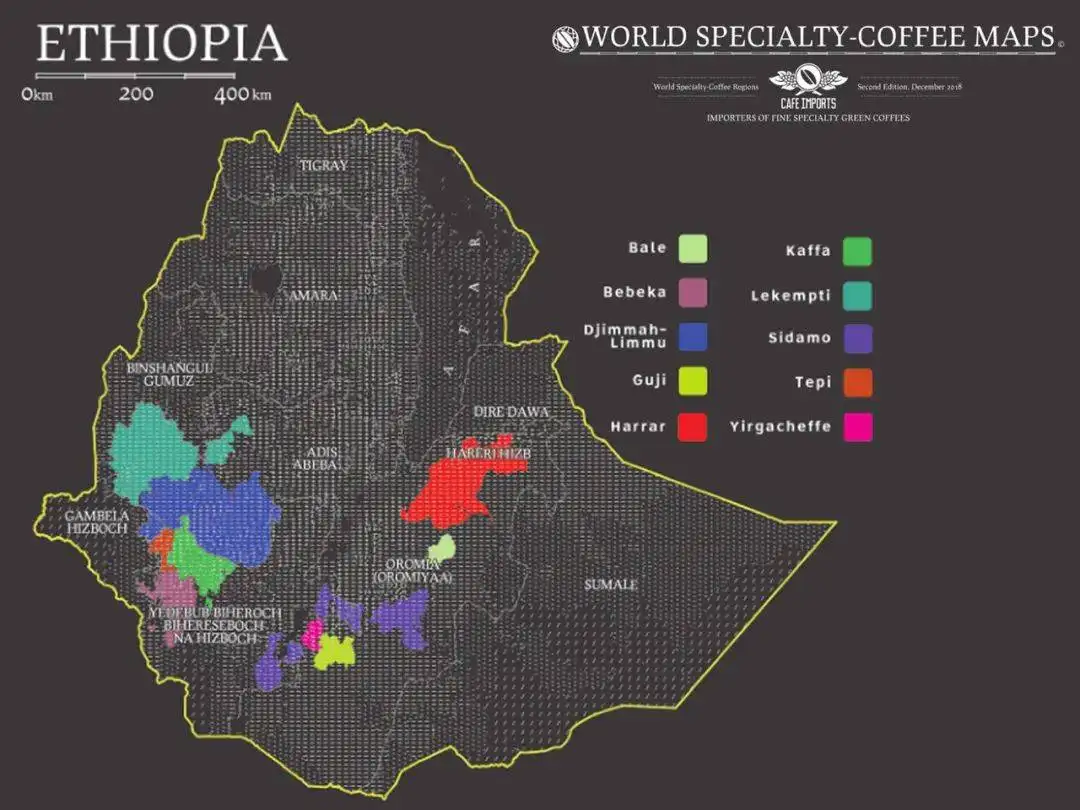
Ethiopian coffee farming primarily follows a garden-style model. This approach involves farmers intercropping coffee trees with other crops such as banana trees on their own farmland, taking full advantage of the high altitude and foggy tropical rainforest climate. With an average altitude of up to two thousand meters across the country, along with abundant rainfall and significant day-night temperature variations, the environment offers ideal growing conditions for coffee trees. Administratively, all five major regions of the country grow coffee, forming nine main producing areas: Gimma, Sidamo, Yirgacheffe, Harrar, Limu, Illubabor, Jimma (Lekempti), Teppi, and Bebeka. Among these, Yirgacheffe, though a small town, is famous for producing thousands of tons of high-quality specialty coffee and stands as an important symbol of Ethiopian coffee.
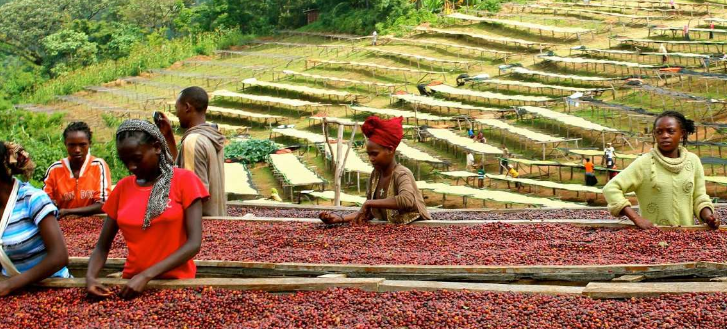
In terms of processing methods, Ethiopia’s geography and climate are highly suitable for natural (dry) processing. However, with technological advancements, washed processing has also become increasingly common. In the early days, natural processing was mostly done on a small, household scale, where coffee cherries were spread directly on the ground or rooftops to dry. While this method produced intense flavors, the quality was inconsistent and often included more impurities. In 1972, the Ethiopian government introduced washed processing techniques from Central and South America, beginning to systematically wash and ferment coffee beans, which significantly improved the cleanliness and consistency of green beans. Washed processing requires large amounts of clean water and specialized fermentation tanks. After fermentation, the coffee is manually washed to remove the mucilage, followed by multiple rinsing steps to smooth the bean surface and reduce defects. The final product typically exhibits bright citrus, floral, and tea-like notes. Represented by Yirgacheffe, this method yields clean, vibrant flavors that are highly distinctive.
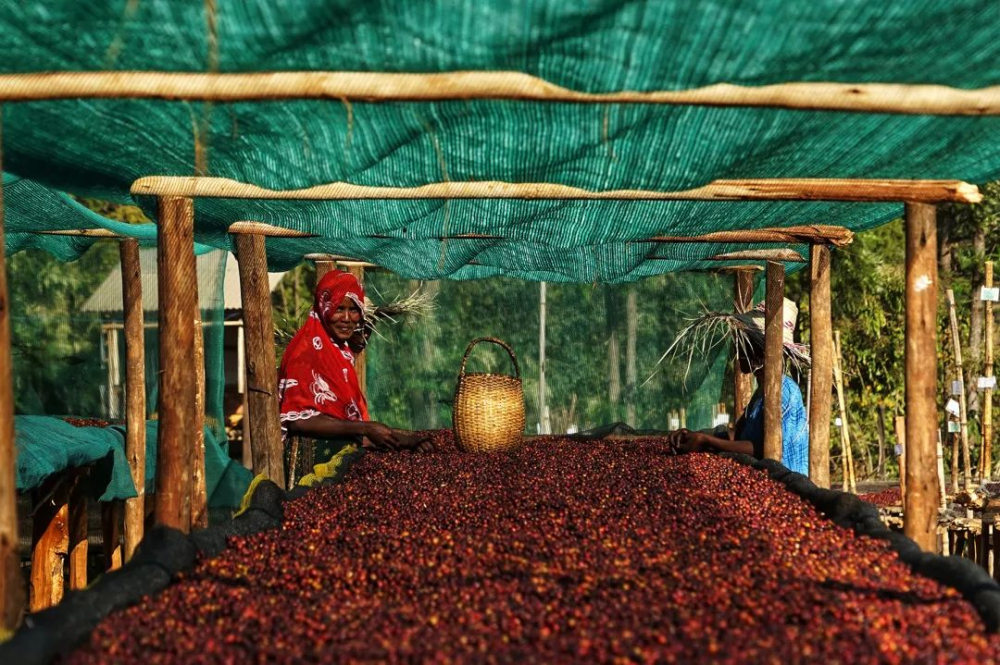
Although washed processing is favored by the market, natural processing remains one of the mainstream methods for Ethiopian coffee. Modern natural processing has evolved into a more refined operation. After harvest, red coffee cherries are first hand-sorted to remove defective and unripe beans, then placed on raised beds or African-style drying racks for a lengthy drying period of 27 to 30 days. During this time, the cherries are frequently turned to ensure even drying down to a moisture content of 11%. This method preserves more of the fruit’s sugars, imparting rich tropical fruit, honey, and fermented aromas to the coffee. The resulting cup is notably sweet with complex layers. A classic example is a certain red cherry-flavored coffee bean.

Ethiopian coffee is known for its fruity, floral notes and bright acidity, making it ideal for coffee lovers who enjoy vibrant flavor profiles. Washed Yirgacheffe typically features lemon, citrus, green tea, and tea-like characteristics, with lively acidity and a honeyed sweetness in the aftertaste. Natural red cherry coffees showcase intense berry, ripe fruit, and honey aromas, with a smoother mouthfeel. Sidamo’s Hambela coffee beans are notable for their passion fruit, cream, strawberry, and cocoa notes, offering a full body and distinct layering. Generally, coffees from these regions are best suited to medium-light roasting, which best highlights their unique fruit acids and floral tones.
For those just beginning to explore specialty coffee, it is recommended to start with a washed Yirgacheffe everyday coffee bean. These beans are not only affordable but also allow you to clearly experience the core flavors of Ethiopian coffee. The small packaging design is also convenient for beginners to try without waste. For pour over brewing, it is suggested to use a V60 dripper, with water temperature controlled at 92–93°C, a coffee-to-water ratio of 1:15, and grind size about the size of fine sugar (78% passing through a #20 sieve). Use a three-stage pouring method: begin with a bloom using twice the coffee’s weight in water (about 30g) for 30 seconds, then slowly pour to reach 125g, wait for the water level to drop, and then pour to 225g. The total extraction time should be around 2 minutes, fully showcasing its clean citrus, berry, and tea flavors.
In summary, the charm of Ethiopian coffee lies not only in its historical status as the birthplace of coffee but also in its diverse regional flavor profiles, the coexistence of traditional and modern processing methods, and the deeply rooted coffee ceremony culture. Whether you’re looking to savor a washed Yirgacheffe bursting with citrus notes or searching for a natural red cherry coffee with intense fruity aromas, this land can fulfill all your imagination of specialty coffee.
The above content is compiled by CoffeeHunters, a coffee news website.


