







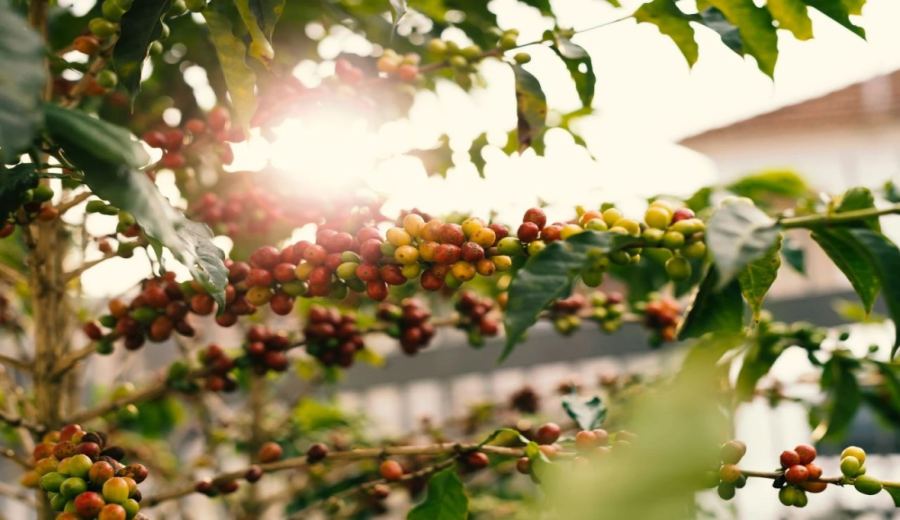
Introduction:Do you know how the coffee you drink every day transforms from a bright red cherry-like fruit into the rich beverage in your cup? This article starts with the basic structure of the coffee fruit, delving into the roles of the exocarp, pulp, mucilage, parchment, and silver skin. It also explains the distribution of the Coffee Belt, the labor-intensive process of hand-picking and selection, and how processing methods like washed and natural affect the final flavor. Whether you're just starting out or already experienced, you'll gain a more comprehensive understanding of how coffee makes its journey from fruit to cup.
Have you ever wondered how the coffee you enjoy daily evolves from an unassuming little fruit? Although coffee is often jokingly referred to as "juice," its production process is vastly different from that of typical fruit beverages. This article begins with the structure of the coffee fruit, breaking down the characteristics and functions of each layer — including the exocarp, pulp, mucilage, parchment, and silver skin. It further introduces the main coffee-growing regions, harvesting methods, and how green beans are transformed into the familiar roasted beans we know through various processing and roasting techniques.
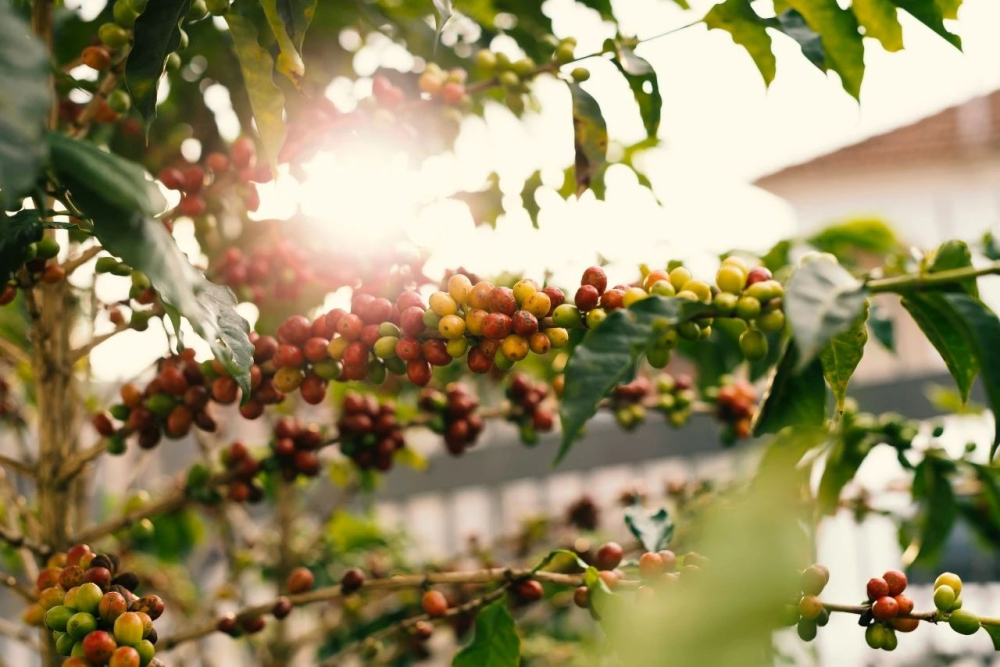
Coffee has become an indispensable beverage in many people’s daily lives, yet few have actually seen fresh coffee cherries, and even fewer have laid eyes on green coffee beans. Some industry professionals like to liken coffee to “juice,” but this comparison isn’t entirely accurate. Juice is typically a liquid extracted directly from fruit through pressing or centrifugation — like orange juice or apple juice. But the essence of coffee lies in using roasted coffee beans (i.e., seeds) and extracting their soluble components with water to produce the black coffee we know, rather than directly using the juice from the fruit flesh.
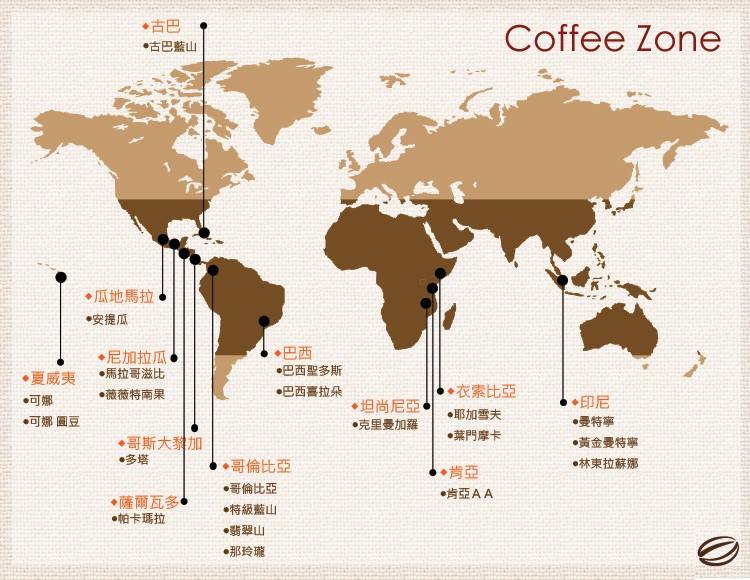
The world’s major coffee-growing regions are concentrated within the tropical zone between the Tropic of Cancer and the Tropic of Capricorn, an area known as the “Coffee Belt” (or Coffee Zone). Coffee trees thrive in warm, humid environments, with ideal conditions including ample sunlight, moderate rainfall, and a stable average annual temperature above 20°C. However, not all coffee varieties can tolerate high temperatures and excessive humidity. For example, the commonly grown Arabica variety is less heat- and moisture-resistant, so it is mostly cultivated in higher-altitude mountainous regions. In areas with overly intense sunlight, shading measures are employed — hence the origins of what’s called “rainforest coffee” or “shade-grown coffee.”
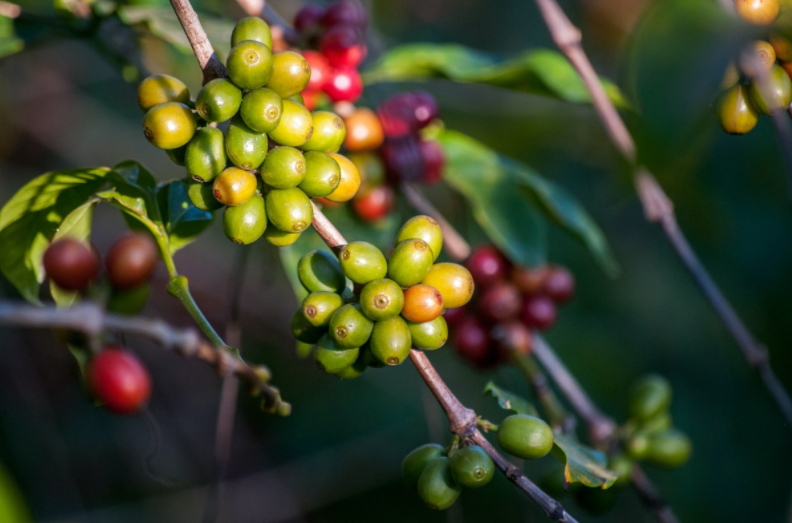
Coffee cherries are small in size and cherry-like in shape, usually turning red when ripe (with some special varieties being exceptions), which is why they’re also called “coffee cherries.” There are three main coffee varieties globally: Arabica, Robusta, and Liberica. Among them, Arabica, though lower in yield and more demanding in growing conditions, generally offers richer flavors and aromas, making it the mainstream choice for specialty coffee. Robusta, on the other hand, is the opposite: high-yielding and easy to grow, but with a simpler flavor profile, and is typically used in instant coffee or commercial blends. As for Liberica, it holds an extremely small market share and has gradually faded from the mainstream.
Harvesting coffee cherries is an extremely time-consuming and labor-intensive task. Although some regions like Brazil have introduced mechanized harvesting, the vast majority of high-quality coffee beans still rely on manual picking. The reason is that coffee cherries do not ripen uniformly — on the same tree, some may be fully red and ripe while others remain green. Therefore, multiple rounds of careful selection and picking are required to ensure only the optimally ripe cherries are harvested.
If you observe a cross-section of a coffee cherry, you can clearly see the coffee bean located at the very center. The outer layers — the exocarp and pulp — are removed during processing. The silver skin, which wraps around the seed, also sheds during roasting. From the outside in, the structure of the coffee cherry is as follows: exocarp, pulp, mucilage, endocarp (commonly known as parchment), and finally, the innermost layers — the silver skin and the coffee bean.
The exocarp is typically composed of one to two layers of cells, sharing properties similar to plant epidermis, with a cuticle and stomata. When the fruit is unripe, the thin-walled cells in the exocarp mostly contain chloroplasts, giving the skin a green color. As it ripens, these chloroplasts transform into chromoplasts, and the skin changes from green to red. Additionally, the pulp of the coffee cherry is technically part of the fruit skin, developing from the ovary wall. It is rich in sugars and fruit acids, with a sweet aroma reminiscent of melon and a refreshing acidity.
Located between the pulp and the endocarp is the coffee mucilage layer. This is a sticky substance made up of heteropolysaccharides, which is not easily soluble in water, yet it also has the highest sugar concentration of any part of the fruit, playing a key role in the fermentation process. For example, in honey processing, the more mucilage retained, the more intense the sweetness and fermentation aromas produced during fermentation. The endocarp, commonly referred to as “parchment,” consists of thin-walled cells and primarily serves to protect the inner coffee bean. The silver skin is an extremely thin membrane situated between the parchment and the coffee bean, and is part of the plasmalemma.
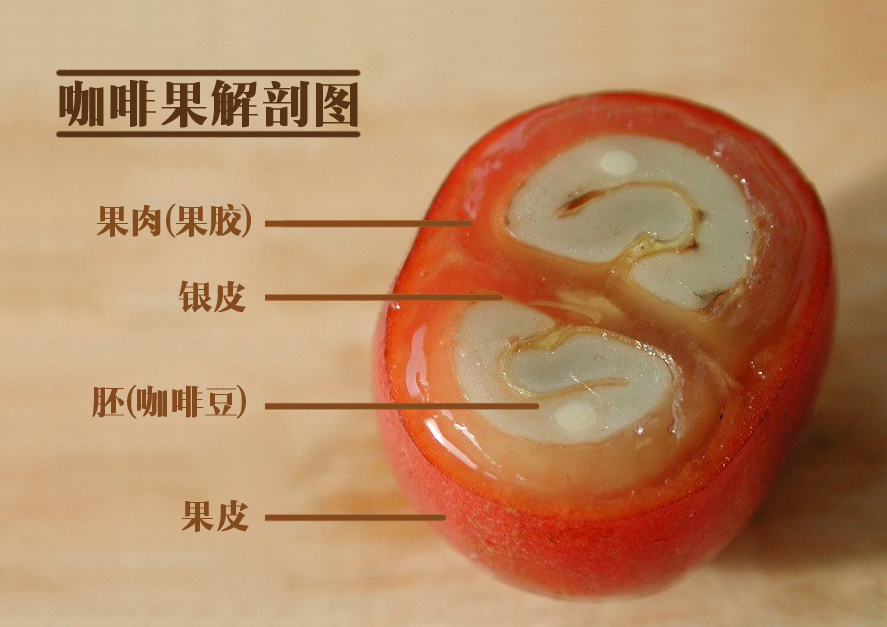
The coffee bean itself is the seed of the coffee tree. Typically, each fruit contains two coffee beans, which are flat on the side where they touch each other, hence called “flat beans” or “peaberry flats.” But sometimes, one of the beans develops poorly during growth, allowing the other to take up more space and grow into an oval shape. These beans are called “peaberries” or “caracolillos.” Each coffee bean has a central crack — the location of the embryo — which will eventually develop into leaves and stems.
After processing and drying, green coffee beans generally maintain a moisture content of below 13%. While this figure affects shelf life, it has limited impact on the final aroma and flavor of the coffee. What truly determines the flavor profile of a cup of coffee is the composition and proportion of the anhydrous compounds in the coffee bean. When green beans undergo high-temperature roasting to become roasted beans, complex chemical reactions occur inside, generating a large number of new aromatic compounds — the source of coffee’s fragrance. In short, from the harvesting of coffee cherries, to washed or natural processing, drying of green beans, and then to roasting, grinding, and extraction, no additional additives are involved at any stage. The flavor comes entirely from the beans’ own transformation and the processing techniques applied.
The above content is compiled by CoffeeHunters, a coffee news website.


