








Introduction:When making Dirty coffee or lattes at home, do you often encounter issues such as unclear layering or coffee and milk quickly mixing together? This is often closely related to cup selection, extraction angle, coffee bean characteristics, and milk texture. This article delves into the common reasons for failed layering in Dirty coffee, offering practical tips on cup type, distance control, coffee concentration, and milk selection. It also recommends suitable types of coffee beans for home use, helping you easily recreate a professional-grade coffee that excels both visually and in flavor.
Want to make a Dirty or latte with clear layers and a smooth taste at home, but always find it falls short compared to café-made versions? The issue likely lies in several key details, including cup selection, pouring height during extraction, coffee concentration, and the texture and thickness of the milk. Mastering these elements can significantly improve layering effects and overall flavor performance.
The principle behind making Dirty coffee is actually very simple: pour freshly extracted hot espresso directly into a transparent cup pre-filled with ice-cold milk. By leveraging the temperature difference and density difference, the dark coffee slowly sinks into the white milk, creating a captivating gradient visual. However, this seemingly straightforward process, if not handled with attention to detail, can easily result in the coffee and milk quickly mixing, losing the beauty of the layered effect.

Although Dirty is considered a variation of an “iced latte,” its unique visual presentation and drinking experience have made it a favorite among many coffee enthusiasts. Nevertheless, many people attempting to replicate it at home often find that the coffee and milk mix too quickly, failing to produce that beautiful descending gradient. Below, we’ve compiled some of the most common reasons for failure and provided practical improvement suggestions.
1. Choosing the Right Cup Matters
The impact of cup type on layering effects should not be overlooked. It is recommended to choosea tall, narrow-mouthed transparent glass cup. This design helps slow down the spread of the coffee, creating better visual layering. In contrast, using a container with a mouth that’s too wide or a cup that’s too short can cause the coffee to spread quickly and lack sufficient “sinking space,” greatly compromising the layering effect.
Additionally,pre-chilling or freezing the cupis also a useful tip, as it not only slows down the rate at which coffee seeps into the milk but also helps preserve the overall flavor.
2. Distance Between the Handle and Cup Mouth During Extraction
Another common mistake is having the coffee handle too far from the cup mouth during extraction. When espresso pours from a height, it forms a concentrated and forceful stream that can easily pierce through the surface of the milk, disrupting the layering. Ideally, let the extraction flowclose to or even lightly touch the milk surface, reducing the impact force and allowing the coffee to float smoothly atop the milk.
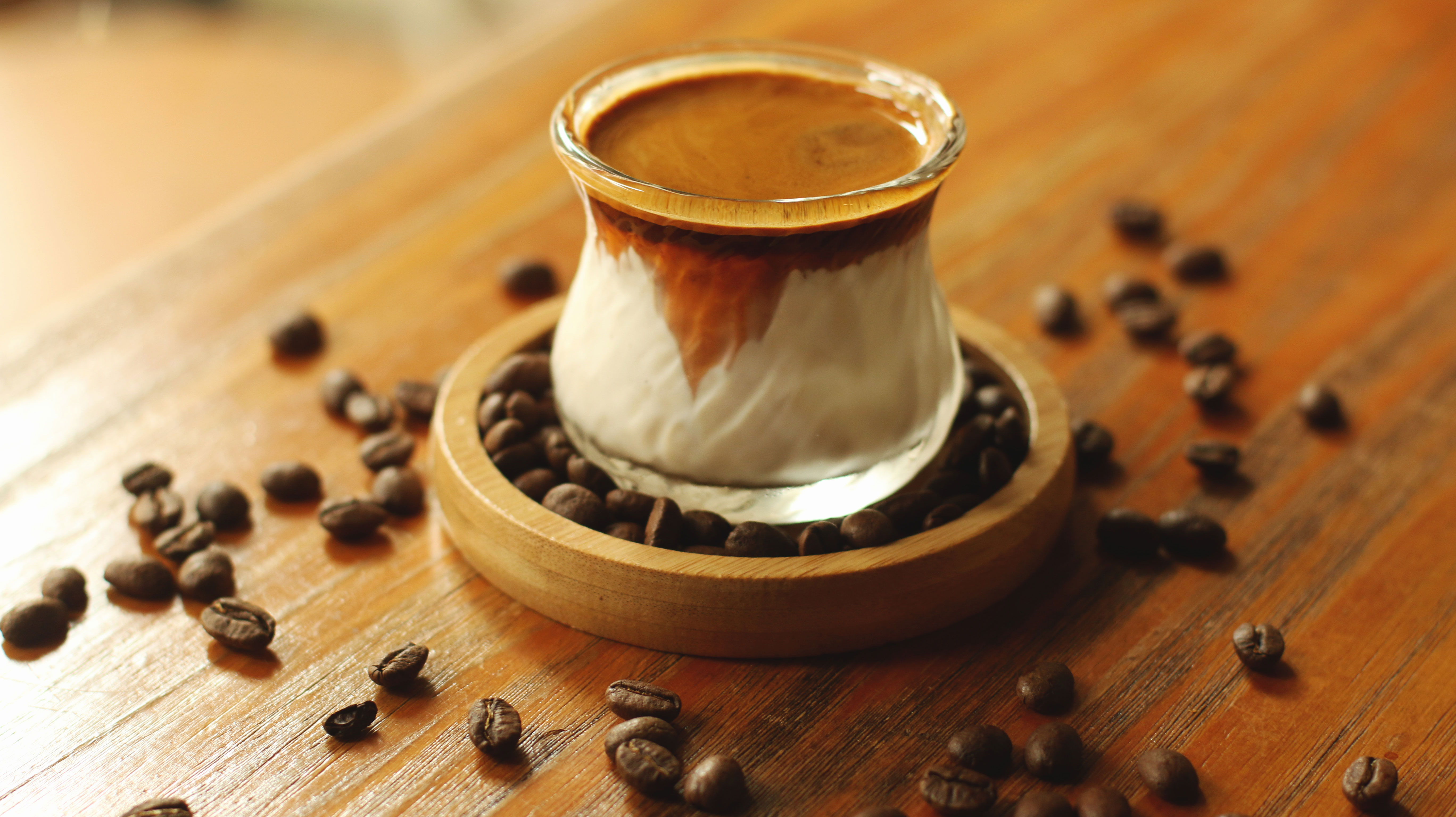
If equipment limitations prevent direct pouring, you can first catch the freshly extracted espresso in a small cup, then use the concave back of a spoon to gently rest against the milk surface and slowly pour the coffee into the spoon, letting it overflow naturally onto the milk to form a smooth transitional layer.
3. Coffee Bean and Espresso Concentration
The roast level and freshness of the coffee beans greatly affect the crema and concentration of the espresso. Generally speaking,medium-dark roastedcoffee beans have richer crema and a deeper color, which help achieve clear layering. Too light a roast may result in a lighter coffee color, which is not ideal for visual appeal; too dark a roast can easily produce excessive burnt bitterness.
For home users, it is recommended to try medium-dark roasted blended beans, such as classic blends that combine the smoothness of Brazilian beans with the aroma of Mandheling, or Italian-style blends with a small amount of Robusta added to enhance body and crema. If you prefer single-origin flavors, you can opt for medium-dark roasted single-origin beans with prominent creamy-peanut notes, along with sweet sugarcane and cocoa aftertastes.
It should be noted thatcoffee made with a moka pot still shows a clear gap in concentration and crema performance compared to professional machines, and is not very suitable for making Dirty coffee where layering is a priority.
4. Milk Selection and Texture
Milk selection is also a key factor. It is recommended to use fresh milk with a rich milky flavor and a thicker texture, which can effectively “support” the coffee liquid and prevent the two from quickly merging upon contact. Overly thin milk will cause the layers to disappear quickly, affecting both visual and taste experiences.
Commercial brands such as Wei Ji, Wei Quan, and Guang Ming Xian Zhen Mu Chang offer good options. To further enhance layering stability, you might also consider using concentrated milk (also known as “iced blog”), which has a denser texture and higher fat content after concentration, extending the duration of layering and providing a unique salty-cheese aftertaste. If time allows, you can also experiment with blending iced blog with regular fresh milk to find a concentration balance that suits your taste.

In summary, making a Dirty or latte that excels both visually and in flavor hinges on attention to detail: from choosing the right cup type, mastering the extraction angle, using coffee beans with an appropriate roast level, to selecting milk with the right thickness—each step influences the final outcome. With these techniques mastered, you can easily recreate a professional-level Dirty coffee experience at home.
The above content is compiled by CoffeeHunters, a coffee news website.


