







Introduction:The natural-processed beans from the Konga Cooperative in Yirgacheffe are renowned for their rich fruitiness and bright acidity, and have even won the national championship in the natural category of the TOH (Taste of Harvest). This article delves into the growing environment, processing methods, and variety characteristics of this origin, and provides professional cupping data and V60 pour-over parameters to help you fully understand this auction-grade coffee bean from origin to cup. Whether you’re a beginner or an advanced enthusiast, you’ll find practical insights here.
Ethiopia’s Yirgacheffe region has long been a holy grail for specialty coffee lovers, and among its producers, the Konga Cooperative stands out for its exceptional quality. Located in the Gedeo zone, this cooperative holds both Fair Trade and Organic certifications. In 2020, it claimed the national title in the natural category of the TOH (Taste of Harvest), showcasing its remarkable potential.
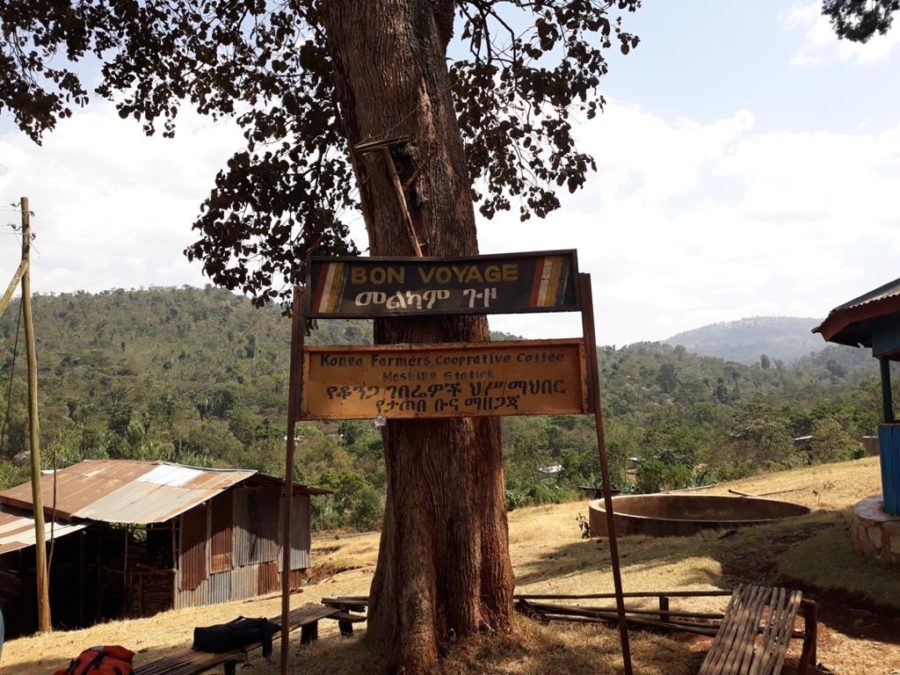
The Konga Cooperative derives its name from the nearby Konga River and village. Situated at an altitude of over 1,800 meters on the Ethiopian highlands, its main harvest season runs from October to February each year. As a member of the YCFCU (Yirgacheffe Coffee Farmers Cooperative Union), the cooperative has been part of the union since 2002. It currently consists of 2,292 coffee farmers and covers a total planting area of 3,361 hectares, with both quality and yield meeting high standards.
The soil in the Gedeo region where Konga is located is rich in iron, with a thick layer exceeding 1.5 meters. Such soil not only allows coffee tree roots to draw nutrients deeply but also provides iron—an essential element for chlorophyll synthesis that enhances photosynthesis efficiency, further boosting the development and flavor potential of the coffee cherries. This deep, fertile soil is one of the cornerstones of Konga coffee’s unique character.
When it comes to the pride of the Konga Cooperative, one cannot overlook its prestigious achievement: the national championship in the natural category of the 2020 TOH season. The TOH is a harvest-season cupping competition organized by the African Fine Coffees Association (AFCA), and is held in the same regard as the COE (Cup of Excellence). It takes place annually in 12 African countries. The competition selects high-scoring batches—those with cupping scores above 80—from regional preliminaries, which are then rigorously evaluated by both domestic and international judges according to SCAA standards, ultimately crowning a national champion. The level of competition is truly intense.
This Konga Cooperative Woter Station natural G1 lot is made from local heirloom varieties, showcasing an enticing profile of citrus, jasmine, honey, and green tea. While it stood out in the competition, it also delivers a highly distinctive tropical fruit character and rich juice-like body when brewed at home.
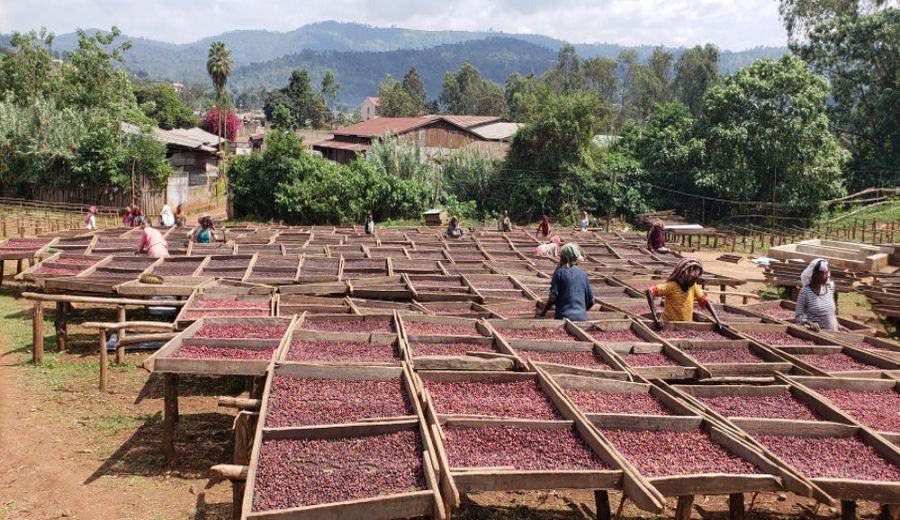
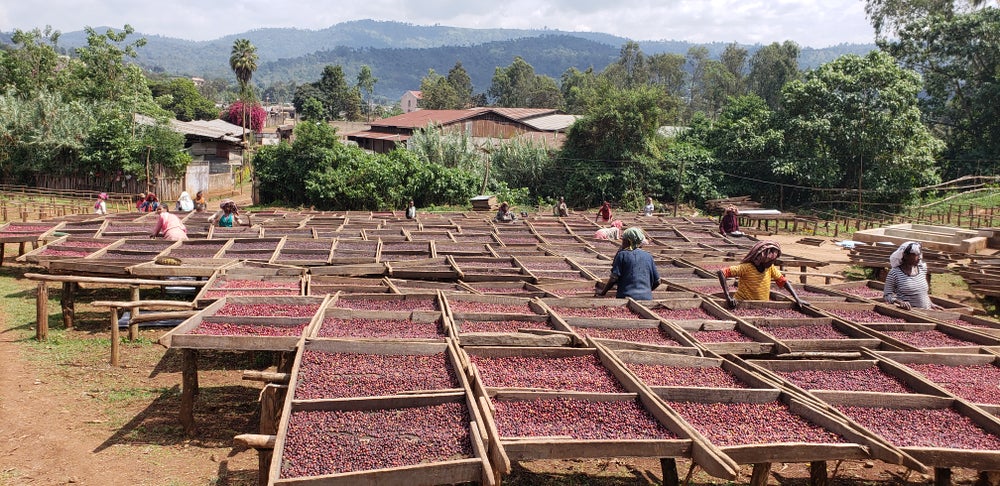
The Woter Station is located within Konga village and is named after the Woter River that flows through it, which also serves as the water source for the station’s operations. This station serves around six to seven hundred smallholder farmers, each with an average farming area of less than one hectare. The planting density is low, and it’s common to see intercropping with crops such as sweet potatoes, mangoes, and avocados, contributing to high ecological diversity. During processing, this natural lot undergoes strict selection of ripe cherries, removal of impurities, and is then sun-dried on raised beds to avoid ground contact, ensuring flavor purity. The drying period lasts approximately two to four weeks, during which the cherries are regularly turned and the moisture content is controlled as it drops from 70% to 10%–12%. Finally, after hulling, this vibrant G1-grade natural-processed coffee is produced.

The variety of this Konga coffee bean is labeled as “heirloom,” which is actually a collective term for numerous genetic strains in Ethiopia’s coffee gene bank. Due to the complexity of the varieties and the Ethiopian government’s conservation policy that prevents full public disclosure, the market generally refers to them all as “heirloom.” This can also lead to slight variations in bean size and appearance between lots, but often results in unexpectedly delightful flavor profiles.
For roasting, it is recommended to use a semi-direct-fire roaster such as the Yangjia 800N. Start with an inlet temperature of 175°C, initial air vent setting at 3, and heat at 130. The turning point occurs around 1 minute and 28 seconds. When the drum temperature reaches 140°C, adjust the air vent to 4, and at 150°C, reduce the heat to 110 to stabilize the drying phase. Once the bean surface turns yellow and the grassy aroma fades—around 8 minutes and 00 seconds—you’ll notice wrinkling and black spots appearing. At this stage, the coffee aroma intensifies, marking the critical period before first crack. First crack begins at 8 minutes and 48 seconds. It is advised to adjust the air vent to 5 and allow first crack to develop for about 50 seconds. The roast should be dropped at 189°C to preserve the bean’s rich fruitiness and sweetness.
For cupping, it is recommended to proceed within 8 to 24 hours after sample roasting. Use a 200ml ceramic bowl, with water temperature at 94°C. The grind size should achieve a 70%–75% extraction rate through a #20 sieve, with a brew ratio of 1:18.18 (11 grams of coffee to 200 ml of water), and a steeping time of about 4 minutes. Cupping results show a dry aroma with distinct citrus notes, while the wet aroma reveals blooming jasmine. The flavor profile includes citrus, honey, green tea, and jasmine, with clear layers and excellent balance.
For pour-over brewing, it is recommended to use a V60 #01 filter cone, with water temperature controlled at 90–91°C, a coffee dose of 15 grams, and a brew ratio of 1:15. The grind size should be medium-fine (similar to caster sugar, with approximately 80% extraction rate through a #20 sieve). Specifically, start with a 30-second bloom using 30 grams of water, then pour in a circular motion with a slow stream until reaching 125 grams, followed by a second pour to 225 grams. Total brew time is about 2 minutes and 10 seconds. This method highlights bright acidity with notes of berries, cream, honey, and citrus. At higher temperatures, the juice-like character is pronounced, while slightly cooler temperatures bring out a smooth and mellow finish.
The above content is compiled by CoffeeHunters, a coffee news website.


