







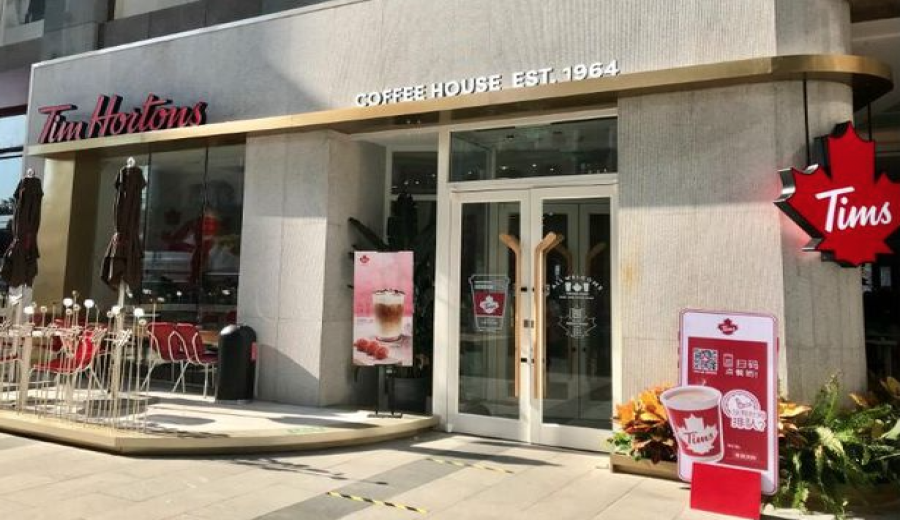
Introduction:In the second quarter of 2024, Tims China made major adjustments to its store strategy, closing 34 company-operated stores and netting only one new addition, bringing the total number down to 907. This significant downsizing led to reduced costs, and adjusted EBITDA turned positive for the first time. This article delves into the highlights of the brand’s financial report, the reasons behind the store adjustments, and real consumer feedback on Tims Coffee and bagels, helping you understand the latest developments of this chain brand.
Tims China recently released its financial report for the second quarter of 2024, showing that the brand continues to optimize its store structure. Following the closure of 15 company-operated stores in the first quarter, another 34 were closed in the second quarter, resulting in a net increase of just one store, bringing the total number down to 907, spread across 71 major and medium-sized cities including Beijing, Shanghai, Zhejiang, and Guangdong.
This move stands in stark contrast to the expansion seen in the fourth quarter of 2023, when the net increase was 149 stores. The brand explained that these adjustments aim to improve the operational efficiency and profitability of existing stores. With fewer company-operated outlets, expenditures such as food and packaging, rent, labor, and marketing have also decreased, contributing to an overall improvement in financial performance.
According to the financial report, Tims China’s total costs and expenses for the quarter amounted to $310 million, a significant decrease from $374 million in the same period last year. Specifically, food and packaging costs were 99.73 million yuan, down from 123 million yuan in the previous year, with their proportion of revenue falling from 34.0% to 30.9%; rental costs were 62.16 million yuan, down from 75.31 million yuan, with their share dropping from 20.8% to 19.3%; and labor costs also fell from 21.9% to 18.9%. Additionally, marketing expenses decreased from 32.34 million yuan to 24.40 million yuan, with their proportion of revenue falling from 6.1% to 3.5%.
After two consecutive quarters of proactively reducing underperforming company-operated stores, Tims China achieved positive adjusted EBITDA (earnings before interest, taxes, depreciation, and amortization) for the first time this quarter, at 4.1 million yuan (approximately $600,000), far surpassing the loss of 40.8 million yuan (approximately $5.7 million) in the same period last year. As a key metric for evaluating a company's core operational performance, EBITDA is widely used to assess actual business profitability.
However, Tims has recently been in the spotlight on social media for frequent store closures, drawing consumer attention. In May 2024, its first store in Yinchuan closed; starting in June, three stores in Changsha shut down in succession; in July, the first Tims Go store in Shandong ceased operations; and in August, the store at Shanghai Changfeng Joy City also reportedly closed. Many netizens commented, “Even when located in prime commercial areas, it’s hard to compete with the pressure from Luckin and Starbucks.”
Consumer feedback on Tims’ coffee quality is polarized. Some users bluntly stated, “Tims’ milk tea tastes bad,” with online comments circulating such as “You can buy a bagel blindly, but don’t bother with the coffee,” “Pistachio latte feels like ancient torture,” and “Matcha double is hard to swallow.” Other customers reported that when they asked for less milk due to the small cup size, the coffee turned out too bitter, and the follow-up service experience was poor, leading them to turn from fans to passersby.
Nevertheless, Tims still has a loyal fan base. Some consumers said, “Their fresh-brewed dark roast coffee with double milk is cheap and hearty—perfect for breakfast with a bagel,” or “The dark roast flavor is rich, offering more coffee character than Starbucks and smoother than Luckin—it’s really not tiresome to drink.” This shows that besides bagels, certain coffee offerings have also successfully cultivated a stable customer base.

Tims China CEO, Lucien Lu, stated that after achieving the goals of the first quarter, the brand has successfully secured $65 million in financing. Moving forward, the focus will be on strengthening core business operations, optimizing the supply chain, driving product innovation, and expanding brand influence, with the goal of achieving growth in both store scale and profitability.
The above content is compiled by CoffeeHunters, a coffee news website.


