








Introduction:Though Flat White and [possibly redundant or mistyped: 馥芮白 (Flat White)], latte, and cappuccino all fall under the category of milk coffee, they differ subtly yet significantly in terms of milk foam thickness, cup size, flavor profile, and even origin stories. Many customers often notice substantial variations in latte art and milk foam texture when enjoying Flat Whites at different cafés, which actually stems from international origin disputes and technical nuances. This article delves into the causes of these differences, guiding you through the logic behind Flat White preparation—from milk foam fluidity and latte art difficulty to coffee taste.
Among milk-based coffee types such as Flat White, [馥芮白 (possibly another name for Flat White)], latte, and cappuccino, what subtle yet crucial distinctions lie beneath the surface? Many coffee enthusiasts who sample “Flat Whites” at various cafés often observe significant differences in cup size, foam layers, or even the presence of latte art. This phenomenon reflects the diverse interpretations of the term “Flat White” across regions and among baristas.
To help everyone better understand this globally beloved rich milk coffee, we’ll start with the most直观 visual difference—whether it features latte art—and trace the heated origin disputes between New Zealand and Australia. We’ll explore how extremely thin milk foam affects overall taste and latte art presentation, and further explain the practical considerations some cafés have for not using latte art, giving you more confidence in your next order.
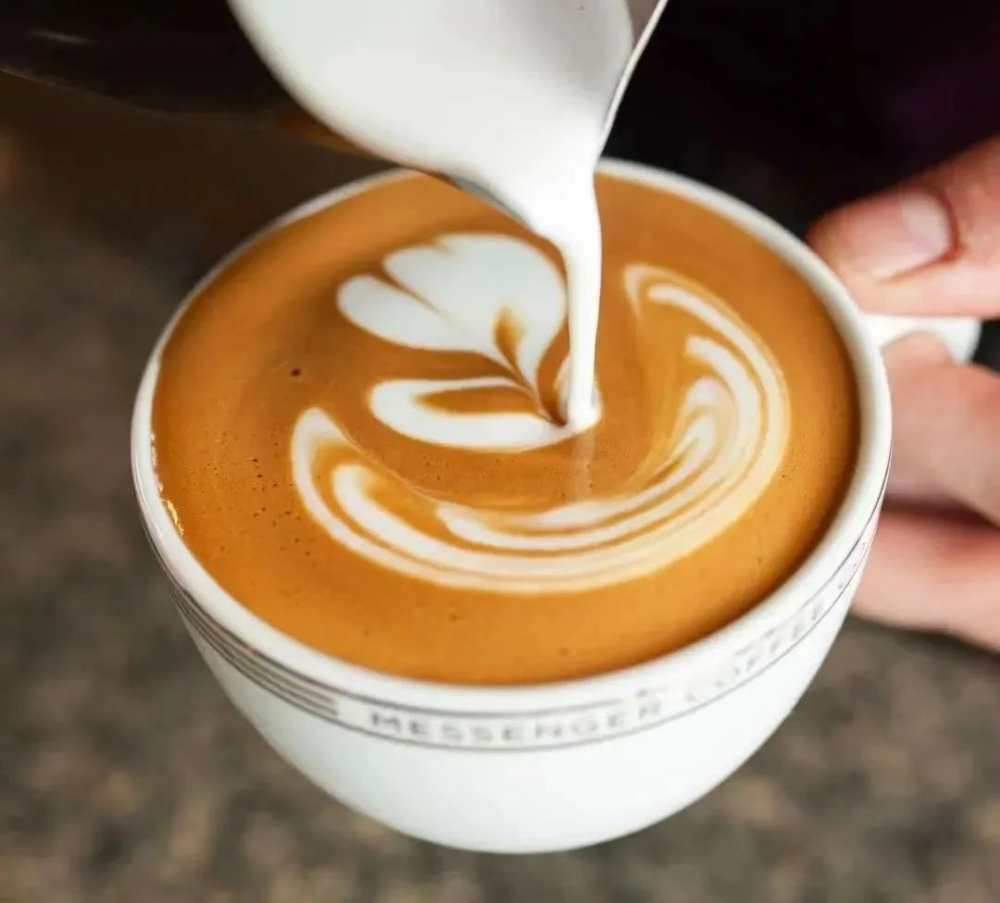
Undeniably, beautiful latte art can enhance the appeal of a steaming cup of milk coffee. As a result, most cafés include latte art as a standard service for larger-sized hot milk coffees like lattes or cappuccinos. However, “most” does not mean “all.” Regular café-goers may have noticed that some shops serve Flat Whites with a completely smooth, unadorned surface—no art whatsoever.
Just like the cup on the right in the image below, featuring just a tiny white dot in the center—a minimalist liquid surface—this is a Flat White without any latte art. For years, the notion that “milk coffee must feature latte art” has been deeply ingrained, leading many customers to wonder: “Why don’t some cafés offer latte art with their Flat Whites?”
In fact, the absence of latte art isn’t limited to visual presentation. Upon closer observation of Flat Whites across different cafés, you’ll also find that they vary in cup size design, milk foam control, and overall flavor expression. Ultimately, these differences stem from the fact that “Flat White” still lacks a unified and rigorous international definition.
The debate over where Flat White originated has been ongoing for years, with both New Zealand and Australia claiming to be the birthplace of this rich milk coffee. According to New Zealand barista Fraser McInnes, he once accidentally frothed the milk for a cappuccino too finely and thinly during work, thus creating what later became known as Flat White, which he served at Wellington’s Cafe Bodega. Although records suggest that similar thin-milk-espresso drinks appeared as early as 1984, limited information circulation at the time has led to Fraser’s story being cited in many educational materials.
On the other hand, Australian barista Alan Preston counters this by claiming that he introduced this thinner-foamed, more concentrated coffee to his menu back in 1985 at his Moors Espresso Bar in Sydney, naming it Flat White. He emphasized that Flat White uses the same cup size as a latte, with the only difference being the control of milk foam layers.

To this day, the question of who truly invented the Flat White remains unresolved, resulting in cafés around the world interpreting and preparing it according to their own standards. Variations in cup size, milk foam thickness, and whether latte art is applied lead to considerable differences in presentation, further confusing consumers.
However, looking at the practices in both New Zealand and Australia, one commonality is strikingly clear—that is, their emphasis on the core characteristic of “extremely thin milk foam.” Compared to lattes or cappuccinos, Flat White’s foam layer is noticeably finer and denser, typically measuring only between 0.3 and 0.5 centimeters in thickness.
This ultra-thin milk foam not only alters the visual appearance of the coffee but also directly influences the drinking experience and texture. With a thin foam layer, drinkers can more quickly reach the underlying espresso when sipping, resulting in a smoother, more refined mouthfeel—sometimes described as silky or velvety. However, this feature also presents a technical challenge: extremely thin foam is actually quite difficult for latte artists to work with.
Why is thin foam less conducive to latte art? The key lies in foam fluidity. The thicker the foam, the lower its fluidity, making it easier for baristas to control when drawing patterns; conversely, the thinner the foam, the higher its fluidity, causing patterns to distort or spread during the drawing process. Typically, the foam used for lattes is about 0.8 to 1 centimeter thick—an easier range to manage that allows for detailed designs without losing control.
In contrast, Flat White foam is usually only 0.3 to 0.5 centimeters thick. While this ultra-thin layer delivers an excellent taste, it is highly prone to producing irregular textures or so-called “jagged edges” during latte art. For baristas whose skills are not yet fully mastered, this challenge may lead to subpar results, prompting some cafés to opt out of applying latte art to Flat Whites.

Of course, the reason for not using latte art isn’t solely due to technical barriers. For many cafés that prioritize efficiency or want customers to focus on the intrinsic flavors of the coffee, skipping the latte art step can save time and help direct attention back to the beverage’s flavor complexity and aroma. After all, while latte art adds visual enjoyment, it doesn’t alter the actual quality or taste of the coffee.
In summary, whether you’ll see exquisite latte art when ordering a Flat White at a café next time depends on the shop’s philosophy, the barista’s technical preferences, and even overall business strategy. Whether it features art or not, the most important thing is understanding these differences, so you can confidently choose the cup that best suits your taste. If you’re particularly particular about the coffee’s visual presentation, feel free to communicate with the barista when ordering to ensure the final product meets your expectations.
The above content is compiled by CoffeeHunters, a coffee news website.


