







Introduction:As a convenient alternative to pour over brewing, drip bags are widely loved by office workers and coffee beginners for their ease of use. But do you know whether the same drip bag can be reused? What kind of pouring technique can fully bring out the coffee’s flavor? This article delves into the drip filtration principles of drip bags, covering everything from coffee-to-water ratio, pouring rhythm, to water flow control, guiding you to master professional-level brewing skills. We also recommend two high-quality drip bags suited to different taste preferences, helping you easily brew a cup of richly layered black coffee.
Drip bags combine the brewing logic of pour over coffee with the convenience of instant preparation. Without the need for complicated equipment, just one filter-bag coffee pack, a kettle of hot water, and a cup are enough to enjoy a drip-filtered coffee experience similar to pour over, either at home or in the office. Its design is inspired by traditional tea bags, but what’s inside is carefully selected and pre-ground coffee powder. Two side straps suspend the filter bag steadily on the rim of the cup, allowing hot water to evenly penetrate the coffee layer.
Although drip bags eliminate the need for professional tools such as scales, grinders, or thermometers required for pour over, if you want to fully extract the aroma and flavor layers of the coffee, you still need to master certain brewing techniques. Especially regarding the common question of “whether it can be brewed more than once,” the answer is usually: not recommended. Because during the first brew, about 60%–70% of the soluble substances in the coffee grounds have already been released, leaving limited flavor compounds. A second brew not only results in significantly lower concentration, but may also extract more impurities, affecting the overall taste.
For a standard drip bag, such as the common 10g size, it is recommended to follow the coffee-to-water ratio used in pour over, which is roughly between 1:15 and 1:18. That means each pack of coffee powder is suitable for about 150 to 180 milliliters of hot water. When brewing, you can start by evenly wetting all the coffee powder with a small amount of hot water (about 20–30 milliliters). This step is called “bloom” and helps initiate the release of aromatic compounds in the coffee. It is recommended to bloom for about 10 seconds. Then, you can adopt a multiple-pouring method: first pour water up to about half the height of the filter bag, wait for the filtrate to drip through, then continue pouring until the bag is about 80% full. Repeat this process until the total water volume is reached.
It is important to note that if you pour too much water at once, the water at the top of the filter bag may not fully interact with the coffee grounds before flowing out from the sides, leading to uneven extraction and a thin flavor. Therefore, it is recommended to adopt a “small amounts, multiple times” pouring strategy, maintaining a steady and fine water stream. This helps the coffee layer to be evenly saturated, thereby improving overall extraction efficiency and flavor performance. In practice, it is recommended to use a narrow-spout kettle to control the speed and landing point of the water flow. Pour in small circles with the center of the filter bag as the axis, keeping the circle diameter to about the size of a one-yuan coin. This helps focus the extraction and prevents the coffee grounds from being dispersed.
If you prefer a lighter-tasting coffee, you can extend the total brewing time by adding another pour until the filter bag is about 80% full, bringing the total water volume up to 180 milliliters. This will result in relatively lower coffee concentration, suitable for those who enjoy a refreshing flavor. On the other hand, consumers seeking a strong and bold taste can strictly control the total water volume and brewing time, ensuring that every drop of coffee liquid is fully extracted for flavor.
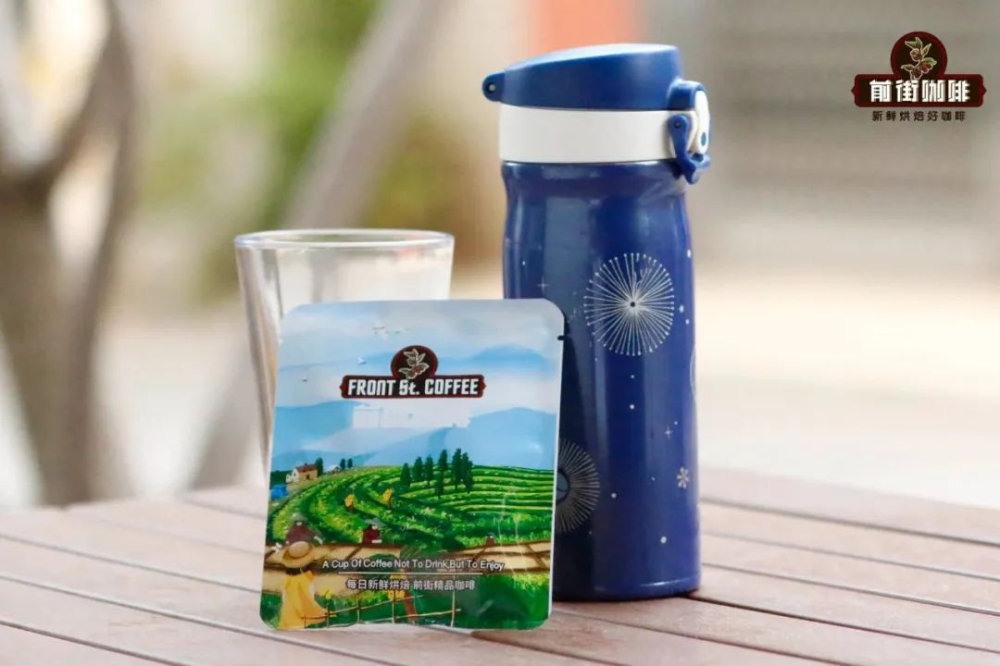
Among the many drip bag products on the market, if you enjoy a balanced coffee with harmonious acidity and bitterness, you might consider drip bags made from Brazilian beans. These coffees often feature notes of nuts, chocolate, and mild caramel, making them suitable for everyday drinking. If you prefer a rich, full-bodied flavor with low acidity and a distinct aftertaste, you can choose drip bags made from Mandheling beans sourced from Indonesia’s Sumatra region, processed through a high-standard hand-selection procedure. Their unique herbal, spicy, and earthy aromas often leave a profound impression on drinkers.
In summary, although drip bags are easy to use, as long as you master the correct brewing techniques—including coffee-to-water ratio, pouring rhythm, water flow control, and appropriate blooming time—you can still achieve a flavor and complexity close to that of professional pour over coffee. Reusing the same drip bag for multiple brews is not recommended, as it not only significantly reduces flavor but may also affect the overall drinking experience. Choosing drip bag products made from high-quality coffee bean materials ensures a satisfying brew every time.
The above content is compiled by CoffeeHunters, a coffee news website.


