







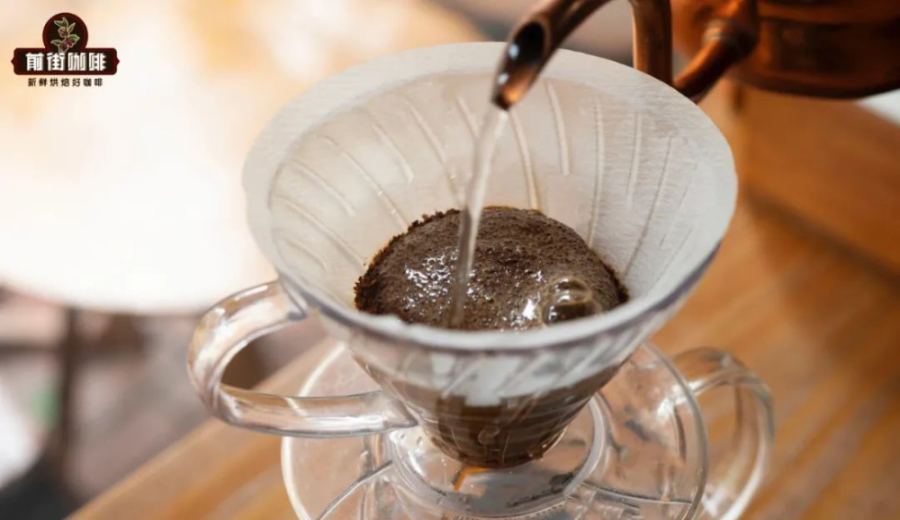
Introduction:Do you often feel that your pour over deep roast coffee has a thin flavor and lacks a full body? In fact, by mastering the right coffee-to-water ratio, brewing time, and filter choice, you can unlock the rich texture unique to dark roasted beans. This article will delve into the key parameters affecting body, starting from the principles of extraction, offering practical tips, and supplemented with illustrations to help you adjust your technique and brew a bold, smooth deep roast coffee.
Many pour over enthusiasts often encounter the issue of overly thin flavor and lack of "body" when brewing dark roast beans. Body refers to the sense of weight and fullness that coffee presents in the mouth, which is closely related to its concentration. Interestingly, although dark roast beans have a relatively loose structure, with proper technique, they can actually yield a richer mouthfeel more easily. This article will explore four key aspects—coffee-to-water ratio, brew time, filter type, and pouring technique—to help you understand how adjusting these factors can effectively enhance the body of your dark roast coffee.
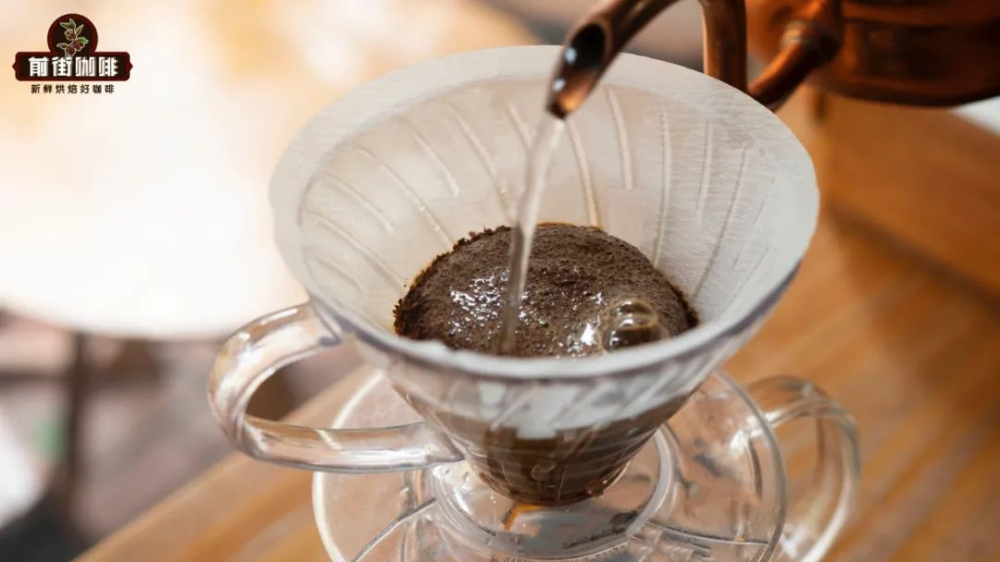
In previous discussions about "coffee flavor descriptions," many readers were especially curious about the term "body." Some shared that the deep roast coffee they brewed at home always tasted too light and hoped to learn how to improve it. Simply put, body is the "weight" or "presence" of coffee in the mouth—higher concentration usually means a more substantial feel, while lower concentration feels thinner. Dark roast beans, due to their looser structure, actually have the potential to release a rich mouthfeel, and with the right brewing conditions, their ideal fullness can be revealed.
In the past, to deliver a bold and stable flavor profile, many roasters opted for dark roasting, which also helped suppress undesirable off-flavors in the beans. However, with the rise of specialty coffee trends, more consumers are now seeking light roasts that highlight distinct regional characteristics, showcasing clear fruit acidity and floral notes. But if you want to experience the deep roast charm of intertwined chocolate, caramel, and spice notes, learning to adjust the coffee-to-water ratio and brewing technique is key.
Commonly available coffee beans can generally be divided into three roast levels: light, medium, and dark. Light roasts often feature pronounced fruity notes with vibrant acidity, such as certain washed Yirgacheffe beans; medium roasts showcase nutty, caramel, and malty flavors, like common Brazilian beans; while dark roasts are dominated by a rich chocolate base, paired with woody, spicy, and smoky notes, with acidity significantly reduced and bitterness turning rounded.
First is the coffee-to-water ratio. It is recommended to keep the ratio between 1:14 and 1:15 when brewing dark roast coffee. This concentration maintains a rich mouthfeel without being overly heavy. If the ratio exceeds 1:15, the coffee can become diluted by water, resulting in a thin flavor. For most people, 1:15 is a standard ratio that is easy to drink and still offers sufficient body. Of course, if you still find the flavor lacking, you can adjust further to 1:13 or 1:14, but be sure to also adjust the brew time accordingly to avoid over-extraction or uneven extraction.
Next is brew time. If you’ve already adjusted the coffee-to-water ratio but your dark roast coffee still tastes thin, it may be due to under-extraction. Especially when using more than 15 grams of coffee, if the brew time is only about 1 minute and 30 seconds, it’s usually because the grind size is too coarse, causing water to flow through too quickly. It is recommended to slightly adjust the grind to a finer setting, aiming for a total brew time between 2:00 and 2:30. This helps fully extract the flavor compounds in the coffee, enhancing the roundness and fullness of the mouthfeel.
The choice of filter also plays an important role. Many people commonly use a V60 filter, but for dark roast coffee, a KONO filter might be more suitable. The V60’s spiral ribs are designed to allow water to flow through quickly, which is an advantage for medium and light roasts that emphasize delicate flavors, but for dark roasts, it may lead to under-extraction. In contrast, the KONO filter’s flow structure is mainly concentrated in the lower half, which effectively slows down the water flow and extends the contact time between coffee grounds and water, thereby improving extraction efficiency and body. Therefore, if you’re aiming for a fuller mouthfeel, try experimenting with a KONO filter.

Finally, the pouring technique is also extremely crucial. Many people, when pour over brewing, tend to let the water stream hit the side of the filter directly. This causes the water to flow down quickly along the wall, leading to some hot water extracting insufficiently before entering the brewer, not only diluting the coffee but also reducing the overall extraction rate. The correct approach is to focus the circular pouring motion toward the center of the coffee bed, avoiding frequent contact with the filter’s sidewalls. This ensures that every drop of coffee that enters the brewer has been fully extracted, delivering a more complete and rich flavor experience.
The above content is compiled by CoffeeHunters, a coffee news website.


