







Introduction:Wondering why Panamanian Geisha can fetch astronomical prices at auctions? This article delves into the microclimates and altitude differences of the three main Geisha-growing plots at Finca La Esmeralda—Jaramillo, Canas Verdes, and El Velo—and compares the flavor profiles of Red and Green Label lots. From the origin of the variety to real-world cupping experiences, it offers a comprehensive understanding of this top-tier coffee bean with floral and fruity tea-like delicacy.
In today’s era where specialty coffee is increasingly valued, the Geisha (also translated as Artisan or Geisha, also known as 芸香) coffee produced by Panama’s Finca La Esmeralda is undoubtedly a star product in the market. From the T2722 variety introduced from CATIE Research Center in Costa Rica in the 1960s, to its meteoric rise in the Best of Panama (BOP) competition in 2004, to the establishment of rigorous grading systems such as Red and Green Labels, Finca La Esmeralda has, through decades of dedication and meticulous cultivation, made Geisha synonymous with high-end coffee. This article will deeply analyze this coffee bean—renowned for its delicate flavors and rich aromas—by exploring its varietal background, the microclimatic characteristics of its three main growing plots, the influence of altitude and processing methods, as well as the actual flavor differences between Red and Green Labels, and uncover the reasons behind its premium pricing.
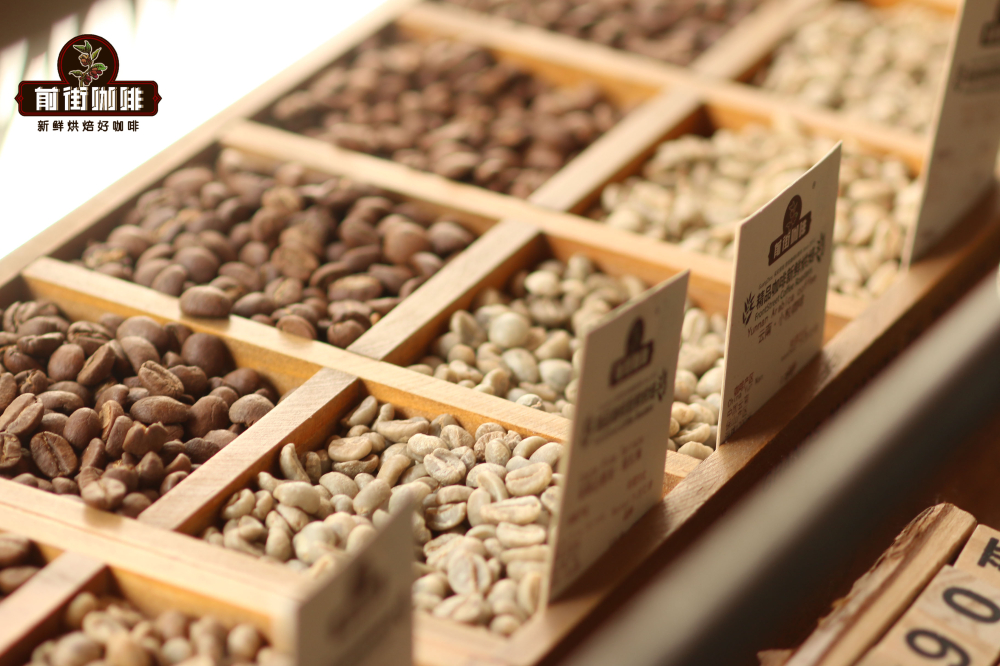
What exactly makes Panamanian Geisha stand out? First, the beans themselves are highly distinctive in appearance:They are long and large, tapering at both ends with a plump center, and often exhibit an inward-curled surface after roasting,resembling little “sausage buns.” As for its flavor, it’s truly exceptional—unlike the strong bitterness typical of conventional coffee, Geisha boasts pronounced floral notes, complex fruit acidity, and multi-layered sweetness, often described as a refined floral and fruity tea. As the temperature changes, its flavor profile evolves too, shifting from citrus and berries to honey and spices, truly astonishing.
However, Geisha is not a variety that can be grown just anywhere. It is extremely particular about its environment, requiring high altitudes, fertile volcanic soils, moderate shading, and a humid climate, and it cannot tolerate direct strong sunlight at all. According to the farm’s management, to protect these delicate plants, a large number of shade trees must be planted on the estate, and traditional pruning techniques must be maintained; otherwise, the seedlings are very likely to die. In addition,the higher the altitude, the slower the fruit ripens, and the more complex the flavors become, but the yield is relatively lower—which explains why Geisha from high-altitude regions commands such high prices.
Coffee cultivation in Panama is mainly concentrated in the western highlands, including areas such as Boquete, Volcán, and Renacimiento, among which the Boquete Valley and the slopes of the Barú Volcano are particularly renowned. These producing regions are located in Chiriquí Province, featuring fertile volcanic soils and pristine forest cover. Climatically, they are influenced by both the warm, moist air currents from the Caribbean Sea and the cold currents from the Atlantic Ocean. With steep mountain terrain, significant day-night temperature variations, year-round mist, and abundant rainfall, they provide an ideal growing environment for Geisha. Many Panamanian Geishas come from this region, fully showcasing their elegant and delicate characteristics.
Finca La Esmeralda (La Esmeralda) was originally the Pamela Farm purchased in 1964 by American banker Rudolph Peterson, primarily used for livestock farming. It wasn’t until 1987, when his son abandoned his medical career to return home and assist, and introduced the Caturra and Catuaí varieties in 1987, that the farm was officially transformed into a coffee plantation. A wet processing mill was established in 1994, and in 1997, the third-generation owner Daniel took over and began focusing on the specialty coffee sector. In 2003, he discovered the unique potential of Geisha during cupping, and in 2004, he entered it into the BOP competition, where it won first place, marking the beginning of the Geisha legend.
Finca La Esmeralda currently has four main growing areas, three of which are core zones dedicated to Geisha cultivation, including Jaramillo, Canas Verdes, and El Velo. Each plot is further divided into multiple sub-sections based on differences in altitude, slope orientation, and microclimate, resulting in the diverse flavor profiles of Geisha.
Jaramillo is the earliest plot acquired by the Peterson family and the site where the Geisha variety was discovered. The coffee trees here have an average age of over 15 years, with most growing at altitudes around 1700 meters, though the steep terrain makes harvesting difficult. The area experiences significant day-night temperature variations, with daytime temperatures of about 19–25°C and nighttime temperatures dropping to 11–15°C. Annual rainfall reaches up to 4000 mm, and the cool, humid air aids in flavor accumulation. Jaramillo is further subdivided into six Red Label sub-plots, including Mario, Noria, Reina, Bosque, Buenos Aires, and the recently added Caballeriza.
Canas Verdes, which in Spanish means “green reeds,” features greater variation in terrain and altitude, ranging from 1500 to 2050 meters. Located on the eastern slopes of the Barú Volcano, it also boasts rich volcanic soils and notable day-night temperature differences. The area receives approximately 3500 mm of rainfall annually, with daytime and nighttime temperatures of 16–23°C and 10–15°C, respectively. The combined effects of terrain and climate give Geisha here intense and varied aromatic qualities. This zone includes 11 Geisha sub-plots, such as Lino, Coronado, Fundador, León, Montaña, Trapiche, Jacinta, Cabaña, Tumaco, Nido, and Colga.

El Velo (Veil Garden) is the highest-altitude plot newly acquired by Finca La Esmeralda in 2012 and currently the region with the highest-altitude Geisha cultivation, with some sections reaching 1900 meters. This area is not only a primary Geisha planting site but also grows over 400 coffee varieties from CATIE, such as Laurina, Pacamara, Mocha, and SL28, for varietal research and future development. Covering a total area of 50.25 hectares, with 37.9 hectares dedicated to Geisha, El Velo is divided into seven meticulously managed sub-plots, including Guabo, Portón, Durazno, Mural, Figueroa, Buena Vista, and Guila.
As for the originally purchased Pamela Farm, it mainly grows Catuaí and serves as the administrative and processing hub for the entire estate, equipped with facilities to process all green beans.
Finca La Esmeralda’s Geisha is categorized into multiple grades based on cupping performance, altitude, processing method, and plot. Among them, Red Label (Esmeralda Special) and Green Label (Private Collection) are the most market-focused. Red Label Geisha represents the estate’s high-quality Geisha outside of auction lots, all grown at altitudes above 1600 meters, with cupping scores of 91 or higher. Each batch comes with detailed information about the producing area, including plot name, altitude, latitude and longitude, tree age, harvest and processing details.
Green Label (Private Collection) consists of mixed Geisha beans that did not previously participate in auctions but still boast outstanding quality. They mainly come from plots at altitudes of 1600 to 1800 meters, with flavors characterized by classic citrus notes and honey sweetness, offering great value and serving as an entry point favorite for many Geisha enthusiasts. Both are available in natural and washed processes. Red Label is known for its intense floral aromas, complex fruit acidity, and multi-layered sweetness, while Green Label showcases clear jasmine and berry notes, with a bright acidity and a lingering green-tea-like aftertaste.
In actual cuppings, the Red Label Natural Geisha emits a rich rose aroma upon opening the bag, with tasting notes of tropical fruits like mango, a silky creamy texture, completely redefining one’s impression of coffee; whereas the Green Label presents a crisper profile, with jasmine floral notes paired with bright acidity from berries and lemon, and a delicate green-tea-like finish, making it suitable for drinkers who prefer a fresh and clean flavor profile.
The above content is compiled by CoffeeHunters, a coffee news website.


