








Introduction:Want to understand the essence of making Americano and the differences in flavor? This article delves into the fundamental distinctions between espresso and pour over coffee, breaks down the standard coffee-to-water ratios for hot and iced Americanos, explores the two major sources of common bitterness in Americanos, and features several classic Italian-style blends suited for different taste preferences. Whether you’re new to black coffee or hoping to replicate café-quality brewing at home, you’ll find practical advice and inspiration here.
Many people assume that an Americano is just espresso with water added, but this seemingly simple drink is actually one of the best indicators of a barista’s extraction skills. This article starts with the basic principles of espresso and pour over, explains the standard preparation ratios for both hot and iced Americanos, analyzes the common factors that make Americanos taste bitter, and recommends several classic Italian-style blends tailored to different flavor preferences. Whether you’re just starting out with pure black coffee or looking to improve your home brewing performance, this piece offers concrete references.
 Espresso refers to a highly concentrated coffee liquid extracted quickly under high pressure using an espresso machine. Normally, this shot is not served as a single-origin drink—only a few customers specifically choose it for its intense stimulation or rich flavor. The standard espresso coffee-to-water ratio is roughly 1:2, and the resulting liquid is not only high in concentration but also has very concentrated flavors.
Mixing this concentrated espresso with water in different ratios results in the everyday Americano; if milk or milk foam is used instead, it transforms into various milk-based coffees like lattes or cappuccinos. Although the Americano and pour over both fall under the category of black coffee, their brewing logics are completely different: the Americano is made by first extracting a concentrated shot under high pressure and then diluting it with water, whereas pour over relies entirely on pour over equipment and filter drippers to brew coffee grounds directly with hot water, without going through an espresso machine or any additional dilution step. Next, let’s focus on the actual preparation of Americano.
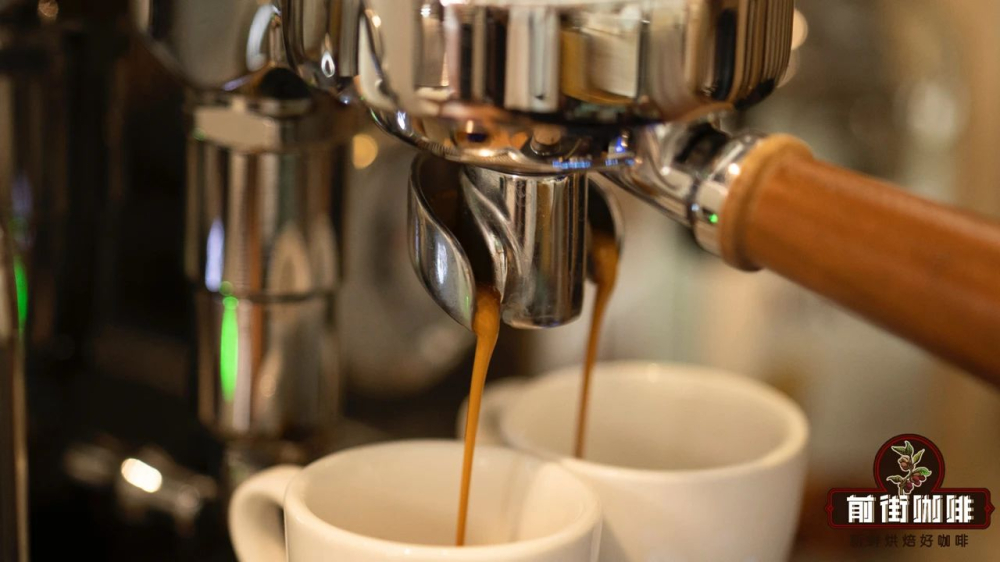 Structurally, an Americano is nothing more than espresso with water added; for an iced version, ice cubes are added as well. But this simple formula actually makes it easier to highlight a barista’s technical skill. Because there’s no milk to buffer the flavors, the inherent characteristics of the coffee beans are fully revealed. Many industry professionals, when visiting different cafés, often order an Americano first—it allows for a quick evaluation and also helps judge how well the shop understands coffee beans and extraction.
The standard process for making a hot Americano usually involves preheating the cup with hot water first, then pouring in an appropriate amount of hot water, and finally adding the freshly extracted espresso. The generally recommended coffee-to-water ratio ranges from 1:4 to 1:6. If you prefer a more balanced taste that isn’t too weak, you can go for the golden ratio of 1:5—that is, diluting about 40 grams of espresso with 200 grams of hot water. As for iced Americano, the method is similar, but you start by adding ice cubes to lower the temperature of the cup, then add water and espresso in sequence. Since the ice will gradually melt and dilute the coffee during drinking, it’s advisable to use a higher ratio of around 1:7—for example, 40 grams of espresso mixed with 280 grams of ice water (with approximately 180 grams of ice and 100 grams of water), ensuring stable overall flavor.
Many consumers often complain that the Americanos they drink are too bitter—but is bitterness really unavoidable? In fact, coffee contains multiple flavor elements such as acidity, sweetness, bitterness, and saltiness, and the balance of these elements is influenced by a combination of coffee variety, green bean processing method, roast level, and brewing technique. Below are explanations for the two most common reasons why Americanos tend to taste bitter.
Reason One: Characteristics of the Coffee Beans
The overall profile of an Americano depends greatly on the nature of the espresso beans used. If the beans are dark roasted or inherently bold in flavor, they are likely to bring out noticeable bitterness. Take a common medium-dark roasted classic blend as an example: this recipe combines Brazilian and Mandheling beans, where the Mandheling provides a core of dark chocolate, spices, and caramel, while the Brazilian beans contribute nutty aromas and a full-bodied texture, with a small amount of Robusta added to enhance crema. This blend is well-balanced overall, with low acidity and prominent roasty aromas, making it suitable for drinkers who enjoy a bold flavor.

If you’re more sensitive to bitterness, you might try the Strawberry Candy Italian blend. This medium-roast blend, designed specifically for espresso and moka pot use, uses beans from Costa Rica, Ethiopia, and Colombia, offering delicate aromas of rose, grape, dried fruit, and almond, with a creamy-smooth mouthfeel. The resulting Americano is sweet and tangy with a refreshing quality, making it an ideal choice for those who dislike bitterness.
Reason Two: Extraction Errors
Beyond the inherent traits of the beans, technical issues during the extraction process are also a major cause of bitterness. Common problems include channeling leading to uneven extraction, or overly fine grind sizes causing over-extraction. To ensure consistent performance in every cup, baristas typically recalibrate extraction parameters before service and make fine adjustments based on the condition of the beans that day. For instance, if previously 20 grams of coffee grounds yielded 40 grams of espresso over a slightly long period, it could lead to over-extraction in the tail end and unwanted bitterness; adjusting to 20 grams of grounds yielding 35 grams of liquid and shortening the time to 25 seconds helps maintain balanced extraction and reduces unnecessary bitterness release.
If you want to replicate café-quality Americanos at home, choosing the right Italian-style blend is crucial. Below are several top-performing Italian beans recommended for users with different needs.
1. Premium Blend Coffee Beans
This long-standing house blend is known for its consistent performance. The roaster carefully selects globally abundant and stable-quality Arabica beans from Colombia and Brazil—washed Colombian beans bring soft fruity acidity, dark cocoa, and caramel layers, while Brazilian beans offer a solid body and rich roasted nut aroma. The brewed result showcases prominent dark chocolate flavors, a thick mouthfeel, and a long finish, making it suitable as either a black coffee or a base for milk coffee.
2. Dark Cocoa Blend Coffee Beans
This high-value blend, highly praised by many baristas, primarily uses Brazilian and Yunnan beans in a ratio of about seven to three. Both beans have a nutty character, with the Brazilian beans further enhancing a solid body and rich crema. It’s suitable for shops seeking cost-effectiveness while maintaining stable flavor.
3. Commercial Blend Coffee Beans
This blend is designed specifically for commercial cafés, based on Colombian and Brazilian beans with a small addition of Robusta. The inclusion of Robusta not only boosts overall crema content but also enhances richness and the authentic coffee flavor, with almost no acidity, making latte art smoother. It’s a practical choice for shop owners aiming for a blend that balances aroma and body.

The above content is compiled by CoffeeHunters, a coffee news website.


