







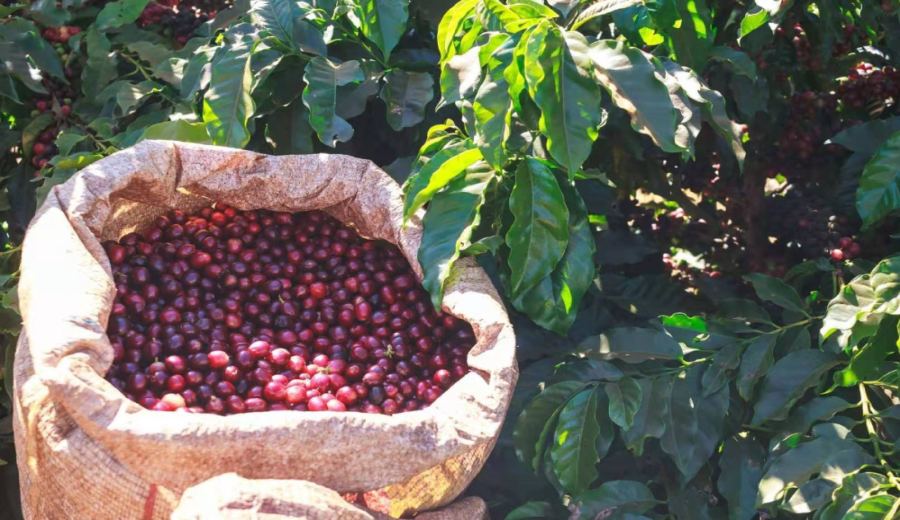
Introduction:Cerrado is an important coffee-growing region in central-western Minas Gerais, Brazil, known for its stable flavor profile and full-bodied taste. It is often used as the base bean in espresso blends. This article delves into the region’s natural conditions, the characteristics of the Red Bourbon variety, and Brazil’s unique semi-washed processing method. It also provides a detailed breakdown of the NY.2 grade definition, defect ratio, bean size specifications, and cupping flavor levels, along with practical medium-dark roast pour-over recommendations and flavor profiles to help you fully understand the features of this classic commercial and everyday drinking bean.
Brazil has long been the world’s largest coffee producer. Among its regions, Cerrado in central-western Minas Gerais is renowned for producing Arabica beans with balanced taste and mild aroma. These beans are commonly used in espresso blends to enhance overall extraction stability and flavor complexity. A well-known brand’s everyday drinking series includes a Brazilian Cerrado Red Bourbon bean, beloved by consumers for its rich, smooth mouthfeel and intense chocolate and nutty notes. This article will explore the region’s environment, variety traits, and processing methods, and comprehensively dissect Brazil’s green coffee grading system — including defect ratios (NY grades), bean size, and cupping flavors. Finally, it offers practical medium-dark roast pour-over parameters and flavor descriptions to help readers deeply understand what NY.2SC 17/18 FC truly signifies.
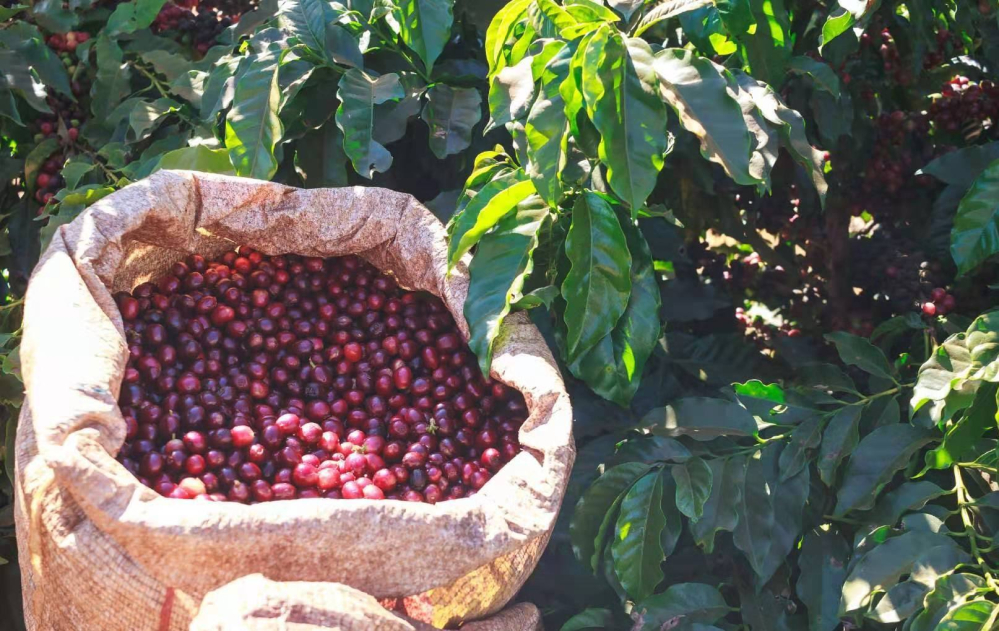
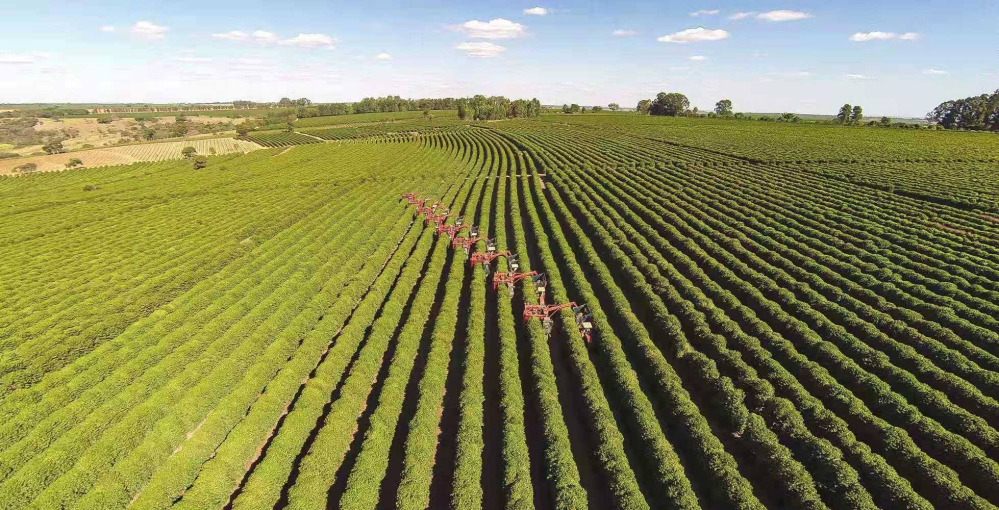
Brazil is not only the world’s largest coffee-producing country, but its Cerrado region in central-western Minas Gerais is also one of its classic representatives. Unlike Colombia, which focuses on high-altitude cultivation, Brazilian coffee generally grows at relatively low altitudes, averaging between 600 to 1,200 meters, predominantly on plains with only a small portion on plateaus. This terrain facilitates large-scale, unified management, and harvesting is often done mechanically, collecting coffee cherries from the same branch all at once.
The Cerrado region is Brazil’s first coffee area to receive origin certification. Primarily located in central-western Minas Gerais at elevations above 1,000 meters, although it does not cover the entire vast Cerrado savannah, this core zone boasts fertile soil and a favorable climate, capable of producing high-quality coffees with clean flavors, pronounced sweetness, and rich complexity. This area is also one of the earliest in Brazil to achieve commercial coffee production, home to many exporters and large plantations.
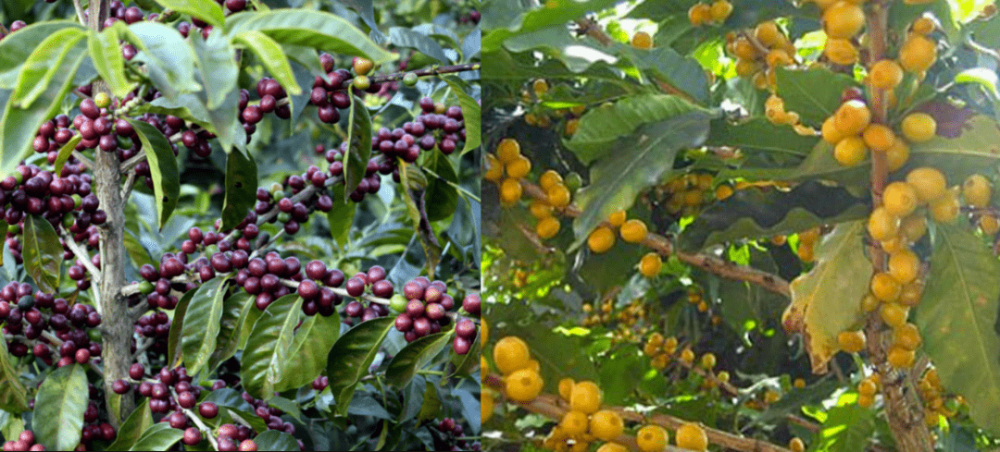
Brazil cultivates a wide variety of coffee beans, among which Bourbon and Typica are among the oldest cultivars. Compared to Typica, Bourbon plants have broader leaves and higher planting density, yielding about 30% more per unit. Its beans are typically rounder and shorter, often exhibiting solid berry acidity and distinct creamy and nutty notes, with clear acidity but relatively weaker disease resistance. A well-known brand’s Cerrado everyday drinking bean uses Red Bourbon — a mutation where the fruit turns red when ripe — and also offers a Yellow Bourbon option from Queen’s Estate.
Brazil’s coffee harvest season mostly falls during the dry season, making sun-drying a suitable method. However, traditional sun-drying often involves spreading coffee cherries directly on the ground, which can absorb odors and affect flavor stability. Since the 1990s, Brazil has promoted the semi-washed method (also called semi-pulped natural), which first uses water flow to remove floaters and defective beans, then mechanically removes the skin, pulp, and part of the mucilage. After washing, the beans are either sun-dried or placed in drying rooms. This method saves water and labor, significantly improves quality, and has reshaped the previously rough image of sun-dried coffee.
Brazil’s coffee grading system is quite diverse due to significant variations in growing regions and processing methods, requiring a comprehensive assessment based on multiple indicators. It is mainly divided into three key dimensions: defect ratio (NY grade), bean size specifications, and cupping flavor performance.
1. Grading by Defect Ratio
Brazil uses a “deduction method,” evaluating based on the number of defects in 300 grams of green coffee, following the New York grading standard (NY). Grades range from NY2, NY2/3, NY3 to NY3/4, where the smaller the number, the lower the defect rate and the higher the quality. Among these, NY.2 is the highest commercial grade, as NY.1 requires zero defects — something that is practically very difficult to supply consistently — making NY.2 the market-recognized top-tier classification.
2. Grading by Bean Size Specifications
Brazil screens beans using mesh sieves with 1/64-inch units, with sizes ranging from 14 to 20, corresponding to the width of the bean’s shorter side. Although sizes up to 19 are possible, they are rare in production, and 17/18 is widely regarded as the hallmark of high-quality beans.
3. Cupping Flavor and Mouthfeel
After defect and size grading, the green beans are roasted and cupped. Referring to the Cup of Excellence scoring system, evaluation is based on both taste and flavor. Mouthfeel is divided into five levels: Strictly Soft (very smooth), Soft (smooth), Softish (slightly smooth), Hardish (harsh), and Rioy (iodine or off-flavors). Flavor levels include Fine Cup (FC), Fine, Good Cup (GC), Fair Cup, Poor Cup, and Bad Cup, with FC and GC being the most common and favored in the market.
Combining the above, a well-known brand’s Brazilian Cerrado coffee green beans are labeled as ‘Brazil NY.2SC – 17/18 FC Cerrado,’ indicating origin in the Cerrado region, bean size of 17 to 18, cupping flavor of Fine Cup, and defect level reaching NY.2 — making it a high-quality commercial bean.
The flavor profile of this Cerrado Red Bourbon coffee is dominated by fullness and low acidity, emphasizing nutty, bread-like, and creamy aromas. Therefore, a medium-dark roast is recommended. To fully showcase the coffee’s flavors, it is advised to use beans roasted within one and a half months, with a 4 to 7-day rest period to allow degassing before reaching peak flavor. A well-known brand guarantees shipment within five days of roasting to ensure consumers receive beans at their flavor peak.
For this medium-dark roast bean, baristas from the brand recommend using lower water temperature and slightly coarser grind to avoid over-extraction and excessive bitterness. The KONO filter cone is suggested to help enhance the expression of a full-bodied mouthfeel.
Pour-over Recommendations:
- Water Temperature: 88°C
- Coffee Dose: 15g
- Coffee-to-Water Ratio: 1:15
- Grind Size: 70% passing through a #20 sieve
- Brewing Method: Three-Pour Technique
Steps for the Three-Pour Technique:
- First Pour: Add 30g of water, bloom for 30 seconds
- Second Pour: Add 95g of water, pouring evenly in a circular motion from the center outwards, until the water level drops to two-thirds of the coffee bed, then proceed to the third pour
- Third Pour: Add 100g of water, using a small stream throughout, total dripping time approximately 2 minutes
Flavor Profile:After grinding, you can detect intense nutty and toasted bread aromas. The brewed cup highlights nutty, creamy, and peanut notes, with a sweet finish featuring black chocolate undertones. The mouthfeel is full-bodied and smooth.
The above content is compiled by CoffeeHunters, a coffee news website.


