







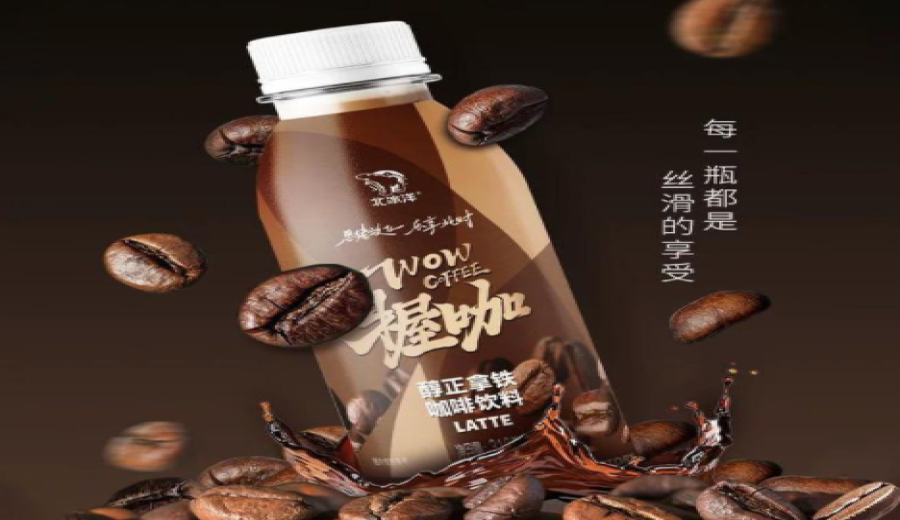
Introduction:Ready-to-drink (RTD) coffee, with its convenience, affordability, and portability, has become a daily go-to energy booster for many office workers. Now, even the nearly century-old Beijing-based beverage brand 北冰洋 (Bingqi Yang) has joined the fray with the launch of its new "Wo Ka" ready-to-drink latte. This article takes an in-depth look at the features and pricing strategy of this new product, and explores how 北冰洋 is striving to break through in the highly competitive RTD coffee market by leveraging brand nostalgia and strategic positioning.
Ready-to-drink coffee, which requires no brewing, is affordable, and easy to carry, has become the “lazy coffee” of choice for many busy professionals—so much so that it’s been dubbed the “poor man’s pleasure” in the coffee world. These products don’t require hot water to prepare, making them especially suitable for time-strapped commuters, allowing people to quickly recharge and boost their energy anytime, anywhere. As a result, they have gained widespread popularity among younger and working demographics.
In recent years, the RTD coffee market has rapidly heated up. Not only have global coffee giants such as Starbucks and Nestlé continued to expand their presence, but numerous beverage companies have also jumped into the fray, hoping to claim a share of this high-growth potential market. Among the new entrants, the classic Beijing soda brand 北冰洋 recently launched its new ready-to-drink coffee latte product “Wo Ka” on its Tmall flagship store, officially marking its entry into the RTD coffee arena.
This new product retains the iconic North Pole bear logo of 北冰洋, with packaging design that maintains strong brand recognition. According to product page information, “Wo Ka” uses Robusta coffee beans, which undergo professional roasting to deliver a rich taste with low acidity—ideal for consumers who prefer a bold flavor without overly sharp sourness. The series is currently being sold at a promotional price of 119.9 yuan for a 15-bottle pack (each bottle is 310 ml), translating to an average unit price of about 8 yuan per bottle, placing it in the mid-range segment of the RTD coffee market.
As a long-established domestic soda brand, 北冰洋 originated from the Beiping Ice Factory founded in 1936. It was nationalized in 1949 and officially launched its soda products in 1951. Over the years, 北冰洋 became well-known for its orange-flavored soda and gained widespread recognition after appearing on the first CCTV Spring Festival Gala, becoming a nostalgic childhood memory for many. However, its joint venture with PepsiCo in 1994 led to a temporary disappearance from the market until its “re-launch” in 2011, when it returned to consumer view.
After re-entering the market, 北冰洋 has been committed to building an image as the “people’s soda,” successively launching a variety of products including orange soda, sugar-free orange juice, and sugar-free orange-flavored soda, as well as developing a range of products tailored for the foodservice and supermarket channels. But with the gradual decline of the carbonated drinks market and the rise of emerging beverage brands, 北冰洋 has faced the challenge of a single revenue structure and has had to accelerate the transformation of its brand and product lines in search of new growth momentum.
The launch of “Wo Ka” ready-to-drink latte can be seen as an important attempt by 北冰洋 to extend from its existing juice soda base into the RTD coffee market. However, some market analysts point out that the RTD coffee segment is already dominated by several major international and domestic brands. While 北冰洋 possesses deep brand emotional equity, it still faces numerous challenges in terms of product differentiation, market positioning, and consumer experience.
In fact, 北冰洋 is not alone—other well-known beverage companies such as Wahaha, Nongfu Spring, Uni-President, and Dongpeng Beverage have also been expanding into the RTD coffee market in recent years, highlighting the strategic value of this niche segment. According to market research firm Mintel, between 2018 and 2023, the global RTD coffee retail market is expected to achieve an average annual compound growth rate of 15.5%, with sales volume projected to exceed 460 million liters by 2023, making it one of the fastest-growing categories within fast-moving consumer goods.
For consumers who prioritize coffee flavor and quality, although RTD coffee is convenient, it often falls short in freshness and subtlety compared to freshly ground coffee. However, for busy urbanites, RTD coffee remains a practical choice that balances efficiency with basic flavor. Those looking to explore more diverse coffee flavors can also consider brands that offer freshly roasted specialty coffee beans, meeting higher demands for brewing parameters and flavor complexity.
The above content is compiled by CoffeeHunters, a coffee news website.


