







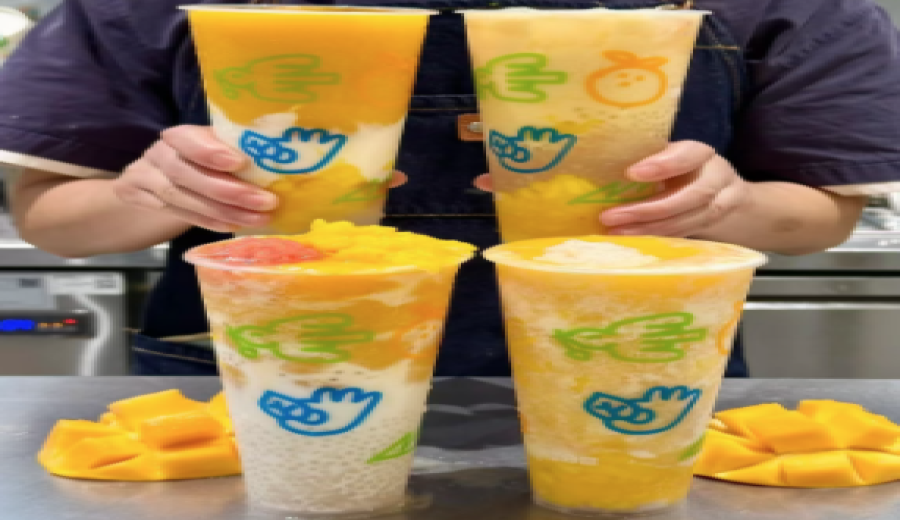
Introduction:With its signature Mango Pomelo Sago dessert, 70% Sweet has expanded to over 1,500 stores nationwide. Recently, it opened its first-ever dedicated Mango Pomelo Sago store in Shanghai’s Changning Longemont Mall, offering only three limited-edition drinks priced between 15 and 20 RMB. In its first week, the store achieved over 10,000 sales and daily revenue exceeding 25,000 RMB. But can this single-product-focused business model sustain its popularity in the highly competitive beverage market? This article takes an in-depth look at its product strategy, customer feedback, and market outlook.
Mango Pomelo Sago originally is a classic Cantonese-style sweet soup, typically made with mango, pomelo, sago, and coconut milk, usually served in a bowl. As the beverage market evolved, this dessert was reimagined by emerging tea brands into a portable cup format, quickly winning consumer favor—with 70% Sweet standing out the most.
The brand’s founder, Xie Huancheng, once mentioned that to avoid direct competition with traditional Hong Kong-style dessert shops in dine-in services, he drew inspiration from Taiwan’s take-away bubble tea model. He specially adjusted the recipe of Mango Pomelo Sago to better suit serving in a cup. For instance, the originally large chunks of mango were diced for easier sipping through a straw, while the serving size was increased from 360 ml to 500 ml. The texture also shifted from thick and rich to light and refreshing, aligning more with modern drinking habits.
According to public data, leveraging this cupped version of Mango Pomelo Sago, 70% Sweet has opened over 1,500 stores across the country, becoming the go-to brand for many consumers when it comes to this dessert drink.
On September 30, 70% Sweet announced the opening of the nation’s first “Mango Pomelo Sago Exclusive Store” in Shanghai’s Changning Longemont Mall. This store focuses solely on this classic item, offering only three products: the 1987 Classic Mango Pomelo Sago, the 2007 Fresh Mango Mango Pomelo Sago, and the innovative Mango Pomelo Sago Gelato, each priced between 15 and 20 RMB.
The brand explained that these three drinks each carry symbolic meaning: 1987 marks the birth year of Mango Pomelo Sago, paying tribute to Cantonese dessert culture and traditional craftsmanship; 2007 represents the milestone when 70% Sweet first launched its cupped version; and the Gelato version combines ice cream, glutinous rice, and Mango Pomelo Sago, representing an innovative experiment.
The store features a minimalist wooden design, covering an area of about 20 square meters, and emphasizes the brand philosophy of “freshly handmade, natural and healthy.” Customers can watch the fresh preparation of mango and other ingredients through a transparent operation area. The display also showcases fresh fruits such as pomelo, mango, and coconut, highlighting the transparency and freshness of the ingredients.
It is reported that in its first week, the exclusive store sold over 10,000 cups, with daily revenue reaching upwards of 25,000 RMB—demonstrating considerable popularity. However, online reviews have been sharply divided.
Some customers praised it as “the best Mango Pomelo Sago they’ve ever had,” especially commending the traditional flavor of the 1987 Classic version.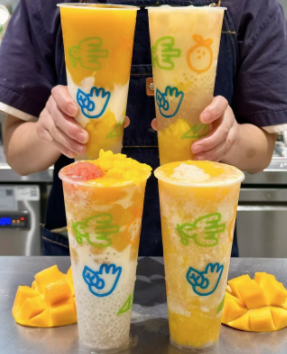 However, other consumers pointed out that the drink has too much sago, resulting in a watery taste and a lack of texture in the mix-ins. They also noted that the mango and pomelo pieces were too small, negatively affecting the overall mouthfeel. Additionally, some criticized the mango syrup for being overly strong and the excessive pomelo making the drink too sour, questioning whether it meets the public’s expectation of an “authentic” Mango Pomelo Sago.
Some even went as far as to say that many modern versions of Mango Pomelo Sago are just mango syrup and ice cubes, having long lost the essence of the traditional Guangdong version—which doesn’t use ice, features large mango chunks, and includes pomelo—questioning whether the brand has become overly commercialized.
Industry insiders analyze that although Mango Pomelo Sago is a market-proven popular item, in today’s fiercely competitive new-style tea market, relying solely on one or two hit products makes it difficult to maintain long-term brand heat. Consumer tastes are constantly evolving, and if brands wish to stay ahead in the market, they must continuously optimize recipes and innovate products based on market feedback.
The above content is compiled by CoffeeHunters, a coffee news website.


