







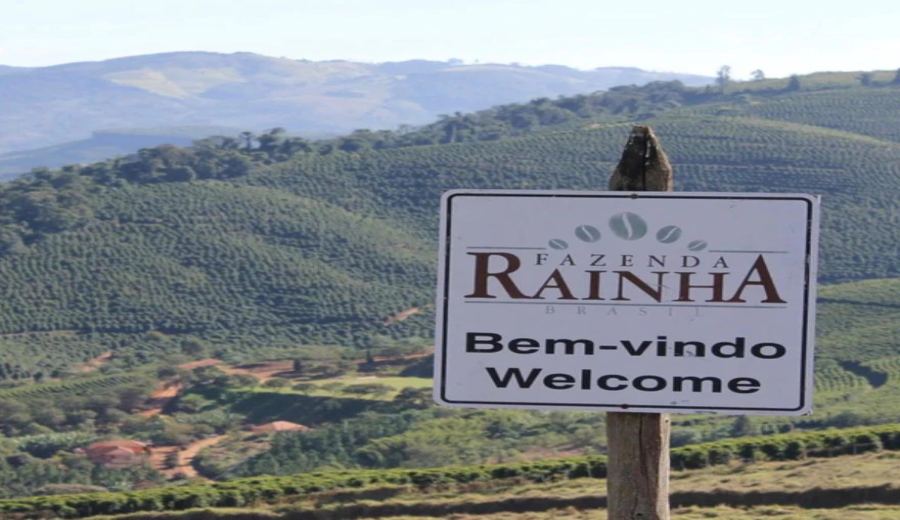
Introduction:Looking for a nutty and cocoa-forward coffee with intense flavors but without pronounced acidity? The Yellow Bourbon beans from Fazenda Rainha (Queen Estate) in Brazil are an excellent choice. Grown at high altitudes in the Mogiana region and processed using the pulped natural method, these beans showcase a sweet brown sugar finish and a rich, nutty profile. This article delves into the estate’s background, the characteristics of the Yellow Bourbon variety, and the pulped natural process, while also providing tested roasting profiles and pour over parameters to help you recreate a balanced and smooth coffee experience.
For coffee enthusiasts who prefer nutty and cocoa flavors but wish to avoid high acidity, the Yellow Bourbon beans produced by Fazenda Rainha in Brazil often become one of their go-to options. These beans originate from Brazil’s high-altitude Mogiana region, naturally boasting a clean sweetness and a mellow brown sugar-like aftertaste, making them one of the most distinctive representatives among Brazilian beans.
Fazenda Rainha (Queen Estate) is owned by the Carvalho Dias family, a highly reputable family in the coffee industry. Since the first Brazilian COE competition in 1999, their four estates have consistently ranked on the list, winning more than twelve awards within just seven years. In 2004, they even claimed the championship, ninth, and eleventh places simultaneously, demonstrating exceptional and stable quality. The estate’s continued success in competitions indirectly proves that its coffee quality far exceeds that of average Brazilian beans.
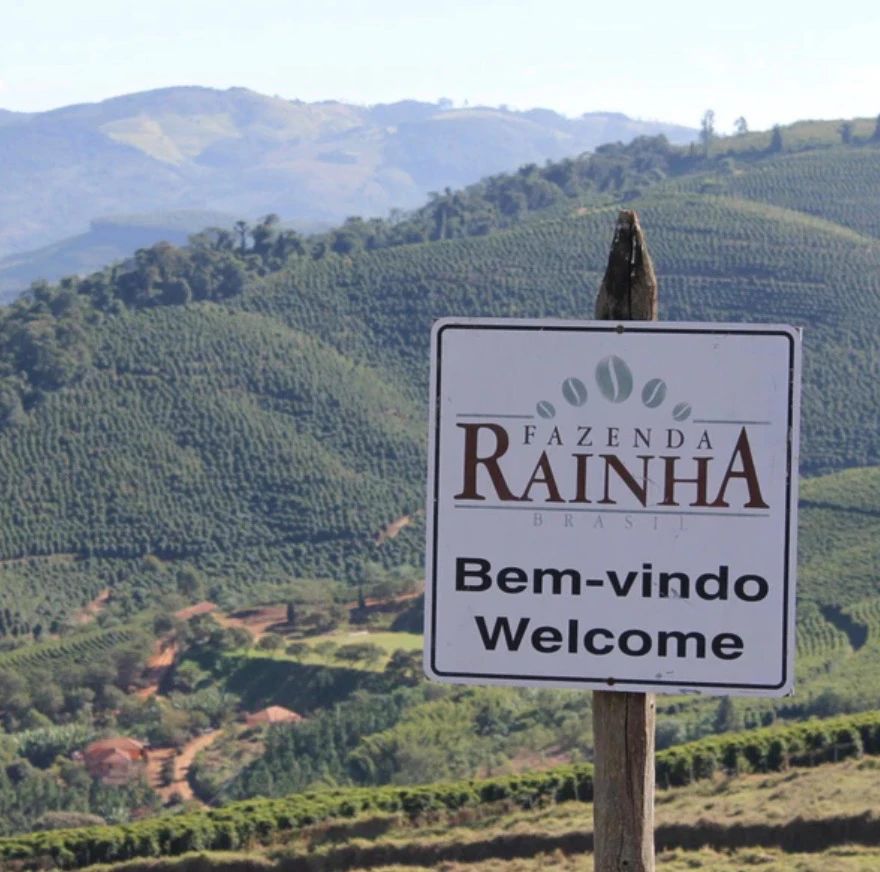
This particular Yellow Bourbon bean from Fazenda Rainha, available on a certain platform, has a unique sweet tone compared to other Brazilian beans. In addition to the common bold nutty and chocolatey notes found in Brazilian beans, its finish delivers a delightful sweet sensation reminiscent of brown sugar, offering a surprisingly enjoyable flavor experience.
Two main factors contribute to these distinctive flavors. First, Fazenda Rainha adopts an in-house estate management system, handling everything from cultivation to post-harvest processing themselves, unlike most estates that rely on smallholder farmers for fruit supply and centralized processing. This allows for more consistent quality. Second, the estate’s main variety is Yellow Bourbon — a variety known for its soft acidity, clean bitterness, and overall bright and refreshing profile.
Fazenda Rainha is located in the Mogiana region at an altitude of approximately 1400 to 1950 meters. This area boasts superior geographical conditions and a climate well-suited for growing specialty coffee, and is currently managed by agricultural engineer José Renato G. Dias. Notably, all workers on the estate live on the farm, which has led to the elimination of a temporary labor system and the provision of benefits such as health programs and unlimited medical care. In recent years, workers have even built the second unit of the Pedro Roza IT School and a chapel designed by the renowned architect Oscar Niemeyer. Fazenda Rainha is not only BSCA certified but also employs a socially and environmentally managed system under UTZ certification. It has been a long-time contender in the Cup of Excellence competition, showcasing its commitment to sustainability and quality.
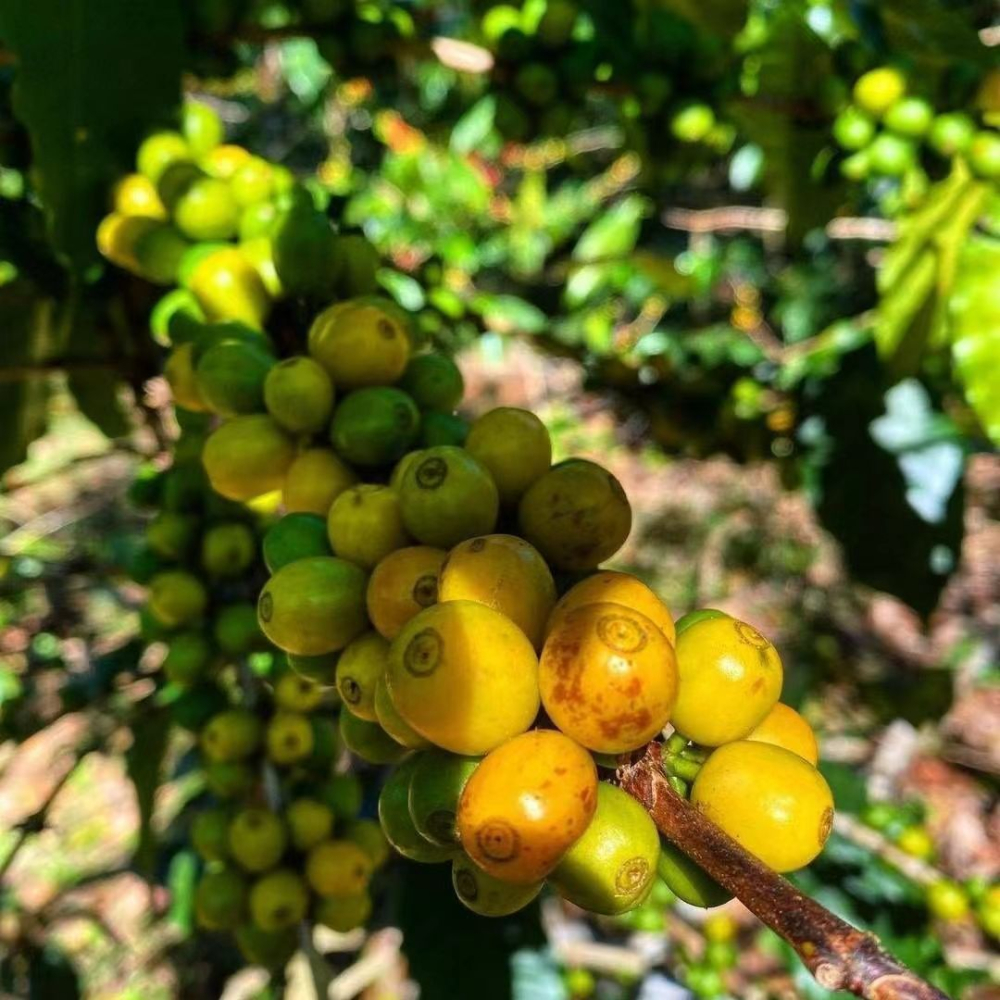
Fazenda Rainha cultivates various varieties including Yellow Bourbon, Icatu, Yellow Catuai, Mundo Novo, and Acaiá, all of which hold BSCA and UTZ certifications. However, the main variety remains Yellow Bourbon, with around 200 hectares of land dedicated to this variety according to estate data.
Yellow Bourbon is a Bourbon mutation originating from the state of São Paulo in Brazil. Its most distinctive feature is that the fruits turn orange-yellow rather than red when ripe, hence the name. This variety is naturally sweet-leaning, with a clean taste. When processed using natural or pulped natural methods, it effectively suppresses overly prominent acidity while perfectly harmonizing with sweetness, and emits aromas of tropical fruits.
As for the processing method, Fazenda Rainha uses Brazil’s unique pulped natural technique. This method was developed to address the region’s rainy climate and to prevent mold issues during sun drying. The pulped natural process involves removing the skin and pulp of the coffee cherry but leaving the mucilage layer intact, followed by direct sun drying. This allows for more precise control over the fermentation level. Compared to traditional natural processing where the entire fruit is exposed to sun drying and fermentation is harder to manage, the pulped natural method offers better quality control.
Another advantage of the pulped natural method is its ability to naturally screen out underripe fruits: since ripe fruits have pulp that is easier to remove, while unripe green fruits have skins that are harder to strip, the process allows further selection to ensure uniform ripeness of the coffee cherries, thereby improving overall cleanliness and flavor consistency. Compared to fully natural processed coffee, pulped natural beans usually offer a more even mouthfeel and lower astringency.
During green bean analysis conducted by a certain platform, it was found that Fazenda Rainha’s Yellow Bourbon beans have relatively soft bean structure, overall low density, moderate moisture content, and a thinner bean thickness from surface to core. Therefore, it is recommended to avoid too high a roasting temperature to prevent burnt or bitter flavors. During actual roasting, medium heat was chosen for dropping the beans, maintaining stable firepower through the dehydration phase, and making slight adjustments after the first crack to promote sufficient caramelization. This semi-washed bean has a slower temperature rise after the first crack, so it is advised to drop the beans close to the second crack to achieve a medium-dark roast level, helping bring out a rich and balanced taste.
The suggested roasting profile is as follows: using a Yangjia 800N roaster, with a charge weight of 550g. Preheat to a machine temperature of 200°C before dropping the beans. Initial firepower is set at 150, with the damper at 3. The turnaround point occurs around 1 minute and 30 seconds. Maintain the same firepower until 5 minutes and 10 seconds when the beans turn yellow and grassy notes fade, entering the dehydration phase. At this point, reduce the firepower to 125 and open the damper to 3.5. Dehydration is completed around 8 minutes and 20 seconds, when wrinkles and black speckles appear on the bean surface, and the aroma shifts from baked bread to coffee. This signals the approach of the first crack. When the temperature reaches 178°C, reduce the firepower to 80 and closely monitor the first crack, which typically begins at 9 minutes and 14 seconds. Open the damper fully to 5. The development time after the first crack lasts about 3 minutes, and the beans are dropped at 201°C, achieving the desired medium-dark roast.
For this medium-dark roasted Yellow Bourbon coffee, it is recommended to use a slightly lower water temperature and a medium-coarse grind size during pour over brewing to balance extraction and avoid over-extraction that could lead to bitterness. Practical parameters used by a certain café are as follows: using a Kono filter, with a water temperature of around 88°C, a coffee dose of 15 grams, a brew ratio of 1:15, and a grind size of medium-fine (70–75% passing through a Chinese standard 20-mesh sieve).
Suggested specific brewing steps: the first stage involves pouring 30 grams of water for the bloom, lasting about 30 seconds. The second stage pours water up to about 125 grams, then waiting until the coffee liquid surface drops to half before pouring the final amount of water to reach a total of 225 grams. The extraction ends once all the coffee liquid has dripped through, with a total brew time of approximately 2 minutes and 10 seconds. These parameters can fully highlight the nutty and cocoa dominant notes of Yellow Bourbon, while also bringing out a gentle sweetness and low acidity.
The above content is compiled by CoffeeHunters, a coffee news website.


