







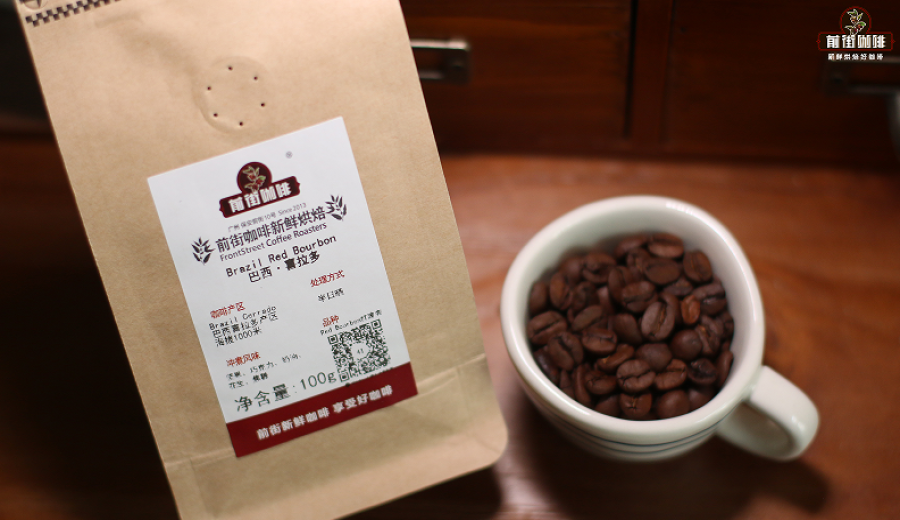
Introduction:Brazil is the world’s largest coffee-producing country, and its Arabica beans are renowned for their rich, low-acid profile with nutty and chocolatey notes. This article delves into the characteristics of Brazil’s major producing regions, classic processing methods, and the flavor profiles of representative beans such as the Yellow Bourbon from Fazenda Rainha. It also offers practical pour-over brewing tips and a three-stage pouring technique suitable for medium-to-dark roasts, helping you brew balanced, clean, and distinctly sweet Brazilian coffee at home.
Brazil is not only the top coffee producer globally, but its Arabica beans are also favored by many coffee enthusiasts for their smooth, full-bodied taste and low acidity. These beans often exhibit notes of nuts, cocoa, chocolate, and a hint of toast, making them ideal for those who prefer rich and well-balanced flavors. This article will guide you through the development of Brazilian coffee, the distribution of its main producing regions, the classic pulped natural processing method, and the unique flavors of renowned beans like the Yellow Bourbon from Fazenda Rainha. It will also share practical pour-over extraction parameters and techniques to help you easily recreate a professional-grade, aromatic experience.
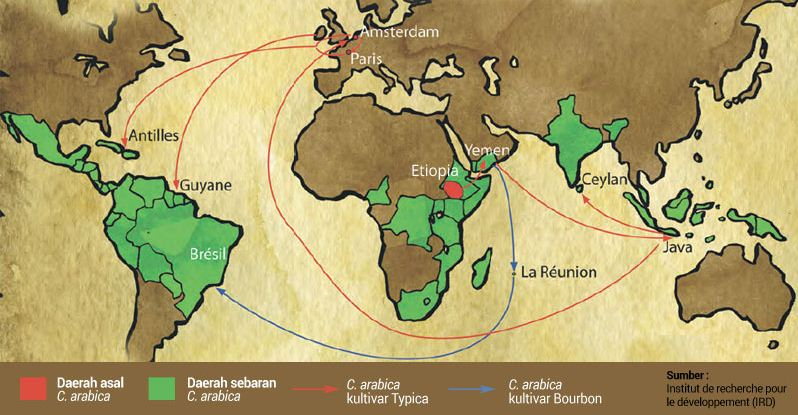
The history of coffee cultivation in Brazil dates back to the 18th century. At that time, as a Portuguese colony, Brazil saw coffee seeds introduced through diplomatic channels by a military officer named Francisco Palheta. Coffee quickly adapted to the local environment, spreading from the north to the south, particularly flourishing in the state of São Paulo. By 1845, Brazil accounted for as much as 45% of global coffee production, becoming a key economic driver for the state of São Paulo.
Currently, coffee is produced in over 14 states across Brazil, with seven major states contributing nearly 90% of the total output. A look at the distribution map of producing regions shows that Robusta is more common in the western areas, while the higher-quality Arabica is concentrated in the southeastern region. This article focuses on two representative producing regions: Minas Gerais, which leads the nation in production, and São Paulo, the earliest region to cultivate coffee.
Minas Gerais accounts for nearly half of the country’s annual coffee production and includes four well-known producing regions: Cerrado, Sul de Minas, Chapada de Minas, and Matas de Minas. Among them, the Cerrado region, named after Brazil’s famous savanna, is actually a flat area in the western part of Minas Gerais. With a concentrated harvest period, it is suitable for large-scale farming and harvesting, and many exporters have established large farms there (typically over 10 hectares). The other three regions, due to their rugged terrain, rely mostly on smallholder farmers who produce coffee manually.
São Paulo is home to the historic Mogiana region, named after the “coffee railway” company Mogiana Railroad Company, established in 1883. The launch of this railway significantly improved transportation conditions and further promoted the expansion of coffee cultivation. This region sits at an altitude of about 900 to 1100 meters, with an average annual temperature of around 20°C. Its rolling hills help coffee accumulate good sweetness and balance. Due to slope limitations, most farms still rely on manual harvesting. For example, the Fazenda Rainha coffee listed on a certain menu comes from this region.
Fazenda Rainha (Queen Estate) is one of Brazil’s leading specialty coffee farms, having won the first-ever Brazilian Cup of Excellence (COE) competition and accumulated numerous awards—all thanks to its consistently high-quality output. The farm grows Yellow Bourbon, a Bourbon variety mutation where the fruit turns yellow due to a recessive gene. Yellow Bourbon naturally boasts excellent sweetness, high cleanliness, good balance, and tropical fruit aromas, making it an ideal choice for crafting classic Brazilian flavors.
Brazil’s green coffee processing methods also carry distinct regional characteristics. Due to the tropical climate, with the harvest season often overlapping with the dry season, coffee cherries can be directly sun-dried. However, traditional sun-drying methods in the early days were crude, often involving laying harvested cherries directly on muddy ground, which could easily introduce earthy off-flavors. To address this, Brazil began promoting the pulped natural method (also known as semi-washed or honey process) in the 1990s.
The processing procedure is as follows: first, foreign matter is removed, followed by flotation in water tanks to eliminate unripe cherries. Then, machines are used to remove the skin, pulp, and part of the mucilage layer, with a brief wash (about one hour). Due to the short fermentation time, the mucilage is not completely removed, so the resulting parchment coffee still retains some mucilage and is spread out on drying patios. This method saves both water and labor, shortens drying time, and is therefore widely used in Brazil.
A certain brand’s Brazilian Cerrado single-origin bean uses this pulped natural method, enhancing cleanliness through multiple screening processes. Meanwhile, the Fazenda Rainha coffee takes it a step further by employing small-batch, refined sun-drying to avoid over-fermentation and undesirable flavors caused by untimely or large-scale turning. The entire drying process is carried out on African raised beds, effectively preventing soil and off-odors from seeping in, resulting in even better sweetness expression.
Brazil also has a rigorous grading system for green coffee beans, taking into account three main criteria: defect rate, bean size, and cupping performance. Information on origin sacks usually includes details such as ‘country + defect grade + cupping taste + bean size specification + cupping flavor grade + origin.’ For example, the Brazilian Cerrado green beans purchased by a certain brand are labeled ‘Brazil NY.2 SC – 17/18 FC Cerrado,’ indicating they are from the Cerrado region, with bean sizes of 17–18 mesh. SC (Strictly Soft) denotes an extremely smooth taste, FC (Fine Cup) signifies excellent cupping flavor, and NY.2 represents the defect grade (with NY.1 being flawless but supply unstable, making NY.2 the actual highest achievable grade).
The flavor profile of classic Brazilian coffee is built upon a base of nuts, cocoa, chocolate, and toast. Therefore, two Brazilian coffee bean offerings from a certain brand are both medium-to-dark roasted to enhance their rich, low-acid characteristics. Many consumers have reported a difference between the flavors they experience when brewing at home and those tasted in cafés. To address this, each bag of coffee beans comes with a brewing reference QR code, allowing users to adjust parameters accordingly. The following uses Fazenda Rainha coffee as an example to illustrate the pour-over strategy employed by professional baristas.
Fazenda Rainha coffee is medium-to-dark roasted, a degree that makes the internal structure of the beans looser, increasing their water absorption after grinding. If parameters are not appropriately adjusted, it can easily lead to over-extraction and a bitter taste. To balance aroma and avoid over-extraction, it is recommended to lower the extraction rate, use a slightly lower water temperature, and opt for a coarser grind to reduce the release of large bitter molecules.
In practice, it is recommended to use a KONO filter. This filter features exhaust ribs only at the one-quarter mark. When the water level exceeds this point, the water inside the filter rises and creates pressure due to the weight of the water, combined with a smaller outlet, which extends the contact time between the coffee grounds and water, effectively extracting more soluble substances and enhancing the body.
Practical pour-over parameters are suggested as follows: water temperature 87–88°C, medium grind (about 70% passing rate through a No. 20 Chinese standard sieve), 15 grams of coffee grounds, a 1:15 coffee-to-water ratio, and a three-stage pouring method. First, pour double the amount of coffee grounds’ weight (about 30 grams) of water for a 30-second bloom. Then, pour in a thin stream in circular motions from the inside out until reaching 125 grams for the first pour. Once the coffee bed drops to the middle of the filter, continue pouring with the same thin stream up to 225 grams to complete the second and third pours. The entire process takes about two minutes. Finally, gently swirl the coffee in the server before serving.
Brewed using this method, Fazenda Rainha coffee presents a layered flavor profile with a rich and clean mouthfeel, showcasing diverse characteristics as the temperature changes. Upon the first sip, notes of nuts and caramel emerge, accompanied by chocolate and sugarcane sweetness, all within a well-balanced structure and a long-lasting aftertaste—making it an excellent choice for experiencing the classic Brazilian flavor.
The above content is compiled by CoffeeHunters, a coffee news website.


