







Introduction:Brazil is the world’s largest coffee-producing country, renowned for its stable flavor profiles and high compatibility, making it the cornerstone of many espresso blends. This article takes you on an in-depth exploration of the distribution and characteristics of Brazil’s 17 major producing regions, analyzes the differences between mainstream varieties such as Red Bourbon and Yellow Bourbon, and provides practical pour over parameters and flavor notes. Whether you’re a beginner or an advanced coffee enthusiast, you’ll find inspiration for selecting beans and refining your extraction.
As the global coffee kingdom, Brazil not only supplies nearly 45% of the world’s green coffee beans, but also has the second-highest domestic consumption after the United States. Among the country’s 21 states, 17 are involved in coffee cultivation, with just seven of these accounting for 98% of the national output. From the early introduction of Bourbon seeds to today’s rise of Minas Gerais as a new hub for specialty coffee, Brazil’s coffee map continues to expand and evolve.
The coffee of this South American giant is predominantly sun-dried, with most beans un-washed, and in trade it is often categorized by origin and shipping port. Its production volume can even influence international coffee prices, especially with notable fluctuations seen in response to variations in dry season length.
Brazil’s coffee cultivation is concentrated in 17 states. Key producing areas include Mogiana and Centro-Oeste in São Paulo, Norte Pionerio do Paraná in Paraná, Planalto da Bahia, Cerrado da Bahia, and Atlantico Baiano in Bahia, Montanhas do Espírito Santo and Conilon Capixaba in Espírito Santo, Sul de Minas, Cerrado Mineiro, Chapada de Minas, and Matas de Minas in Minas Gerais, as well as Rondônia and Rio de Janeiro. Together, these regions contribute over 98% of the country’s total output.
The history of coffee cultivation in Brazil began with an international twist. In 1727, army officer Francisco de Melo Palheta was sent to French Guiana to mediate a dispute. Legend has it that he won the favor of the governor’s wife, who gifted him a bag of Bourbon seeds (or seedlings). Upon returning to Brazil, Palheta abandoned his military career and began planting in Pará, sparking a coffee cultivation craze. Over the next two centuries, cultivation gradually shifted eastward and southward until, during the 1970s and 1980s, farmers moved to the warmer, less frost-prone regions of Minas Gerais and Bahia, laying the foundation for specialty coffee.
Brazil cultivates a diverse range of coffee varieties, with key ones including Red Bourbon, Yellow Bourbon, Mundo Novo, and Catuai, along with research varieties like Catucaí, Arara, and Obatã. Located in São Paulo, the Instituto Agronômico de Campinas (IAC) is a major hub for variety improvement, and the globally widespread Catimor was jointly developed by Portuguese and Brazilian scientists.
Mundo Novo is a hybrid of Bourbon and Typica, which gained popularity since its emergence in the 1940s due to its high yield and disease resistance, though it tends to have a simpler flavor profile. Catuai, a descendant of Catucaí and Mundo Novo, is highly resistant to disease and boasts high yields, with both red and yellow fruit varieties, and is noted for its bold acidity. Catucaí originated from a genetic mutation in Brazil in the 1930s, featuring compact plants that are easy to harvest, but at low altitudes, the lightweight fruit can weigh down branches—planting above 1200 meters is recommended to ensure quality.
The Bourbon variety is a secondary mutation of Typica, with Red Bourbon, Yellow Bourbon, and Pink Bourbon all falling under this category. Red Bourbon is the most common, with fruits transitioning from green to yellow, then orange, and finally red when they are at optimal harvest maturity. Yellow Bourbon is believed to be a cross between Red Bourbon and other varieties, ripening to a yellow color. It was first discovered in Brazil, typically yields less, and is more sensitive to environmental conditions. Pink Bourbon, due to its recessive genetics, is even rarer and difficult to stabilize in cultivation.
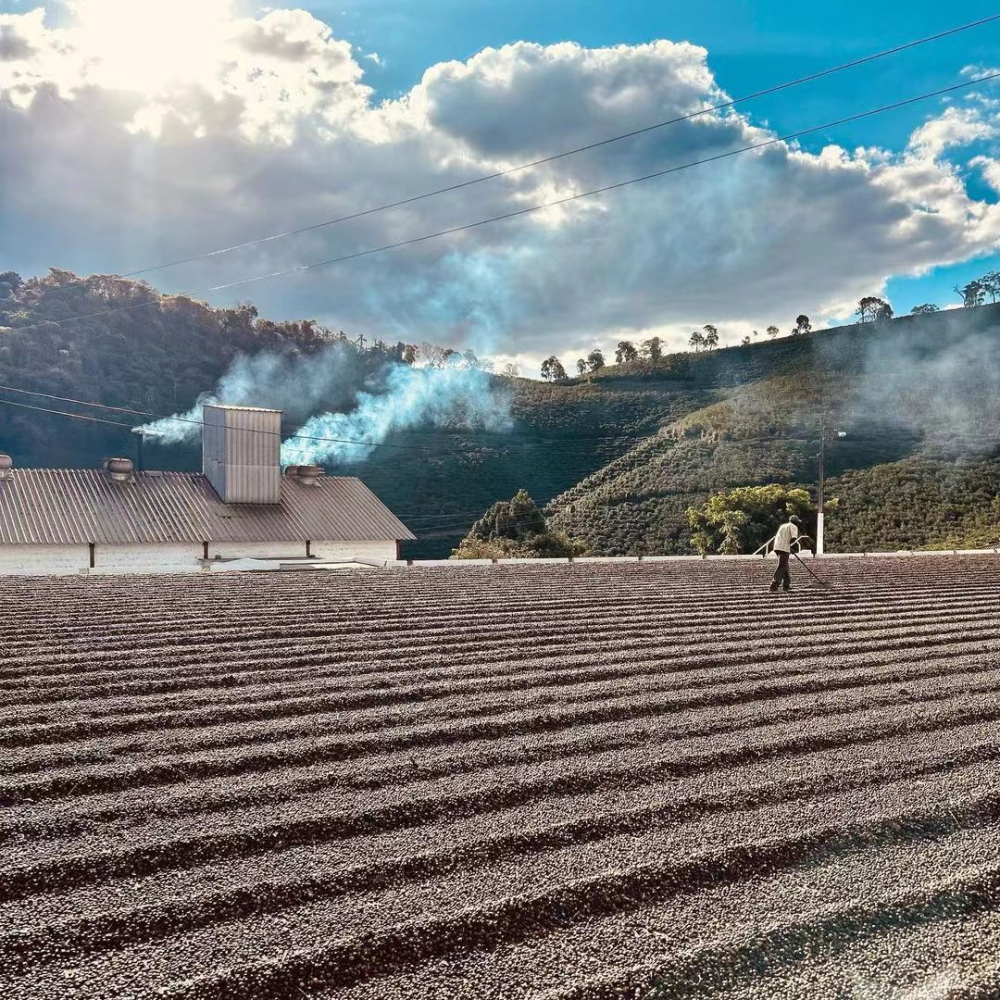
Brazilian coffee-growing terrain is divided into highlands (above 500 meters in elevation) and plains (below 200 meters), with varieties mostly from the Bourbon family. Flavors generally exhibit low acidity, prominent nuttiness, and a balanced, full-bodied mouthfeel. Though not particularly outstanding in the specialty market, it remains an indispensable component of espresso blends and is commonly used as the base for commercial blends and instant coffee.
Brazilian coffee beans are typically large in size, with intense aroma, gentle acidity, moderate bitterness, and a long-lasting aftertaste. They are smooth on the palate, with grassy notes and subtle bitterness, offering a mellow and refreshing cup—making them ideal for espresso preparation. Many barista-recommended espresso blends, such as Black Cocoa and specialty blends, often include Brazilian beans.
Take the Cerrado Mineiro region in Minas Gerais as an example. Located in the Brazilian highlands, it enjoys superior climatic conditions and fertile soil, making it highly suitable for cultivating high-quality coffee. The Red Bourbon produced here, with its stable and distinctive flavor profile, has become a single-origin favorite for many coffee enthusiasts.
Recommended pour over parameters are as follows: use a Kono filter, control water temperature at 88°C, use 15 grams of coffee, with a 1:15 coffee-to-water ratio, and grind to a medium-fine consistency (70–75% passing through a Chinese No. 20 sieve). For brewing, a three-stage pour is suggested: start with a 30-gram bloom for 30 seconds, then pour in a small circular motion until reaching 125 grams for the first pour. When the water level drops and is about to expose the coffee bed, continue pouring to 225 grams, then stop and wait until the water level drops again and is about to expose the coffee bed before removing the filter. The total brew time should ideally be between 2 minutes 05 seconds and 2 minutes 15 seconds.
Brewing Cerrado Mineiro Red Bourbon with these parameters results in a cup with pronounced sweetness, delicate caramel aromas, a strong nutty character, and a rich dark chocolate note in the latter stage. The overall mouthfeel is round and full, with a pleasant and lingering aftertaste.
The above content is compiled by CoffeeHunters, a coffee news website.


