







Introduction:Jamaican Blue Mountain coffee is hailed as a legend in the coffee world, and its status remains timeless. This article delves into the natural conditions of the Blue Mountain growing region, the historical roots of the Typica variety, and the rigorous grading system established by Jamaican authorities. It also explores the story behind the Clifton Estate and offers expert pour over recommendations, including filter choice, water temperature, coffee-to-water ratio, and pouring technique — helping you fully experience the classic flavor profile of Blue Mountain coffee: a balanced acidity, sweetness, and bitterness, with a smooth and rich body.
In the world of specialty coffee, although the Geisha variety has shined brightly in recent years, when it comes to historical significance and widespread recognition, Jamaican Blue Mountain coffee remains an irreplaceable classic. This coffee, frequently featured in Hong Kong and Taiwan dramas, captivated a generation with its unique charm. What exactly makes this coffee so beloved? This article begins with the unique geography and climate of the Blue Mountain region, traces the history of how the Typica variety was introduced to Jamaica, provides a detailed analysis of the strict grading system set by the Jamaica Coffee Industry Board (CIB) based on altitude and bean size, and takes you behind the story of the renowned Clifton Estate. Finally, we’ll reveal expert-level pour over advice, including the best filter, water temperature, coffee-to-water ratio, and pouring rhythm — helping you recreate that legendary cup with its perfectly balanced acidity, sweetness, and bitterness, and a velvety-smooth mouthfeel.
Every industry has its iconic pinnacle, and even as times change, those once-legendary products continue to live on. In the coffee world, Jamaican Blue Mountain is just such an icon. Even among non-specialist coffee drinkers, the five words “Jamaican Blue Mountain” are often widely recognized. Interestingly, many first-time coffee consumers may have first heard of this coffee through dialogue in Hong Kong and Taiwan TV dramas.
In the early days, Jamaican Blue Mountain coffee was extremely expensive, yet the market was flooded with many products misleadingly labeled as “Blue Mountain.” Many consumers were left puzzled after trying it: why didn’t the flavor live up to their expectations? So, what exactly gives Blue Mountain coffee its almost mythical status?
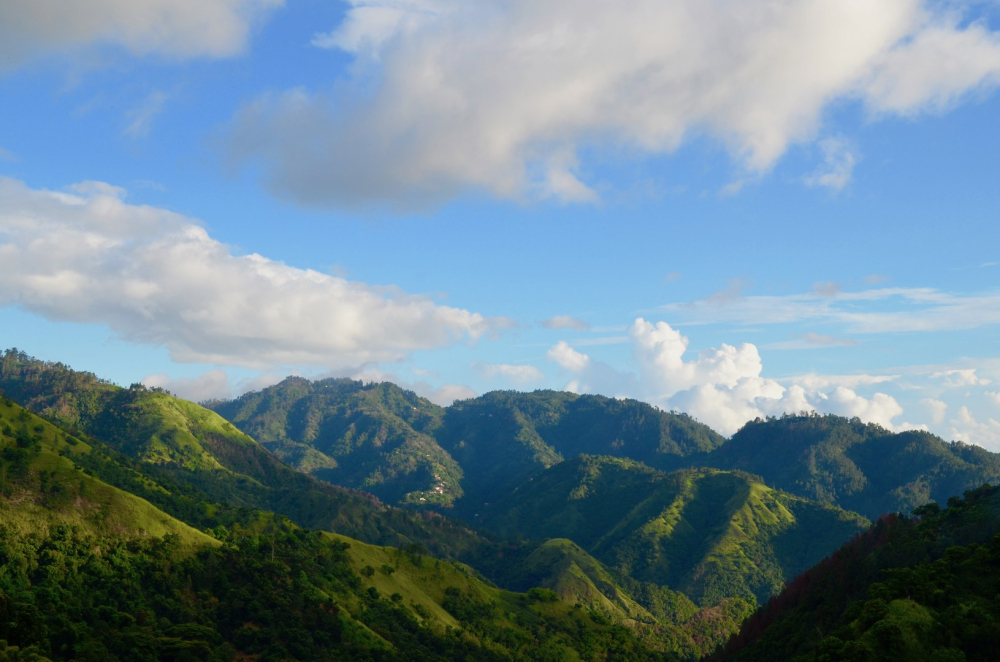
Similar to many well-known coffee origins, the “Blue Mountain” in Jamaican Blue Mountain refers to the growing region within the Blue Mountains of eastern Jamaica. This area lies at 25 degrees north latitude, within the global coffee belt, boasting climate and geographic conditions that are highly suitable for coffee cultivation.
The highest peak of the Blue Mountains exceeds 2,200 meters. The mountain soil is fertile, providing rich nutrients for coffee trees. Coupled with year-round cloud cover, fresh air, stable humidity, and significant day-night temperature variations, these conditions together create an almost perfect coffee-growing environment. Additionally, the Blue Mountains are surrounded by the vast Caribbean Sea. On clear days, sunlight reflecting off the deep blue sea casts shimmering light over the mountains, giving them a captivating bluish hue — hence the name “Blue Mountain.”
The origin of coffee can be traced back to Ethiopia in Africa, while Jamaica’s coffee cultivation history is closely tied to European colonial expansion in the 18th century. Around 1728, then-Governor of Jamaica, Sir Nicholas Lawes, introduced and planted descendants of the Typica variety originating from Martinique, bringing them from the foothills of St. Andrew Parish near Kingston. Planting gradually expanded to various slopes of the Blue Mountain range.
To this day, Jamaican Blue Mountain coffee still insists on using the historically significant Typica variety. Typica coffee trees have distinct growth characteristics: short branch spacing, wavy leaves, and young top leaves that are reddish-copper in color. The coffee produced typically exhibits elegant acidity, soft fruity notes, and a delicate mouthfeel — all contributing to the high-quality genetic foundation of Blue Mountain coffee.
However, not all coffee grown in Jamaica can be called Blue Mountain coffee. Jamaican authorities have extremely strict regulations on coffee grading and naming. According to the standards of the Jamaica Coffee Industry Board (CIB), the primary grading criterion is altitude.
Only coffee grown at altitudes above 1,000 meters qualifies as “Jamaican Blue Mountain Coffee”; coffee grown between 500 and 1,000 meters is classified as “Jamaican High Mountain Coffee”; and coffee grown below 500 meters is classified as “Jamaican Prime Coffee.”
In addition to altitude, bean size (i.e., screen size) is also an important grading factor. The grading is as follows:
• Grade 1: Screen size of 17/18, defect rate below 2%
• Grade 2: Screen size of 16, defect rate below 2%
• Grade 3: Screen size of 15, defect rate below 2%
• PB (Peaberry): Refers to round beans formed when only one seed develops inside a coffee cherry, screen size of 10, defect rate below 2%, and graded separately due to its rarity
Overall, Jamaican Blue Mountain Grade 1 is the highest grade, and its rarity and high standards are directly reflected in its pricing. Consumers should pay special attention to product labeling, as many products on the market that claim to have a “Blue Mountain flavor” or are “Blue Mountain blends” are often not actually from the Blue Mountain region.
To distinguish genuine Blue Mountain coffee, you can make a comprehensive judgment based on appearance consistency, flavor characteristics, and relevant certification documents. Even after roasting, Blue Mountain beans maintain a relatively uniform appearance without obvious size variation. Its flavor profile features an excellent balance of acidity, sweetness, and bitterness, with a rich and long-lasting aroma, and a full, smooth mouthfeel.
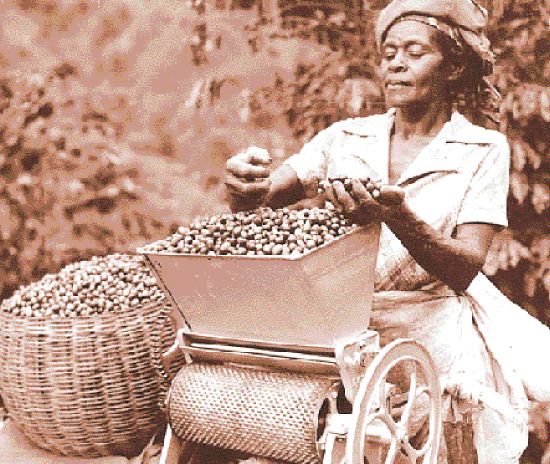
It’s worth mentioning that Jamaican Blue Mountain coffee is the only coffee in the world shipped in oak barrels. Every batch of exported Blue Mountain coffee must pass the strict certification of the Jamaica Coffee Industry Board and come with an official certificate. throughout the export process, specialized quality monitoring and sampling inspections are carried out to ensure the high standard of every bean lot.
Clifton Estate is one of the most representative coffee farms in the Jamaican Blue Mountain region, with a history dating back to the late 18th century. This estate was once taken over by a gentleman who had lost his beloved, inspired by a touching story. It was later transformed into a public tourist destination, allowing more people to get close to this magnificent mountain range and lush forest.
By the early 20th century, Clifton Estate had become one of the largest coffee plantations in Jamaica. In 1978, the Sharp family took over the estate, which at the time was overgrown with weeds and wild coffee trees scattered everywhere. It wasn’t until 1984 that family member Charlie Sharp resolved to devote himself to coffee cultivation, initiating the estate’s revival. Starting in 2003, Charlie and his brother traveled to major coffee regions around the world to gain experience, refined the traditional fully washed processing method, and introduced advanced equipment, eventually creating one of the largest professional coffee processing facilities in Jamaica — BMCP.
Clifton Estate maintains extremely strict quality control over its green coffee beans, and was awarded the honor of “Best Coffee Producing Region” for the 2017/2018 harvest season. Many specialty coffee shops regard Clifton Estate’s products as the benchmark when selecting Blue Mountain Grade 1.
Generally speaking, Jamaican Blue Mountain Grade 1 coffee is commonly medium-dark roasted. This method fully brings out the rich aroma characteristic of Blue Mountain coffee, while retaining a full-bodied and silky mouthfeel.
So, how can you brew Blue Mountain coffee at home to achieve its optimal flavor? Here are expert-level pour over recommendations:
• Filter: KONO
• Water Temperature: 88°C
• Coffee Dose: 15 grams
• Coffee-to-Water Ratio: 1:15
• Grind Size: Approximately 75% passing through a Chinese Standard No. 20 sieve (medium-fine grind)
Steps are as follows:
1. First, pour about 30 grams of hot water for a 30-second bloom to activate the release of coffee flavors.
2. Then, slowly pour with a thin stream in a circular motion from the center outward until reaching 125 grams.
3. When the water level in the filter drops to the point where the coffee grounds are about to be exposed, continue pouring in a circular motion until reaching a total of 225 grams.
4. Control the total extraction time to around 2 minutes to achieve the best balance.
The brewed Blue Mountain Grade 1 coffee delivers a rich nutty profile upon entry, with a silky-smooth mouthfeel and a buttery texture. The finish lingers with notes of dark chocolate, where acidity, sweetness, and bitterness are perfectly integrated — truly a classic among classics.
The above content is compiled by CoffeeHunters, a coffee news website.


