







Introduction:The success or failure of espresso extraction often hinges on precise control of grind size. Even the slightest deviation can lead to over-extraction or under-extraction. This article will guide you from the basics, showing how to adjust to the optimal grind size based on bean characteristics and extraction conditions, and explain why pre-ground coffee is detrimental to flavor — an essential skill every espresso enthusiast should master.
Among the many parameters in coffee extraction, grind size is undoubtedly the most critical and the most challenging to master, especially when making espresso. Compared to pour over, espresso demands a much finer grind, where even a difference of just 0.1 on the grinder scale can result in vastly different outcomes. To produce a balanced and flavorful shot of espresso, correctly setting the grind size is an absolutely indispensable foundation.
Many people know that espresso requires a finer grind than pour over, but what exactly counts as “just right” is often unclear. In reality, espresso is extracted under high pressure in a short time, so any minor change in parameters is magnified — both the complexity of flavors and the efficiency of extraction are directly affected by grind size. If the grind is too fine, water flows more slowly, which can easily lead to over-extraction, resulting in bitter and harsh flavors with a heavy mouthfeel. Conversely, if the grind is too coarse, water flows too quickly, leading to under-extraction, with weak flavors and overly prominent acidity.
For beginners just getting into espresso, if you want to quickly find the right grind size, it’s recommended to follow these two main steps: first, determine a general grind range, then make finer adjustments based on the actual flavor and flow rate of the extraction.
The first step is to find a rough grind range. Beginners are advised to start by adjusting the grinder to a fineness close to that of flour. You can pinch the coffee grounds between your fingers to feel whether they are fine and uniform, without any noticeable particles. Generally, depending on the roast level, the starting point for grind size will also vary. For example, medium-dark roasted blends — such as those with buttery or dark chocolate notes — because they are roasted longer and have better expansion properties, with stronger water absorption, can be ground slightly coarser. On the other hand, medium-roasted single-origin beans, such as sun-dried Red Cherry SOE or Kagoshima Hua Kui SOE, which are harder in texture, must be ground finer to effectively extract their intended flavors.
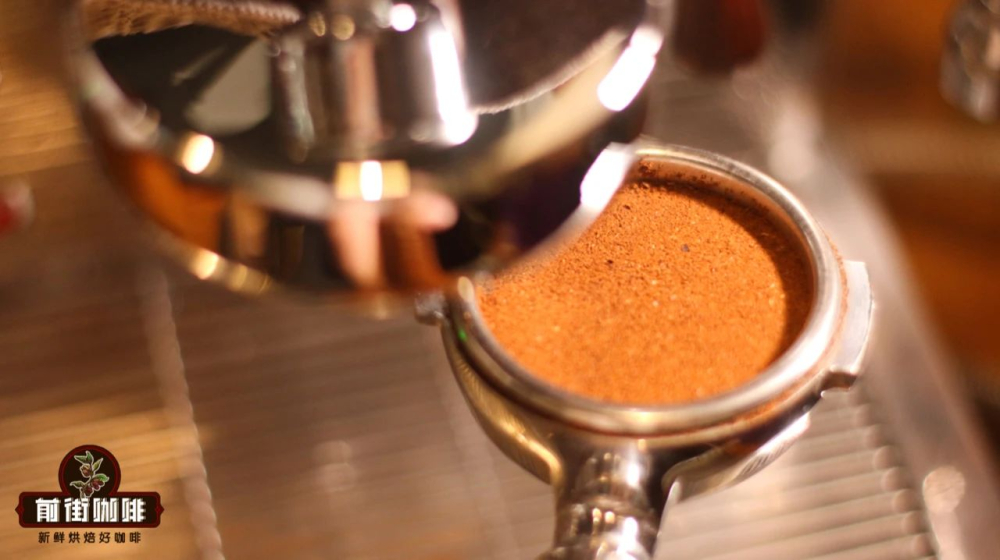
At this stage, it’s recommended to use the standard coffee-to-water ratio of 1:2, and to control the extraction time between 20 to 30 seconds. The amount of coffee can be set according to the size of the portafilter basket — for example, use 18 grams of coffee for an 18g basket, or 20 grams for a 20g basket. Once the coffee dose and ratio are fixed, making fine adjustments to the grind size to bring the extraction time into the above range is a very practical starting approach. If the extraction time exceeds 30 seconds, it means the grind is too fine, and you should make it coarser; if it’s less than 20 seconds, the grind is too coarse and needs to be adjusted finer.
The second step is to further optimize the grind settings based on actual extraction performance and flavor feedback. Even if the extraction time falls within the ideal 20–30 second range, it doesn’t necessarily mean the flavors are ideal. At this point, you can taste the coffee to determine if further adjustments are needed. If the coffee tastes noticeably sour or thin, it usually indicates the grind isn’t fine enough, and you can adjust it a bit finer. On the contrary, if the coffee shows obvious burnt bitterness or astringency, it may be due to over-extraction from too fine a grind, and in this case, you can make the grind coarser or adjust the coffee-to-water ratio to 1:1.8 to achieve a more balanced taste.
Additionally, some readers might ask: “If I can’t adjust the grind myself, can I just buy pre-ground coffee?” Although pre-ground coffee is available on the market, it is generally not recommended for espresso. First, the grind size required for espresso is extremely fine, which causes the coffee’s aroma and flavor compounds to volatilize more easily, and carbon dioxide to dissipate rapidly, not only affecting crema development but also significantly diminishing the overall quality of the coffee. Second, because factors like weather, humidity, and the coffee beans’ degassing status can vary daily, the grind size for espresso almost always needs daily fine-tuning to maintain stable extraction quality. Therefore, if you truly want to enjoy the pleasure of manually brewing espresso, learning to adjust the grind yourself and choosing freshly roasted whole beans is the right path to great coffee.

The above content is compiled by CoffeeHunters, a coffee news website.


