







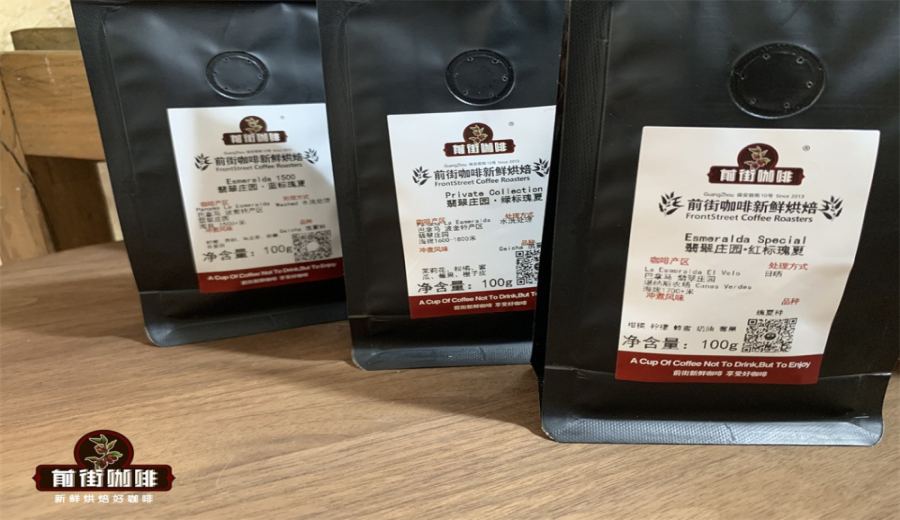
Introduction:Panama Geisha coffee is hailed as the top variety in the specialty coffee world. Especially the Red and Green labels from Hacienda La Esmeralda, which are dream coffees for many coffee enthusiasts. But do you know what sets their grades apart? Why are they so expensive? This article delves into the historical journey of Geisha from Ethiopia to Panama, explains the classification criteria and flavor profiles of the Red, Green, and Blue labels, and provides practical pour over brewing recommendations and cupping insights to help you better understand this uniquely flavored top-tier coffee.
When it comes to specialty coffee, many people first think of Panama Geisha. This coffee variety from Central and South America, with its distinctive floral and fruity aromas and delicate acidity, has long been ranked among the world’s top coffees. However, did you know that even though all of them come from Hacienda La Esmeralda, there are still differences between the Red, Green, and Blue labels? What exactly makes these grades different? And why does the Red Label Geisha often fetch sky-high prices at auction? This article will fully break down the grading logic and flavor characteristics of Panama Geisha, and deeply analyze the reasons behind its high prices.
The fame of Geisha coffee can be traced back to the 2004 “Best of Panama” (BOP) competition. That year, Hacienda La Esmeralda first entered coffee beans from the high-altitude Jaramillo farm, and with its outstanding jasmine, citrus, bergamot, and berry aromas, as well as clean, bright acidity and aftertaste, it won the championship, shocking the entire coffee judging community. Since then, Geisha has not only become Panama’s pride but also quickly risen to one of the most sought-after specialty coffee varieties in the world.
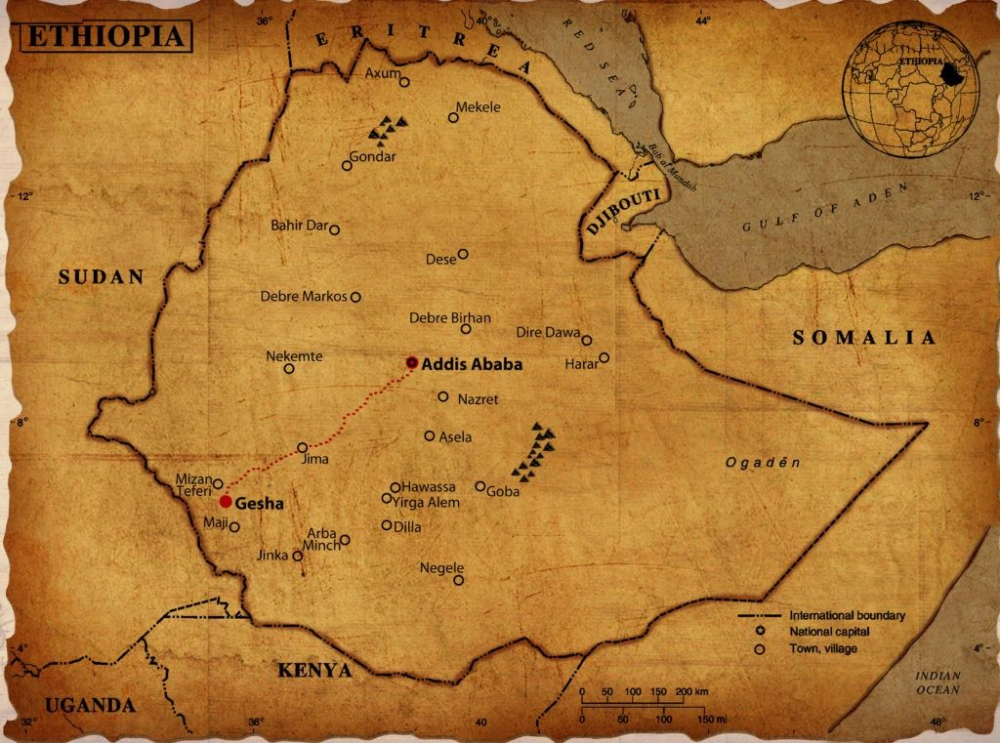
In fact, the Geisha variety originally did not originate in Panama but from the Kaffa forests in southern Ethiopia. In 1931, in search of new disease-resistant varieties, researchers collected this original species near Geisha Mountain and named it after the local mountain. Over the following decades, it was introduced to Kenya, Uganda, Tanzania, and even registered in 1953 at CATIE Research Center in Costa Rica as T2722, but it never gained much attention due to its tall and slender tree structure, low yield, susceptibility to diseases, and unremarkable flavor when grown at low altitudes.
It wasn’t until the 1960s, when CATIE introduced the T2722 plant to Panama, that the “rebirth” journey of Geisha began. In the 1990s, the Peterson family, founders of Hacienda La Esmeralda, discovered that even though other coffee trees around were affected by leaf rust, the Geisha plants remained healthy. They immediately decided to transplant the Geisha to high-altitude areas with frequent cloud cover and good shading, and gradually improved the precision of management. By 2003, after multiple cuppings, they finally confirmed that this coffee had an exceptionally unique floral, fruity aroma and a balanced sweet-and-acid profile — leading to the later BOP championship that stunned the world.
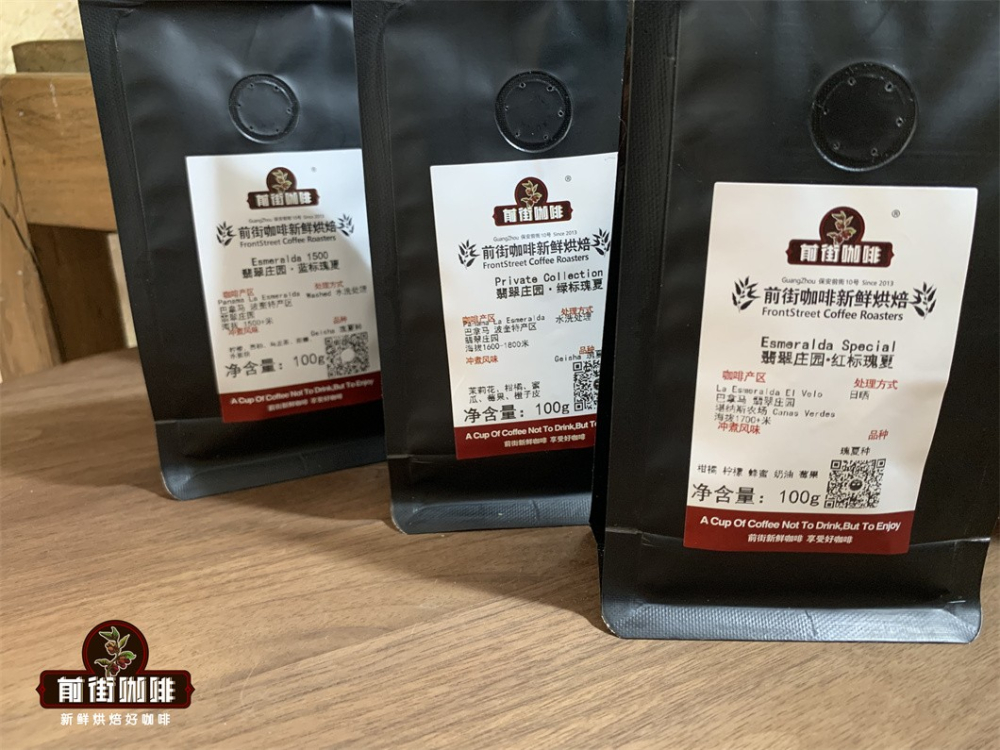
Hacienda La Esmeralda divides Geisha into three major grades based on growing region, altitude, and cupping performance: the Red Label (Esmeralda Special), the Green Label (Private Collection), and the former Blue Label (now called Las Rocas). Among them,the Red Label is the highest grade, sourced only from the two high-altitude farms of Jaramillo and Cañas Verdes (1600–1800 meters above sea level), and must pass strict cupping tests, usually scoring over 90 points. These coffee beans often come from specific micro-lots, such as the Mario plot, and are sold through separate auctions, hence also referred to as “auction lots.”
The Green Label Geishais categorized as a private collection lot. Though also grown at high altitudes, it does not specify individual plots and therefore does not participate in auctions. Though slightly lower in grade than the Red Label, it still retains the classic floral aroma, lemony acidity, and tea-like aftertaste of Geisha, making it a high-quality, more accessible choice for many coffee lovers. As for the former Blue Label, now renamed Las Rocas, it is typically sourced from lower-altitude regions. Though it still carries the Geisha genes, its overall performance is slightly inferior to the Red and Green Labels.
Growing Geisha is extremely demanding. Its leaves are thin, roots are fragile, and it is highly sensitive to light, water, and nutrient requirements. Therefore, it is only suitable for growth in high-altitude, shaded, fertile-soil, and cool-climate environments. High altitude not only extends fruit ripening time but also results in richer and more layered flavors. For this reason, Geisha production is extremely limited, and the need for manual, careful harvesting and processing naturally drives up costs.
In terms of processing methods, the Red Label Geisha often uses natural (sun-dried) processing, which brings out intense honey, citrus, rose, black tea, and complex fruit aromas. The Green Label, on the other hand, mostly employs washed processing, resulting in a fresher profile of lemon, berries, pomelo, and oolong tea flavors. To fully showcase the delicate floral and fruity notes of Geisha,it is recommended to use medium-light roasting, and fine-tune the roasting curve according to the processing method to preserve the maximum amount of aromatic compounds and vibrant acidity.
If you enjoy brewing Geisha using pour over methods yourself, here are expert-recommended parameters: Use a V60 dripper, control water temperature at 91–92°C, use about 15 grams of coffee, with a 1:15 coffee-to-water ratio, and grind size roughly equivalent to 80% of powdered sugar passing through a #20 sieve. Use a three-stage extraction — first pre-infuse with 30 grams of water for 30 seconds, then pour in a circular motion for 95 grams, wait for the bed to drop, then add the final 100 grams. Throughout the process, maintain a slow, centered stream to avoid over-extraction or channeling. After brewing, gently swirl the brew and start tasting from hot to experience the layered evolution of Geisha's flavors.
In summary, Panama Geisha is precious not only because of its exceptional flavor profile but also due to its rare production, strict grading system, and the challenges of high-altitude cultivation and meticulous management. Whether you’re a beginner or a seasoned coffee enthusiast, understanding the differences between the Red, Green, and Blue labels and mastering the correct brewing techniques will allow you to more fully appreciate this “artwork in the world of coffee.”
The above content is compiled by CoffeeHunters, a coffee news website.


