







Introduction:Blue Mountain coffee is world-renowned, yet the market is flooded with products of wildly varying quality — from cheap instant versions to high-priced counterfeits. Consumers often wonder: why is some Blue Mountain coffee so inexpensive? What’s the fundamental difference between genuine Jamaican Blue Mountain and the imitations sold in stores? This article delves into the authentic definition, historical background, and grading system of Blue Mountain coffee, while dissecting the three most common types of counterfeit practices to help you accurately identify and avoid purchasing pitfalls.
When it comes to Blue Mountain coffee, many coffee enthusiasts are familiar with the name, but in reality, the quality and price of "Blue Mountain" products on the market vary drastically. From instant powder selling for just a few dozen yuan per kilogram on e-commerce platforms to so-called Blue Mountain coffee beans priced at hundreds of yuan per pound, consumers are often left confused. What exactly is genuine Jamaican Blue Mountain coffee? Why are some products on the market so cheap? This article will take you through the definition, history, importation, and grading of Blue Mountain coffee to reveal its true nature, and teach you how to distinguish the three most common types of counterfeit or borderline products on the market.
First, it must be clarified: the so-called "authentic Blue Mountain coffee" refers to coffee beans grown in the core production area of Jamaica’s Blue Mountains, and must be circulated in the form of whole beans. These beans offer a balanced flavor profile, combining bright acidity, pronounced sweetness, and moderate bitterness in perfect harmony, with a rich and smooth mouthfeel — making them a globally recognized symbol of high-quality coffee. Their international fame soared during the 1970s and 1980s, when Blue Mountain coffee was the only one in the world to achieve an exceptional level of quality control. Coupled with strong acclaim from the Japanese market, it established its status as the "King of Coffee." Blue Mountain coffee gained popularity in Taiwan and mainland China in the 1990s, initially served only to foreign guests in high-end hotels, making it largely inaccessible to the general public. As a result, its image as "high price equals high quality" became deeply rooted.
It’s worth noting that in mainland China, many people are accustomed to equating "Blue Mountain No. 1" with all Blue Mountain coffee. However, Blue Mountain coffee is actually divided into four grades: No. 1, No. 2, No. 3, and Peaberry. Among these, Blue Mountain No. 1 is the highest grade, featuring whole, intact beans with the lowest defect rate and the most outstanding flavor performance. In earlier years, due to the lack of direct import channels in China, Blue Mountain coffee could only be introduced in small quantities via transshipment through Hong Kong, Taiwan, or Japan, making it even more rare. It wasn’t until 2010, when the Hangzhou Coffee and Western Food Industry Association signed a letter of intent with Jamaica to become the general agent for Blue Mountain green beans in China, that the first batch of original green beans officially entered via Ningbo Port in May 2011. Only then did China have a formal import channel for this coffee.
Authentic Jamaican Blue Mountain coffee beans are all imported in original wooden barrels, with each barrel limited to 15 kg, 30 kg, or 70 kg. This makes it difficult for small coffee shops to purchase independently, so most opt for group orders. However, this approach makes it hard to guarantee the purity of the beans or to prove their origin to customers. Some quality-focused shops, such as suppliers who have long imported beans from the Clifton Estate (a well-known Blue Mountain-producing farm in Jamaica), purchase entire barrels directly to ensure consistency and transparency in sourcing. In 2019, this supplier also obtained an official distributor certificate issued by the Jamaican government, with a retail price of about 158 yuan per 100 grams, and a cup price of around 60 yuan in stores — a reasonable range. If you see Blue Mountain coffee beans on platforms like Taobao being sold for just a few dozen yuan per kilogram, or large packages available for 300–500 yuan, consumers should be highly vigilant.
As for why Blue Mountain coffee used to be so expensive on the market, even reaching several hundred yuan? This was mainly due to the scarcity of quotas and the difficulty of importing into the Chinese market at the time, coupled with multiple layers of markups by agents, resulting in artificially inflated prices. As import channels have gradually opened up and China’s imports have increased year by year, prices should theoretically become more reasonable. Yet some merchants still exploit information asymmetry to sell low-quality or fake products at high prices — a risk consumers must not overlook.
Next, let’s look at the three most common types of "Blue Mountain coffee" products on the market that are instantly recognizable as fake. The first type is so-called "Blue Mountain instant coffee." Authentic Blue Mountain coffee is only roasted and ground as green or roasted beans, and is never made into instant powder. Any instant coffee labeled as "Blue Mountain" is almost always using the name as a marketing gimmick, with no actual connection to real Blue Mountain coffee.
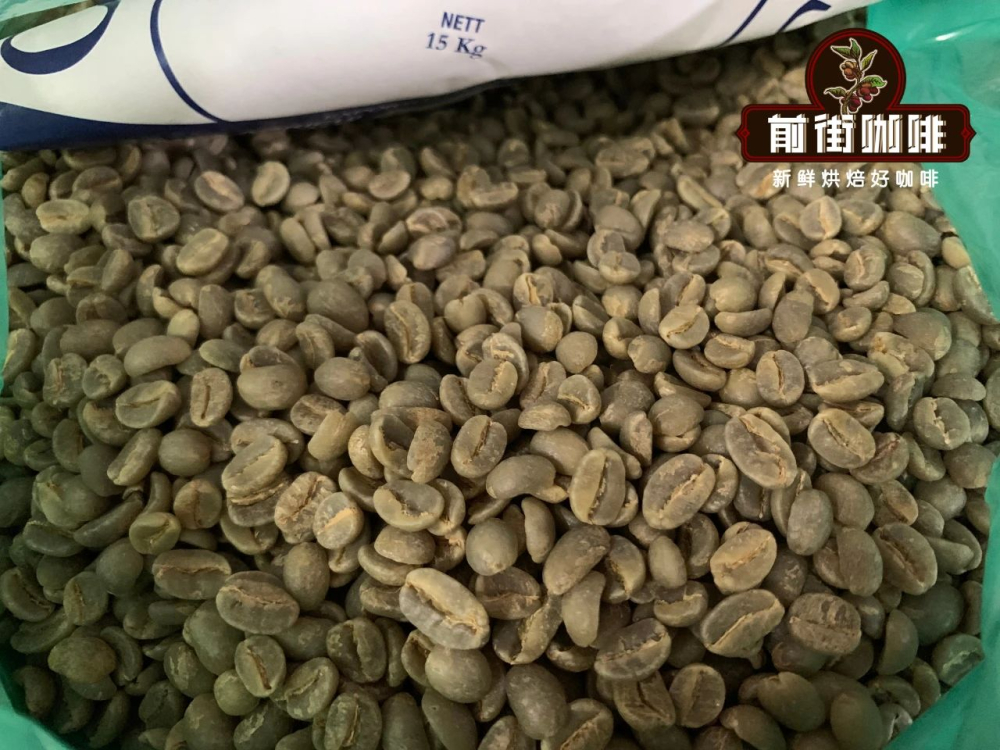
The second type includes coffee products labeled as "Blue Mountain flavor" or "Blue Mountain blend." Although these products do not directly claim to be authentic Blue Mountain, they often use names like "Blue Mountain flavor coffee" or "Blue Mountain blend," and are actually made from coffee beans from other regions, roasted dark or specially blended in an attempt to mimic the flavor characteristics of Blue Mountain coffee. However, these products are fundamentally not Blue Mountain coffee — they are merely imitations under commercial packaging.
The third type is the easiest to judge: "Blue Mountain coffee" with unreasonably low prices. For example, if a product claims to be Blue Mountain coffee but is sold at an extremely low price (such as just a few dozen yuan per kilogram), consumers can almost be certain it’s fake. After all, the production cost, transportation, and import procedures for Blue Mountain coffee are complex — genuine products simply cannot be widely circulated at such low prices. If the price is too low, it often hides low-quality beans, counterfeits, or even completely unrelated coffee beans.
In summary, identifying genuine Jamaican Blue Mountain coffee hinges on understanding its definition, origin, grade, and import method. True Blue Mountain coffee beans come exclusively from the core production area of Jamaica’s Blue Mountains, are imported in original wooden barrels, and are graded into No. 1 to No. 3 and Peaberry, with No. 1 being the top tier. Meanwhile, the commonly seen instant products, flavored blends, and suspiciously cheap so-called Blue Mountain coffee on the market are almost all counterfeits or misleading products. Mastering these basic facts is key to making informed purchasing decisions and truly savoring the unique charm of Blue Mountain coffee.
The above content is compiled by CoffeeHunters, a coffee news website.


