







Introduction:Global food giant Nestlé has announced that Laurent Freixe, who is familiar with the Latin American market, will succeed as CEO, officially taking office in September. This move is seen as a strategic shift by Nestlé back to promoting from within and emphasizing its core brands. The new CEO emphasized focusing on key markets and brands, rather than large-scale mergers and acquisitions. We take an in-depth look at the background of this personnel change, Freixe’s leadership style, and the performance of different regions in Nestlé’s latest financial report—especially the continuously growing Latin American market—to help you grasp the latest developments in the global coffee industry.
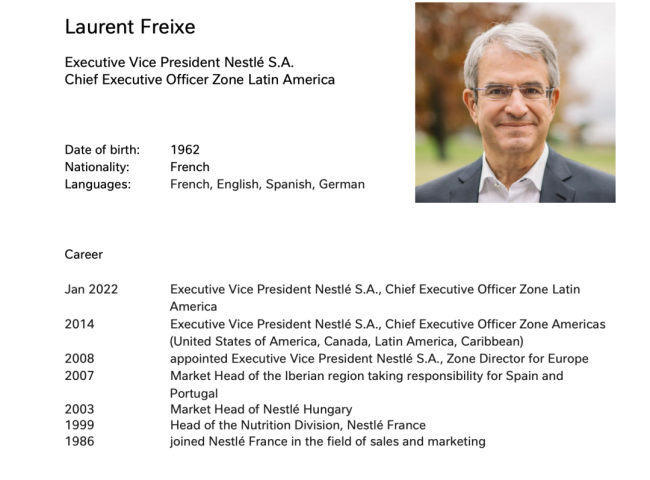
Nestlé, the world’s leading food company, recently announced a major personnel change, with current Executive Vice President and head of the Latin America region, Laurent Freixe, replacing Mark Schneider as the group’s new CEO, expected to officially take the reins in September. This marks the first time in eight years that Nestlé has promoted a senior leader from within, which is interpreted by outsiders as the board’s intention to reshape corporate culture and return to a development path centered on core business.
At the same time, Nestlé also confirmed that current CEO Mark Schneider (Mark Schneider), who has served for eight years, will step down from his positions as CEO and board member, ending his tenure. Looking back at Schneider’s tenure, Nestlé actively expanded its coffee footprint through acquisitions, including purchasing specialty coffee brand Blue Bottle for $3.3 billion in 2017, and reaching an agreement with Starbucks in 2018 to gain the rights to sell its products and services outside of Starbucks stores, filling a gap in Nestlé’s retail channel. In addition, he boldly disposed of non-core assets, such as selling Nestlé Skin Health for 70 billion Swiss francs and acquiring dietary supplement company The Bountiful Company for $41 billion.
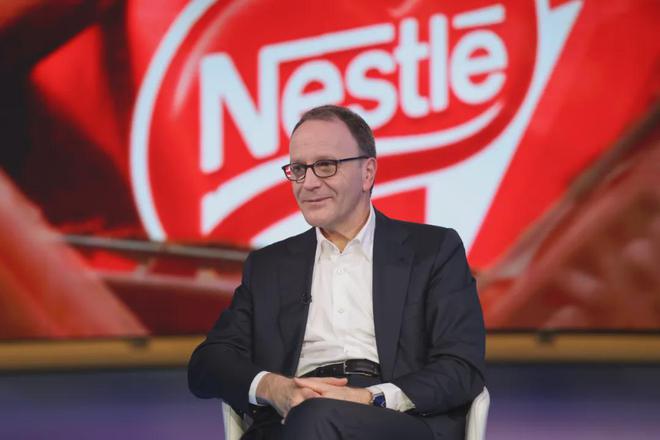
In response to media questions, Laurent Freixe clearly pointed out the difference in his strategic thinking compared to his predecessor. He stated that in the future, he will focus more on Nestlé’s core brands and main markets, “My focus will be on core businesses. Of course, we’re not opposed to mergers and acquisitions, but that’s not the top priority. What we prioritize is concentrating resources on the core.” This suggests that Nestlé may slow down its pace of large-scale M&A in the future and instead deepen its efforts in existing markets and product lines.
In recent years, affected by a global economic slowdown and weakening consumer spending power, many multinational companies have adjusted their senior management in hopes of driving reform through leadership changes. Just before Nestlé announced its new CEO, Starbucks also announced late last week that Brian Niccol would succeed as CEO, with current CEO Laxman Narasimhan stepping down immediately. The market generally believes that Starbucks’ move aims to salvage its weak performance in recent years and accelerate digital transformation. The news sent Starbucks’ stock soaring by over 20%.
It is worth noting that among many markets, Nestlé’s Latin America region is one of the few that has continued to grow in recent years. According to Nestlé’s financial report for the first half of 2024, global total sales fell by 2.7%, reaching 45 billion Swiss francs, with exchange rate fluctuations causing a 4.4% negative impact and asset divestitures dragging down 0.4%, mainly related to the European frozen pizza joint venture between Nestlé and PAI Partners.
Looking at regional performance, among Nestlé’s five major global regions, only the Latin America region maintained positive growth in both 2023 and the first half of 2024, while the other four major regions—North America, Europe, Greater China, and AOA (Asia, Oceania, and Africa)—all showed declining trends. The person in charge of the Latin America region is none other than Laurent Freixe, who is about to become the global CEO.
Since 2022, Nestlé has reorganized its global business into five regions: North America, Latin America, Europe, Greater China, and the AOA region. Among them, Greater China has been separated from the original Asia-Pacific and Africa region, not only accelerating decision-making efficiency but also allowing the voice of the Chinese market to be more directly conveyed to headquarters, highlighting its importance.
Financial data shows that the sales of the Latin America region increased from 11.819 billion Swiss francs in 2022 to 12.196 billion Swiss francs in 2023; in the first half of 2023, it was 6.082 billion Swiss francs, and by the first half of 2024, it further increased to 6.166 billion Swiss francs. In the context of a global economic slowdown, the region has still been able to grow steadily, thanks in no small part to the leadership of Laurent Freixe, making him a top candidate to succeed as global CEO.
Nestlé’s sudden high-level management change has sparked heated discussion in the market. Some netizens have said that this move by Nestlé demonstrates a corporate culture of “promoting the capable and removing the incompetent,” which helps with the company’s long-term development and market competitiveness. As for whether there will be further adjustments in the regional management team at Nestlé in the future, it remains to be seen.
The above content is compiled by CoffeeHunters, a coffee news website.


