








Introduction:Have you ever encountered overly sour, bitter, or even astringent flavors when brewing pour over coffee? Even when following the steps, the taste just doesn’t turn out as expected? This article delves into the principles of extraction to explore the common causes behind sour, bitter, and astringent flavor imbalances in pour over coffee, and provides practical adjustment methods — including grind size, water temperature, coffee-to-water ratio, pouring technique, and filter choice. It also includes actual brewing parameters for two classic coffee beans to help you consistently brew balanced, smooth, and flavorful coffee.
Pour over coffee may seem simple, but brewing a cup with well-balanced flavors and a clean mouthfeel actually involves quite a bit of skill. Many people brewing at home often find their coffee too sour, too bitter, or unpleasantly astringent, leading them to wonder if they’ve made a mistake. In fact, these issues are mostly related to various parameters and techniques during the extraction process. Once you understand the underlying causes, you can make gradual adjustments to find the brewing method that works best for you.
First, let’s look at why coffee can taste overly sour. The perception of sourness, sweetness, and bitterness in coffee depends on the amount of various soluble substances dissolved by water. When a cup of coffee is dominated by sharp acidity from start to finish, it’s usually due to under-extraction — meaning the water hasn’t fully extracted the flavor compounds from the coffee beans. Common causes include using a grind that’s too coarse, water that’s too cool, or an extraction time that’s too short. In such cases, the acidity tends to stand out prominently, but sweetness and body are noticeably lacking, possibly accompanied by weak aroma and thin mouthfeel.
If you’re using a light roast coffee bean with pronounced fruity acidity — such as those with passion fruit or citrus notes — under-extraction can easily make the acidity overly sharp and unappealing, with an aftertaste that fails to linger. It’s recommended to adjust the grind to a fineness akin to granulated sugar, pair it with a water temperature of around 92°C and a coffee-to-water ratio of 1:15, and use a multi-pour technique to control the total extraction time to about 2 minutes. This helps achieve more complete flavor release and improves the balance between sweetness and acidity.

Next, let’s talk about bitterness and astringency — aspects that deter many people. Bitterness is a taste that’s relatively easy to detect, whereas astringency is more unique. Unlike sourness or sweetness, which are basic tastes, astringency is more akin to a tactile sensation or roughness, often causing discomfort, especially in dark roasted coffee. However, it’s important to note that dark roast doesn’t necessarily equate to bitterness and astringency. Some dark roast beans with flavors of caramel, spices, and dark chocolate — such as the classic Indonesian Golden Mandheling — can actually showcase a rich and clean aftertaste when brewed properly.
The common causes of bitter and astringent coffee include the following. First isoverly long extraction time, especially when using 15–16 grams of coffee grounds. If the total brew time exceeds 2 minutes and 30 seconds, larger molecules — such as those responsible for bitterness and astringency — are more likely to be released, resulting in a coarse mouthfeel. If you notice that the coffee bed surface is left with wet, sticky, muddy grounds, it may be due to excessive fine particles accumulating and impeding proper drainage; in this case, consider grinding slightly coarser. If the coffee grounds settle at the bottom with a flat surface, it might be because the water flow during pouring is too weak, leading to uneven saturation of the filter layer. It’s advisable to increase the water flow slightly after the bloom to raise the water level to abouttwo-thirds of the filter height, facilitating better water flow.
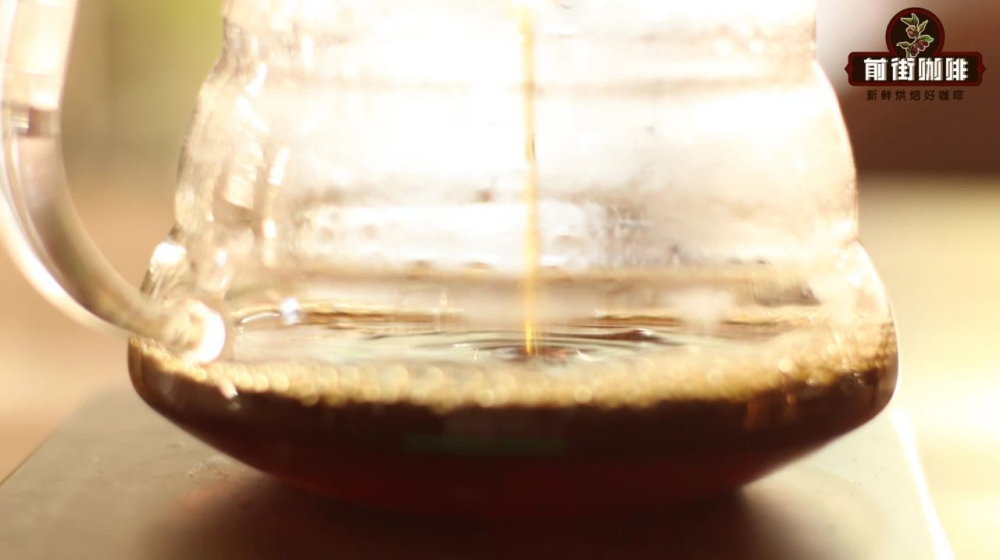
The second common cause isexcessively strong or unstable water flow. Many people tend to pour water quickly with a high flow rate during pour over, but if not controlled properly, it can lead to uneven agitation of the coffee bed — causing some grounds to be over-extracted while others are under-extracted, resulting in a sour and astringent taste. It’s recommended to use a stable and vertical water stream, holding the kettle about 3–4 centimeters above the coffee bed, and pour in slow circular motions. This helps achieve even extraction and reduces the likelihood of astringency and off-flavors.
The last often overlooked factor is thematerial and design of the filter cone. Take ceramic filter cones, for example: their high specific heat capacity helps maintain a stable brewing temperature after preheating, but this may also increase overall extraction efficiency — especially in the later stages, where excessive astringent substances can be released. If you suspect your ceramic filter cone is causing astringency, try lowering the water temperature slightly by 2–3°Cto reduce the risk of over-extraction and achieve a smoother mouthfeel.
In summary, achieving balanced flavor in pour over coffee hinges on understanding how each step affects extraction. From grind size and water temperature to coffee-to-water ratio, pouring technique, and filter selection, every detail influences the final flavor profile. Beginners are advised to start with fixed parameters, then gradually experiment and record changes with each brew to identify the combination that suits their taste and coffee beans best. With a grasp of the fundamental principles and adjustment directions, you can easily brew a pour over coffee with balanced acidity and sweetness, and a refreshing mouthfeel — even at home.
The above content is compiled by CoffeeHunters, a coffee news website.


