







Introduction:Panamanian Geisha coffee has long been a dream brew for specialty coffee enthusiasts, thanks to its distinctive fruity and floral notes. But what makes Geisha from Panama stand out? This article will take you on a deep dive into the geographic advantages of Panama’s Boquete region, as well as the grade differences, processing methods, and flavor profiles of Emerald Estate’s Red and Green Label Geishas. We’ll also provide practical pour over parameters to help you better grasp the essence of this top-tier coffee.
In the world of specialty coffee, Panamanian Geisha is almost synonymous with high quality and rarity. When people talk about Geisha, Panama is often the first place that comes to mind—even though Costa Rica, Colombia, and Guatemala also grow this variety, Panamanian Geisha’s reputation remains unmatched. This is not only due to its unique microclimate and soil conditions, but also closely tied to Emerald Estate’s rigorous grading system and global marketing strategy.
Situated in Central America, Panama borders Costa Rica and Colombia. The terrain is predominantly mountainous, with the central mountain range stretching from east to west, allowing high-altitude areas to trap cool air and create an environment ideal for coffee cultivation. Especially in mountainous regions over 6,500 meters above sea level, the unique cool and rainy microclimates of Boquete and Candela offer perfect growing conditions for Geisha.
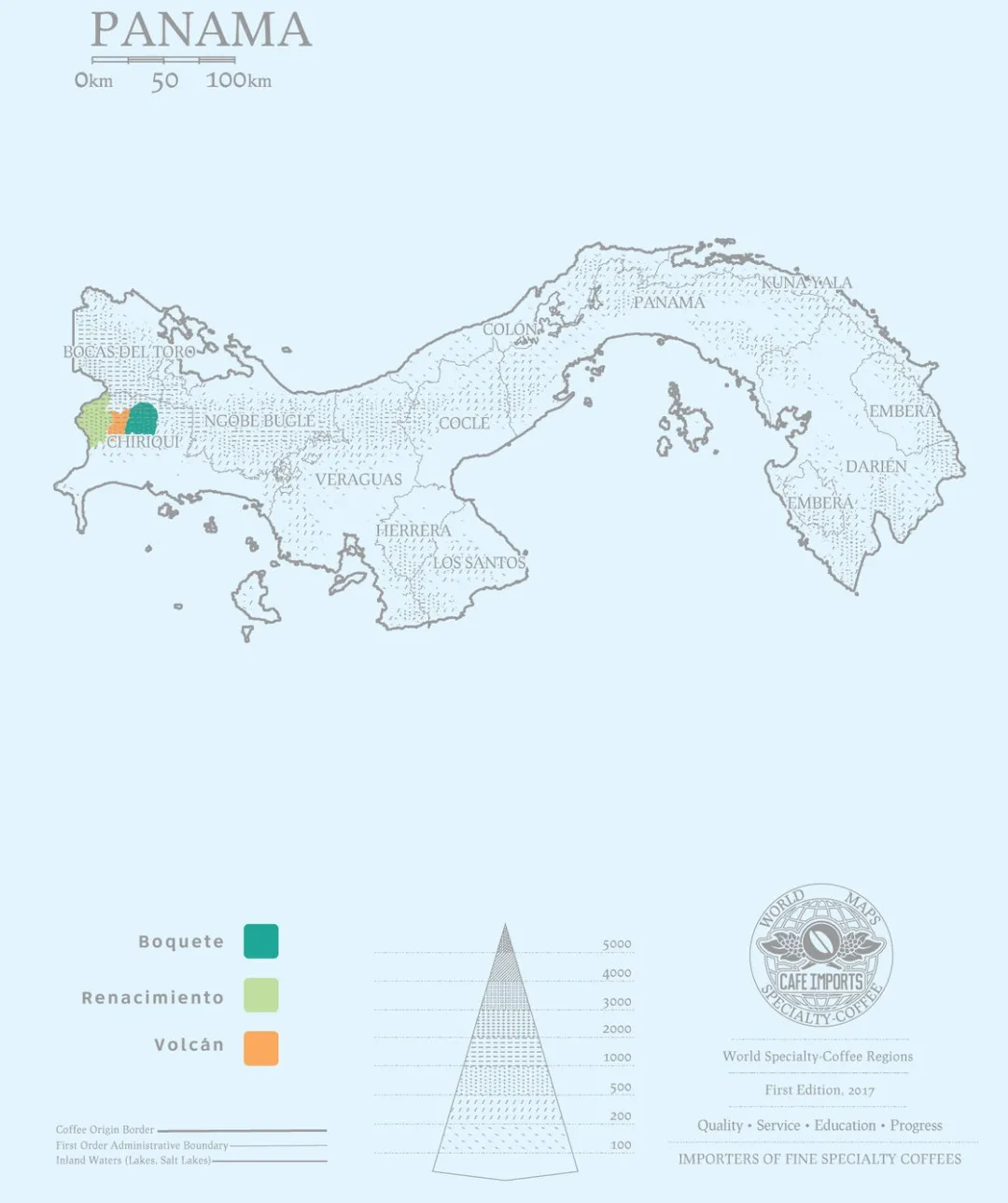
Panama is divided into 10 provinces and 5 indigenous regions, with specialty coffee primarily concentrated in the western Chiriquí Province. This can be further subdivided into three major producing areas: Boquete, Volcán-Candela, and Renacimiento. Both Boquete and Volcán-Candela are surrounded by the Volcán Barú (also known as Barú Volcano), an active volcano reaching 3,477 meters in elevation. The mineral-rich soils around this volcano form a crucial foundation for growing high-quality coffee.
The history of coffee cultivation in Panama dates back to the late 18th century, around the 1780s, when a retired British naval officer first introduced Typica and Bourbon varieties to the Boquete Valley. Since initial plantings were mostly at lower altitudes, farmers later relocated cultivation to higher elevations—particularly around the Barú Volcano—to avoid pests and diseases, laying the groundwork for the later introduction and development of the Geisha variety.
After the collapse of the International Coffee Agreement in 1989, international prices for green coffee beans plummeted, impacting Panama’s traditional commercial coffee industry. To adapt to market changes, local producers turned toward the specialty coffee route. In 1996, seven coffee farms jointly established the Panama Specialty Coffee Association (SCAP) and launched the first Best of Panama (BOP) competition along with an online auction system. This move successfully attracted international buyers and paved the way for the rise of the Geisha variety.
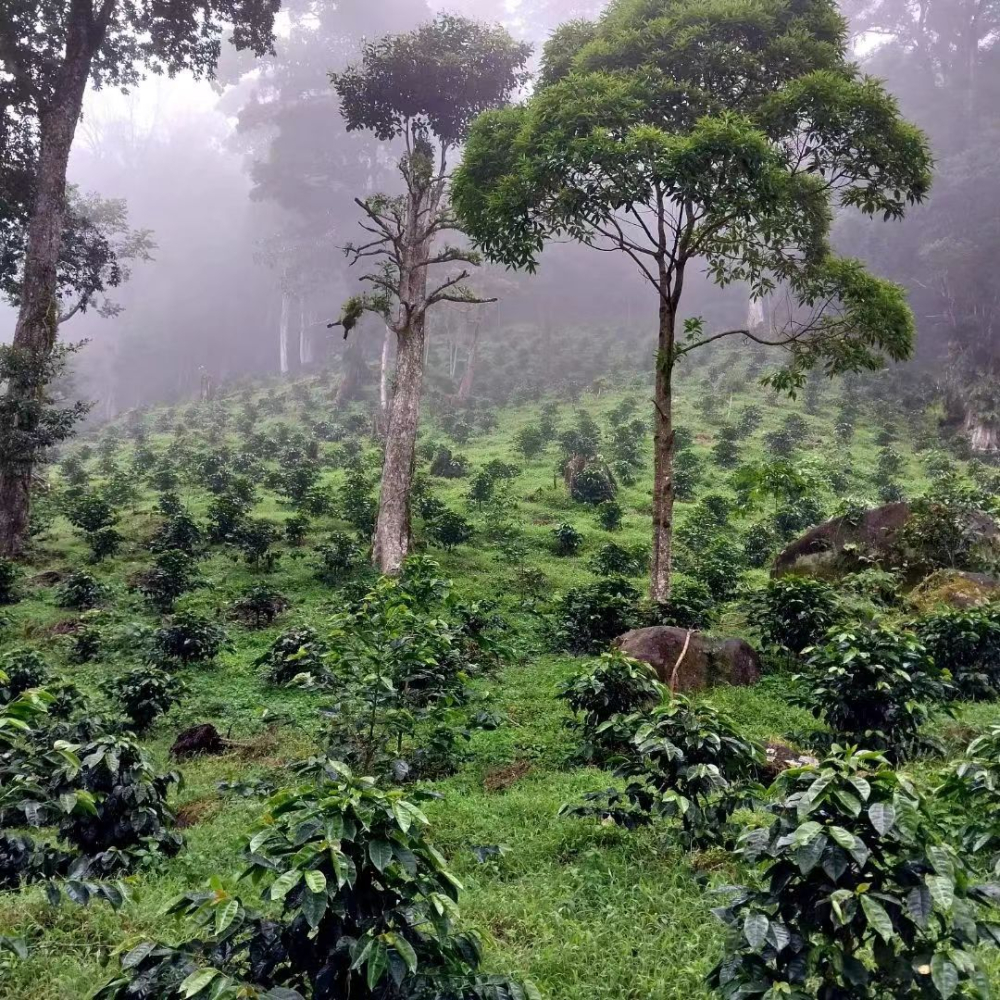
When it comes to Panamanian Geisha, most coffee enthusiasts immediately think of the Boquete region. This area not only boasts the presence of the Barú Volcano, but also enjoys a unique microclimate shaped by the convergence of moist airflows from the Caribbean Sea and the Pacific Ocean—resulting in large day-night temperature variations and a humid, foggy environment. Typically, temperatures here range between 11°C and 27°C. Coupled with high altitude and fertile volcanic soil, coffee cherries ripen more slowly, allowing them to accumulate richer flavor compounds and exhibit complex floral-fruity notes along with bright acidity.
Emerald Estate (La Esmeralda) is one of the key forces behind Geisha’s global fame. In 2004, the estate won the Best of Panama competition with the Geisha variety, subsequently breaking auction price records year after year. Not only committed to cultivating Geisha, the estate was also the first to introduce a strict grading system based on varying altitudes, microclimates, and processing methods. It categorized Geisha into Red Label and Green Label grades, enabling consumers to choose different levels of Geisha flavor according to their preferences.
Emerald Estate owns three main Geisha-growing farms: Cañas Verdes, El Velo, and Jaramillo. Each farm is further divided into multiple small plots with differing altitudes and microclimates, contributing to a rich and diverse spectrum of Geisha flavor profiles.
In terms of grading, Emerald Estate classifies Geisha into three main brands: Esmeralda Auction (auction lots), Esmeralda Special (Red Label), and Private Collection (Green Label). The auction lots represent the highest-tier micro-lots of each year, known for their premium pricing and high demand. Red Label Geisha typically scores 91 or above in cupping tests, is grown at altitudes above 1,600 meters, and comes with detailed traceability information—including plot name, harvest date, processing method, and altitude—making it a must-try for advanced coffee lovers.
As for Green Label Geisha (Private Collection), it is a non-auction yet high-quality Geisha blend, mainly sourced from plots at altitudes between 1,600 and 1,800 meters. Its classic flavor profile features citrus, berries, and a tea-like quality, making it suitable for consumers on a budget who still want to experience the charm of Geisha. Starting in 2022, the Green Label also began indicating the origin plot, adding greater transparency to its flavor and making selection more informed.

If you plan to brew Panamanian Emerald Geisha at home using pour over, we recommend a medium-light roast for the Red Label. Use a grind size similar to superfine sugar, a water-to-coffee ratio of 1:15, and maintain a water temperature of 90–92°C. Employ a three-stage pouring technique with a total extraction time of about 2:30 to 3:00 to fully highlight its floral-fruity aromas and bright acidity. For the Green Label, slightly coarsen the grind to a white sugar level, reduce the water temperature to around 88–90°C to enhance its citrus and tea-like characteristics—ideal for those who prefer a cleaner, crisper cup.
The above content is compiled by CoffeeHunters, a coffee news website.


