







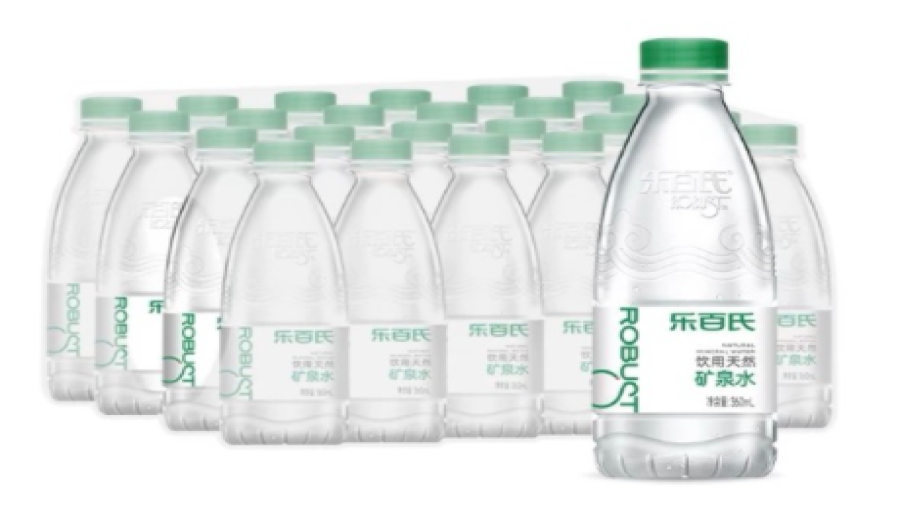
Introduction:Once ranked alongside Nongfu Spring and Wahaha, Robust has made a comeback to the market with 1-yuan mineral water, drawing attention. This article analyzes its brand journey, the pricing strategy of its new product, and explores the current competitive landscape of the bottled water market. For coffee enthusiasts, understanding water quality and pricing trends can help optimize water choices for pour over or extraction.
Robust, which once formed a "three-legged" dominance in the drinking water market alongside Nongfu Spring and Wahaha, has recently re-entered the bottled water arena with 1-yuan mineral water, becoming a market focal point. Founded in 1989, the brand has gone through twists and turns such as being acquired by Danone and changing hands, significantly reducing its market visibility. Now, facing challenges from established rivals and cross-industry newcomers like Pang Donglai, East Buy, and Sam’s Club, can Robust regain its market position with a low-price strategy? This article will outline Robust’s rise and fall, the background of its new product pricing, and analyze the current competitive dynamics of the drinking water market. For coffee lovers, it also offers insights into key considerations for selecting brewing water.
Looking back at the past few years, the bottled water industry once pursued premiumization, with the mainstream market price range generally settling around 2 yuan, and 1-yuan water almost disappearing. However, as consumer trends shift, 1-yuan water has made a comeback, sparking a new wave of price competition, with Robust being the latest entrant to the fray.
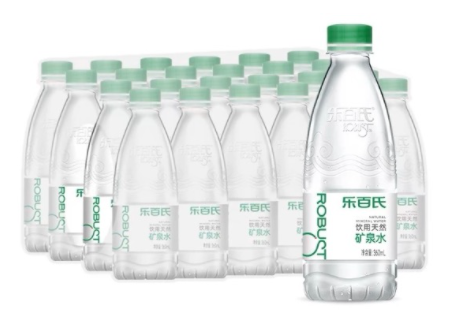
Robust recently launched 360ml and 550ml versions of its mineral water products on platforms such as its Tmall flagship store and Xiaohongshu e-commerce. The brand stated that the new products’ water source comes from deep underground rock fissures in the Longquan Mountain Range in Sichuan, demonstrating its determination to re-enter the bottled water market. Notably, the average price per 360ml bottle is about 1.08 to 1.65 yuan, a pricing strategy that reflects the intensity of competition in the current bottled water market.
Before the turn of the millennium, Robust was an important brand in China’s bottled water industry, although younger consumers may be less familiar with the name. Since its establishment in 1989, Robust gained fame with its innovative health drink "Robust Yogurt," and later its AD Calcium Milk quickly won market favor by meeting children’s calcium supplementation needs. Through a series of precise marketing strategies, Robust successfully built brand recognition, and between 1993 and 1998, its dairy products ranked first in national market share for six consecutive years.
In 1997, Robust entered the drinking water sector and invited Leon Lai, one of the then wildly popular "Four Heavenly Kings," to be its spokesperson. Thanks to extensive TV ad exposure and the star effect, Robust mineral water quickly gained a foothold in the market.
However, the good times didn’t last. After Danone Group acquired a stake in Robust, the brand gradually lost competitiveness amid fierce competition. In 2001, Robust’s annual sales were only 1 billion yuan, a stark contrast to Wahaha’s breakthrough of 6 billion yuan in the same year. In 2016, Danone transferred the Robust brand and its six factories located in Guangzhou, Beijing, Tianjin, Chengdu, Chongqing, and Zhongshan to Yingtou Holding Co., Ltd.
According to Tianyancha data, Robust (Guangdong) Drinking Water Co., Ltd. is still owned by Yingtou Holding, mainly dealing in products such as barrelled water and Robust bottled water. But to this day, Robust’s market presence has significantly diminished.
Robust’s launch of new mineral water products priced at 1 yuan is a strategic response to the current consumer market. According to the "2024 Interesting Lifestyle Report," price is the second most important factor for consumers when choosing food and beverages, accounting for 49.1% and second only to health-related components (such as sugar control and salt reduction). Clearly, Robust hopes to attract cost-conscious consumer groups with an affordable price.
However, whether Robust’s 1-yuan pricing strategy will succeed remains to be seen. In the current domestic bottled water market, in addition to traditional major players like Nongfu Spring and Wahaha, there are also cross-industry brands such as Pang Donglai, East Buy, and Sam’s Club, which have launched their own bottled water with unit prices similarly dropping to around 1 yuan, making the competition extremely intense.
For coffee enthusiasts, understanding the price and quality changes in the bottled water market can also help make smarter choices when selecting brewing water. As professional baristas often emphasize, the impact of water quality on coffee flavor cannot be ignored, and finding the right balance between suitable water quality and price is often key to everyday extraction.
The above content is compiled by CoffeeHunters, a coffee news website.


