







Introduction:Gain an in-depth understanding of the unique flavors and origin background of Finca Alto Cielo’s Panamanian Natural Geisha, while also exploring the grading differences among Hacienda La Esmeralda’s Red Label, Green Label, and auction-grade Geishas. This article provides a comprehensive reference—from variety origins and processing details to the best pour over recommendations for lightly roasted Geisha—helping coffee enthusiasts master the key points of appreciating and brewing this exceptional coffee.
The Geisha (Geisha) coffee variety has long been hailed as one of the top cultivars in the specialty coffee world, and Panamanian Geisha, with its complex and layered aromatic profile, is even more of a dream brew for many coffee aficionados. This article takes the Natural microlot Geisha produced by Finca Alto Cielo as a starting point, detailing its varietal origins, growing environment, and processing methods, while also delving into Hacienda La Esmeralda’s rigorous grading system for Geisha, including the differences between auction, Red Label, and Green Label. Additionally, we’ve compiled practical pour over suggestions and parameters to help you fully appreciate this delicately flavored coffee.
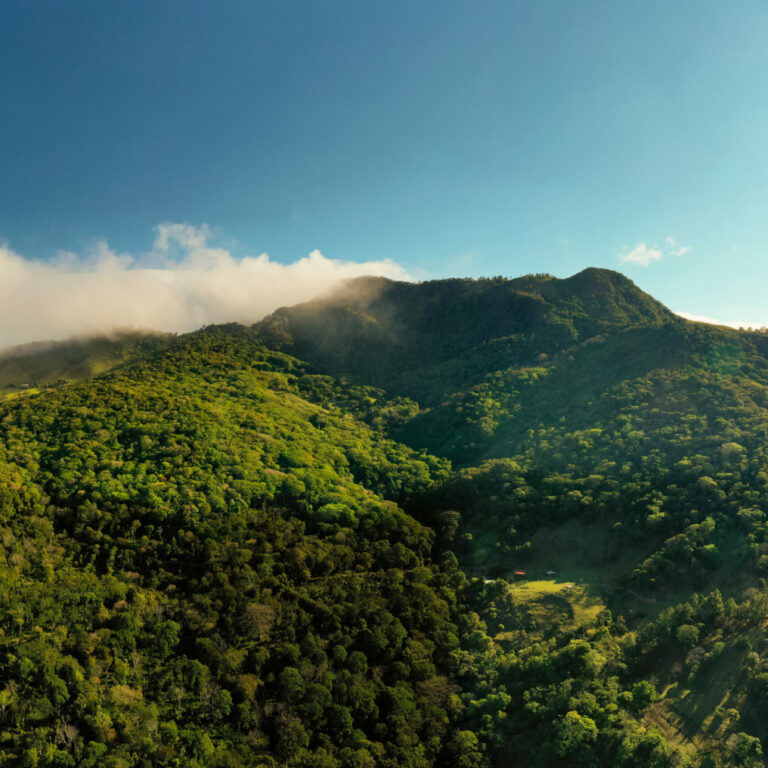
This Natural Geisha from Finca Alto Cielo is grown at an altitude of up to 1,750 meters in the Huila-Gigante region and is personally managed by the farm owner, Anyelo Sossa. The coffee undergoes an African raised bed slow natural process lasting 23 to 25 days, with only fully ripe coffee cherries carefully selected—defective and diseased fruits are removed to ensure flavor purity. During processing, the cherries are placed on shaded raised beds where temperature is well controlled, facilitating the slow development of flavors. This method imparts the coffee with bright acidity and the classic complex aromas typical of Panamanian Geisha, such as strawberry, melon, jasmine, and lemongrass, resulting in a richly layered and distinctive flavor profile.
The history of Finca Alto Cielo dates back to around 2011, when Mr. Eugene Altieri (nicknamed Don Gene) first experimented with planting Geisha at an altitude of 1,800 meters. The seeds came from the renowned Peterson family—whose coffees have consistently performed exceptionally well in Panama’s Best of Panama competition. Due to the region’s unique microclimate, Geisha became one of the farm’s main cultivated varieties. Anyelo has been involved in coffee cultivation since childhood, initially starting with Typica, but gradually shifting to the more disease-resistant Geisha and Tabi due to the threat of leaf rust. After years of varietal adjustments and technical improvements, he finally cultivated Geisha coffee with high flavor potential.
Beyond cultivation, Anyelo is also committed to improving the quality of life for coffee farmers in the region. In 2015, he established the Association El Paraiso (Paradise Association), bringing together 40 coffee farmers to collectively learn about quality management and infrastructure improvement, further raising the overall coffee standard of the region.
When it comes to the market positioning of Geisha, it can be said that it is currently one of the most famous and expensive specialty coffee varieties in the world, second only to Blue Mountain. Its flavor characteristics are closely tied to its growing environment, particularly requiring high altitudes, cloud cover, and nutrient-rich soil to produce its unique berry, floral, and delicate acidity profiles. It’s worth noting that the more challenging the growing conditions, the more astonishing the flavor expression Geisha can often deliver.
Speaking of the origins of Geisha, it was actually first discovered in 1931 in the Gesha forest of Ethiopia, later traveling through Kenya, Uganda, Tanzania, and Costa Rica, before finally being introduced to Panama in the 1970s. However, due to its scarce production and high cultivation barriers, Geisha remained largely overlooked for a long time. It wasn’t until 2003, when Hacienda La Esmeralda isolated and cultivated it independently, and then won first place in the 2004 Best of Panama (BOP) competition, that this variety began to attract global attention.
Hacienda La Esmeralda grades Geisha strictly based on altitude and cupping scores. Originally divided into Red Label, Green Label, and Blue Label—with the Red Label including both auction and non-auction lots—in 2022, the estate adjusted its product line, discontinuing the Blue Label and separating the auction lots under the independent “Esmeralda Auction” (Hacienda La Esmeralda Auction), which can only be obtained through bidding. For example, on August 17, 2022, lot ES-W-3-1 sold for a record-breaking $2,755 per kilogram, setting a new auction high for the estate.
Red Label Geisha is grown at altitudes between 1,600 and 1,800 meters, with cupping scores generally exceeding 90 points. It mainly comes from the Jaramillo and Canas Verdes regions and includes both washed and natural processed lots. Green Label Geisha, on the other hand, is relatively more affordable while still offering a high level of flavor performance. Although it does not participate in auctions, it is mostly a blend from different plots, so its flavor occasionally resembles that of the Red Label—especially the Natural Green Label, which often carries aromas of passionfruit and floral tea, with a balanced acidity and sweetness.
Many consumers often ask about the difference between Red Label and Green Label. Simply put, Red Label can be traced back to specific small plots, while Green Label is a blend from multiple areas without detailed plot information. If you’re on a budget but still want to try high-quality Geisha, the Green Label or non-auction Red Label are also excellent value-for-money choices.
For pour over recommendations of lightly roasted Geisha, since its flavor compounds are released more slowly, it is recommended to use a higher water temperature and finer grind to improve extraction efficiency. We suggest using a grind size with an 80% passing rate through a Chinese standard No. 20 sieve (close to fine sugar), with 15 grams of coffee grounds, brewed using a Hario V60 size 01 filter cone. The coffee-to-water ratio is recommended to be set at 1:15, with water temperature controlled at around 91°C. During brewing, start with a 30-second bloom using 30 grams of water to awaken the coffee grounds, then pour in a small circular motion until reaching 125 grams for the first pour. Continue pouring up to 225 grams before stopping, with a total brew time of about 2 minutes. These parameters help balance acidity and sweetness, highlight delicate floral and fruity aromas, and avoid over-extraction or excessive tannin release.
Overall, whether it’s the Natural Geisha from Finca Alto Cielo or the various Geishas from Hacienda La Esmeralda—including auction-grade, Red Label, and Green Label—they all showcase the diverse expressions of this variety under different processing methods and altitudes. If you’re trying Geisha for the first time, you might want to start with the Green Label or an entry-level blend, and gradually explore the endless possibilities of this remarkable variety.
The above content is compiled by CoffeeHunters, a coffee news website.


