







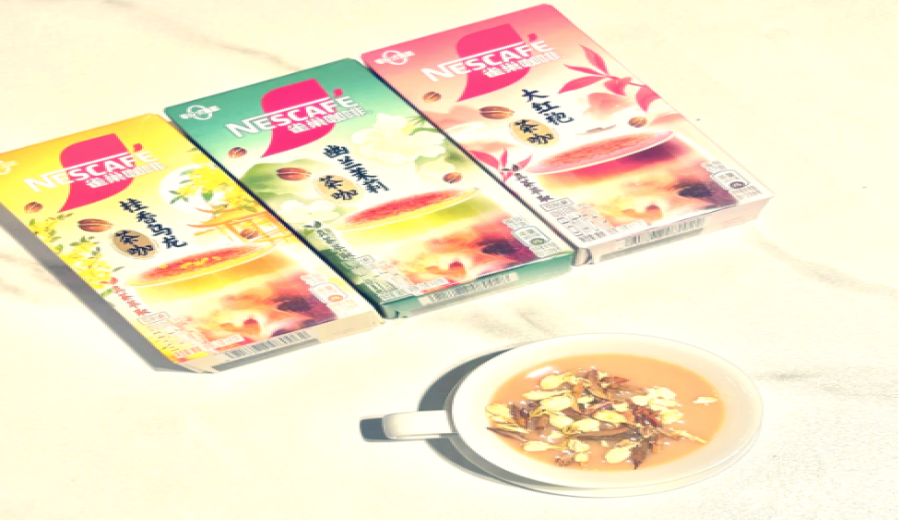
Introduction:As a leading global coffee brand, Nestlé has faced challenges such as the decline of the instant coffee market and brand aging. In July this year, it launched a new tea-coffee series, featuring three flavors—Orchid Jasmine, Osmanthus Oolong, and Da Hong Pao—aiming to attract younger consumers through the crossover combination of tea and coffee. Three months later, the brand further collaborated with the popular mobile game Onmyoji in a cross-industry partnership, leveraging IP collaboration and limited-edition merchandise to expand into the Gen Z market. This article delves into the product features, market feedback, and effectiveness of the collaboration strategy for these three tea-coffee products.
In recent years, a clear trend of cross-industry innovation has emerged in China’s beverage market: tea drink brands have gradually expanded their coffee product lines, while coffee brands have introduced milk tea-style offerings. At the intersection of these two categories, a new type has emerged—tea-coffee. Tea-coffee is made by blending coffee with tea infusion, combining caffeine and tea polyphenols to offer a smoother taste than pure coffee, while retaining the unique aroma of tea leaves. It has become a favorite among consumers seeking a balanced flavor profile.
Nestlé, a global coffee giant, has actively sought breakthroughs amid challenges such as the shrinking instant coffee market, pressure to appeal to younger consumers, and diverse consumer demands. In July this year, the brand officially launched its new "Special Blended Tea-Coffee Series," with the initial lineup including three flavors: "Orchid Jasmine," "Osmanthus Oolong," and "Da Hong Pao." Each flavor draws inspiration from a specific type of tea, allowing consumers to choose their preferred tea-coffee combination based on their taste preferences.
Since their launch, Nestlé’s tea-coffee products have garnered considerable consumer feedback. According to discussions on social media platforms, these three tea-coffee flavors primarily attract two groups: those who are already accustomed to drinking Nestlé coffee, and those who don’t usually consume coffee but need an energy boost for work or study and are wary of the bitterness of pure coffee or the high fat content of milk tea. The relatively lower caffeine content and smooth taste of tea-coffee perfectly meet the needs of this segment.
In terms of actual experience, many netizens have shared their personal insights. Some consumers noted that "Orchid Jasmine" emits a rich jasmine aroma after brewing, with a smooth texture and a refreshing aftertaste, delivering an overall impressive performance. However, others felt that although "Osmanthus Oolong" had a pleasant fragrance, the coffee flavor was weak, lacking the expected richness. As for "Da Hong Pao," it was widely regarded as the most tea-forward of the three, with a subtle orchid-like aroma and a bolder, more robust taste.
Beyond product development and blending, Nestlé has also actively aligned its marketing strategy with younger audiences. To further promote the tea-coffee series, the brand recently announced a collaboration with the popular mobile game Onmyoji, using co-branded gift boxes and limited-edition merchandise to extend its reach from being "the first cup of coffee for young people" to being "their first gacha item," thereby strengthening its influence among Gen Z.
As part of this collaboration, Nestlé launched a co-branded gift box endorsed by three popular Shikigami from Onmyoji, along with several exquisitely designed limited-edition items, such as postcards, folders, laser tickets, and pins. Notably, against the backdrop of frequent criticism aimed at many co-branded merchandise items, Nestlé’s limited-edition products unexpectedly received positive reviews. Consumers generally praised their exquisite design, attention to detail, and the overall visual and tangible quality as a pleasant surprise.
Additionally, some consumers carefully calculated the product’s cost-effectiveness, pointing out that each pack of Nestlé tea-coffee averages around two New Taiwan Dollars. When purchased together with the co-branded gift box and merchandise, it’s almost like getting the extras for free—a testament to the brand’s strong promotional push. Such pricing strategies and marketing tactics undoubtedly represent Nestlé’s key move to capture the younger consumer market through high cost-performance and emotional connection.
The above content is compiled by CoffeeHunters, a coffee news website.


