







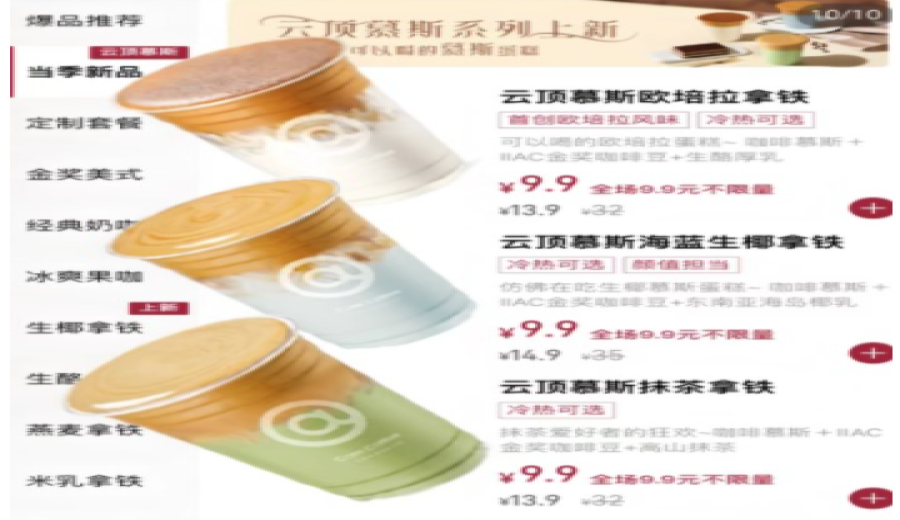
Introduction:Kudi Coffee’s newly launched Cloud Top Mousse Series has made its debut at an affordable price of 9.9 RMB, featuring three innovative flavored lattes. This article delves into the recipe characteristics of the Opera Latte, Azure Coconut Latte, and Matcha Latte, explores the use of IIAC Gold Award-winning coffee beans, and provides purchasing advice and answers to frequently asked questions based on consumer feedback, helping coffee enthusiasts make more informed choices.
Recently, Kudi Coffee has simultaneously launched its new Cloud Top Mousse Series across all nationwide stores, introducing three new products, all priced at just 9.9 RMB. This series specifically uses IIAC Gold Award-winning coffee beans as the base, crafting three distinctive flavor combinations: the Opera Latte, Azure Coconut Latte, and Matcha Latte, offering consumers a completely new coffee experience.
According to the brand, the biggest highlight of this series of drinks lies in the mousse design on top. The Opera Latte draws inspiration from the classic French dessert, the Opera cake, and features specially imported New Zealand cheese to deliver a velvety texture reminiscent of liquid cake.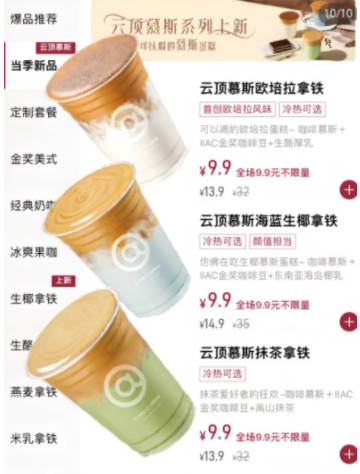 The Azure Coconut Latte uses Southeast Asian island coconut milk, highlighting a refreshing and light flavor profile; while the Matcha Latte is made with 100% organic high-mountain matcha, delivering a layered and soothing tea aroma.
To coincide with the launch of the new products, Kudi has collaborated with artist Jayde Fish, who has previously created illustrations for Gucci, to release a co-branded merchandise line themed around a hidden garden. This includes exquisite accessories such as cup sleeves, paper bags, and refrigerator magnets. Among them, three paper refrigerator magnets can be obtained through official combo meal channels. According to buyer feedback, these designs carry a classical artistic charm and feature quite refined artwork.
Prior to the official launch, Kudi conducted a product testing campaign via social media. Based on the first batch of consumers’ real experiences, all three drinks feature a design where coffee mousse is layered over different bases — only the top mousse layer contains coffee. Some users specifically pointed out that the Opera Latte has the richest flavor layers due to the cocoa powder sprinkled on top, and it is recommended to choose the half-sugar option to avoid an imbalance in overall flavor caused by insufficient vanilla syrup.
The Matcha Latte is sweet enough even without additional sugar, with the coffee mousse effectively neutralizing the underlying sweetness. However, some consumers reported a noticeable herbal taste, and the overall flavor is lighter compared to the Opera Latte. The Azure Coconut Latte has a minimum sweetness level set at half-sugar; some users felt the coconut milk flavor was too prominent, and its texture was the thinnest among the three, with a coordination level between the topping and the base that could be improved. It is more recommended to opt for the traditional coconut latte instead.
Notably, several consumers reported that the mousse topping was insufficient in quantity, with some cases where the mousse layer was barely visible. One user uploaded a photo showing the Matcha Latte with almost no mousse on top, questioning whether the actual drinking experience was close to that of a regular matcha beverage. Store staff explained that the standard serving cup comes with a straw hole on the lid and a marked standard line on the cup body; if the mousse is missing, customers can request a remake, and were reminded that the mousse product does not offer options for less or no ice, so as not to affect the presentation.
From a professional perspective, the key to this type of top mousse design lies in balancing coffee aroma and foam texture. The ideal state should have a mousse layer thickness of about 0.5 centimeters, with the coffee content accounting for no less than 30%. When making a purchase, consumers are advised to pay attention to the coffee bean grade label on the cup and adjust the sugar level according to personal taste preferences — half-sugar is usually the best choice for balancing sweetness and bitterness.
The above content is compiled by CoffeeHunters, a coffee news website.


