







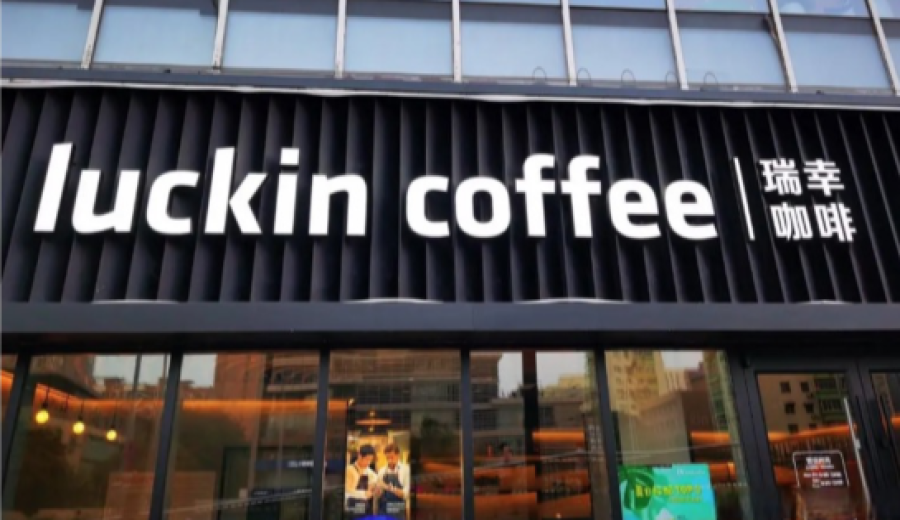
Introduction:Luckin Coffee has added an astonishing 10,000 stores in just one year, bringing its total to nearly 20,000 — surpassing Mixue Ice Cream & Tea to become the fastest-expanding chain coffee brand. However, behind this rapid growth, profits have declined. The price war triggered by the 9.9-yuan promotion campaign has put further pressure on profitability. This article delves into how Luckin balances scale and profitability, and explores the impact of the price war on the broader coffee market.
Luckin Coffee has shattered records in the chain coffee industry with its astonishing expansion speed, netting 10,000 new stores in just one year and rapidly scaling its total store count to nearly 20,000 — even outpacing Mixue Ice Cream & Tea, known for its rapid rollout. It took five years for Luckin to grow from zero to 10,000 stores, but only one year to go from 10,000 to 20,000, showcasing its formidable market expansion capability.
According to official data, as of June 30 this year, Luckin’s total store count reached 19,961, including 13,056 company-operated stores and 6,905 licensed stores. This translates to approximately 27 new stores opening each day on average over the past year — an astonishing pace. In July this year, the opening of Luckin’s flagship store in Beijing’s Zhongguancun district also marked its official entry into the “20,000-store” club, making it one of the few domestic chain brands to reach this milestone.
In comparison, its close follower, Cotti Coffee, has yet to break the 10,000-store mark. Meanwhile, Luckin’s current total store count is almost equivalent to the combined number of stores of four other major brands: Starbucks, Cotti, Luckin, and Hucky Coffee, demonstrating its massive footprint in China’s coffee market. Looking at the overall chain restaurant sector, only brands like Shanxi Noodle Shop, Wallace, Mixue Ice Cream & Tea, and Lanzhou Ramen currently have more stores than Luckin.
However, behind these impressive expansion figures, Luckin’s financial reports reveal some concerning trends. In the first quarter of this year, Luckin ended its streak of six consecutive quarters of profitability, posting its first net loss of 83.2 million yuan. By the second quarter, although revenue increased by 2.2 billion yuan compared to the same period last year, the net profit margin dropped to just 10.4% — far lower than the 16.1% recorded a year earlier. More notably, same-store sales at company-operated outlets declined year-on-year in both the first and second quarters, signaling weakening profitability per store.
Regarding this decline in performance, Luckin explained in its financial report that the main reason was the ongoing 9.9-yuan high-quality coffee promotion campaign, which has pulled down the average selling price of its products overall, thereby affecting profit margins. In fact, the price war that began last year has not only reduced the average transaction value per customer, but has also made “increasing revenue without increasing profits” the biggest challenge Luckin faces today.
To improve profitability, Luckin has begun adjusting its strategy by reducing the scope of price subsidies. For example, some drinks that were originally priced at 9.9 yuan have been raised to 11.9 yuan; meanwhile, the number of drinks available under the “9.9 yuan per week” promotion has been cut from eight in February to just five in March. However, Luckin is not the only brand caught up in the pricing competition — competitors such as Cotti and Starbucks have also joined the fray.
In April this year, Cotti Coffee announced that it would extend its store subsidy policy until the end of 2026. Its strategy officer, Li Yingbo, even publicly stated that the company is prepared to sustain a “storewide 9.9-yuan promotion” for three years. Meanwhile, Starbucks, which had previously been less involved in price wars, has also had to adjust its strategy, rolling out limited-time offers such as “three cups for 49.9 yuan, two cups for 39.9 yuan, and a 30% discount coupon for a single cup,” indicating that market competition has reached a fever pitch.
In summary, although Luckin has successfully claimed the top spot among domestic coffee brands in terms of store count, under the dual pressures of rapid expansion and intense price competition, maintaining stable profitability will be a key challenge for its future operations. For consumers, short-term benefits may include more promotions, but in the long run, whether brands can strike a balance between price and quality will determine whether their market position remains solid.
The above content is compiled by CoffeeHunters, a coffee news website.


