







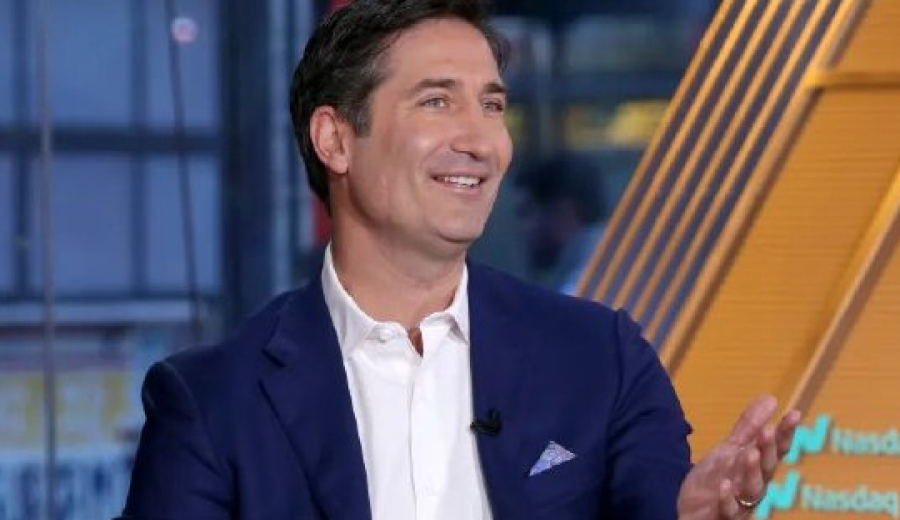
Introduction:Following his appointment as Starbucks' new CEO, Brian Niccol made his first public statement, reaffirming the brand’s original mission and commitment to quality. However, in the face of China’s intense price competition and shifting consumer trends, the market is closely watching whether he can successfully reverse the decline in Starbucks’ revenue in the Chinese market. This article delves into the strategic challenges in the Chinese market, the impact of discount promotions on the brand, and the possibility of spinning off the China business, offering insights into Starbucks’ future direction.
Starbucks has welcomed a new CEO, Brian Niccol, who quickly issued his first public letter after taking office. In it, he clearly stated the need to return to Starbucks’ essence as a “community coffeehouse,” emphasizing the brand’s foundational values of coffee quality and customer service. He pointed out that Starbucks is not just about serving a beverage, but also about providing a space that connects people with each other and with their communities. Every cup of coffee is handcrafted by baristas in green aprons, conveying craftsmanship and warmth.
However, Starbucks China is facing unprecedented market challenges. As the company’s second-largest market globally, China’s Q3 2024 financial report showed a10.71%year-on-year decline in revenue,reaching only$734 million.
A weak consumption environment, coupled with competitive pricing strategies from local brands such as Luckin and Cotti, which offer coffee at compelling prices like “coffee for 9.9 RMB,” has forced Starbucks to adjust its approach. The company has launched various discount promotions, such as “three cups for 59.9 RMB,” “two cups for 45.9 RMB,” and “single cup for 19.9 RMB,” in an attempt to maintain its market share.
While this “volume-over-value” strategy has temporarily boosted purchase frequency, it has also raised concerns: does it conflict with the premium brand image that Starbucks has long cultivated? Many industry observers note that over-reliance on discounts may dilute brand value and further erode consumer loyalty and emotional connection to the brand.
Notably, Starbucks China has so far maintained a fully company-owned model, with no franchising, and all stores are directly operated by the headquarters. However, as market competition intensifies and local demands evolve rapidly, this model is under pressure to adapt. Analysts point out that while direct operation helps ensure quality control and brand image, it is less agile in responding to flexible pricing and rapid store expansion compared to local competitors.
Against this backdrop, there have been growing calls for Starbucks to consider spinning off its China business as an independent entity. Such a move could allow more focused localization strategies and help unlock the potential of the Chinese market, thereby boosting overall shareholder value. As early as July this year, former CEO Laxman Narasimhan mentioned the idea of separating the China market during an earnings call, sparking widespread discussion in the investment community.34%Now, with the arrival of Brian Niccol, the market generally expects discussions around a potential spin-off of Starbucks’ China business to intensify. Looking back at his track record, Brian Niccol previously held key positions at Taco Bell and Chipotle, where he successfully led Chipotle out of a crisis. Under his leadership, Chipotle’s annual revenue grew by91%, operating profit increased by175%, and net income rose nearly
, earning him the title of a “turnaround hero” in the restaurant industry.
At the time, Chipotle had pursued cost-cutting measures, simplifying processes and lowering food standards, which triggered a severe food safety crisis between 2015 and 2016, resulting in the temporary closure of multiple stores. Its management also attempted to boost performance through low-price strategies, which only deepened the brand’s negative image of being “cheap and unsafe.”
After taking office, Brian Niccol decisively changed course, completely eliminating discount promotions and refocusing on the core values of “made fresh, made to order, and healthy.” He keenly captured the millennial generation’s emphasis on health and ingredient sourcing, gradually adjusting the menu and brand communication strategy, even implementing modest price increases. Ultimately, he successfully reshaped the brand image, propelling Chipotle to become one of the highest-valued restaurant chains in the United States.
The above content is compiled by CoffeeHunters, a coffee news website.


