







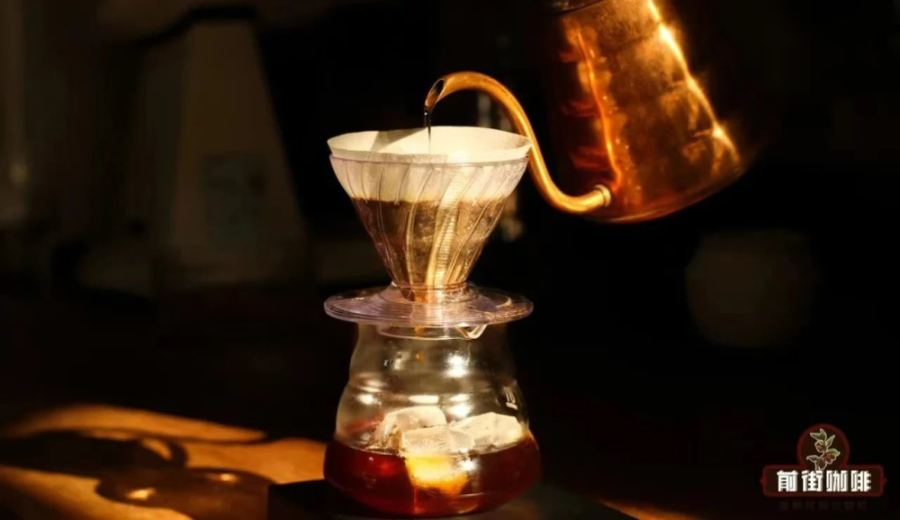
Introduction:Want to easily make a refreshing, non-bitter pour-over iced coffee at home? This article details the complete process from bean selection, grinding to extraction, including practical coffee-to-water ratios, water temperature suggestions, grind size, and three-stage pouring techniques to help even beginners get started quickly. With commonly used proportion examples, it will guide you through the core essentials of iced pour-over, allowing you to craft your ideal flavor—whether you prefer fruity or nutty profiles.
On hot summer days, more people crave a refreshing iced coffee than a steaming hot one. Pour-over iced coffee not only has a relatively approachable learning curve but also highlights the layered flavors of the coffee beans themselves, making it a top summer choice for many coffee enthusiasts. This article will take you from scratch, showing how to brew a refreshing and flavorful iced pour-over with simple steps and the right proportions.
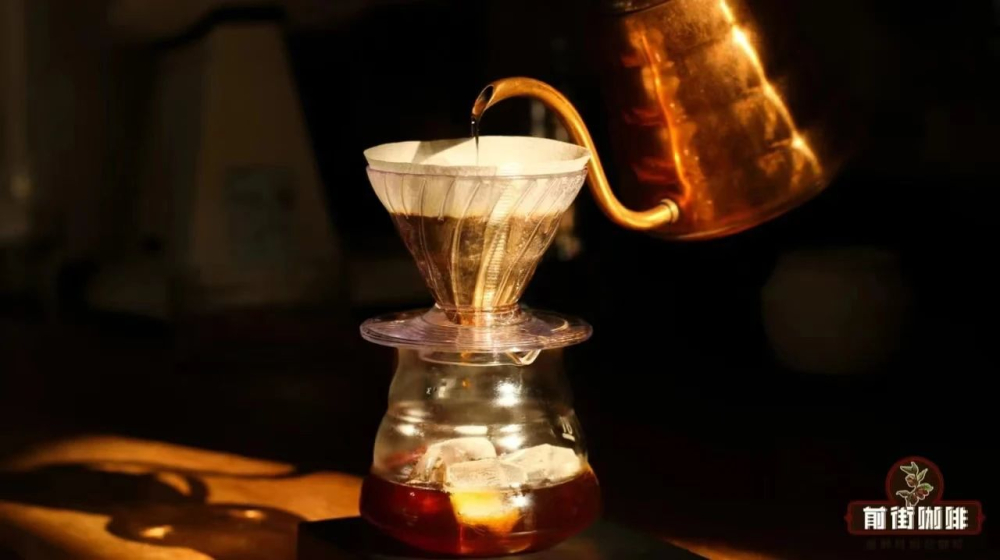
Many people assume that pour-over coffee requires parameters precise to decimal points, professional-grade equipment, and techniques—but that’s not necessarily the case. If you just want to enjoy a good cup of coffee at home, there’s no need to pursue competition-level precision. Simply master a practical and stable template, then fine-tune according to personal preference. Especially in summer, pour-over iced coffee is an easy yet effective brewing method that showcases the layers of coffee flavor.
Pour-over coffee is a type of drip filtration extraction, primarily relying on manually controlling the water flow to evenly pour hot water over coffee grounds, filtering through paper to produce a clear coffee liquid. This method is highly adaptable to different coffee beans, whether light, medium, or dark roast, each showcasing distinct flavor characteristics such as floral-fruity notes, caramel sweetness, or nutty tones. In addition, pour-over doesn’t require expensive equipment—just the basics—and can be easily done at home.
Generally, the common coffee-to-water ratio for hot pour-over is 1:15, while for iced pour-over it’s adjusted to 1:10, plus an appropriate amount of ice for cooling and dilution, resulting in an overall flavor that is more refreshing and balanced. Taking a common café practice as an example, using about 15 grams of coffee, with 150 grams of hot water and 75 grams of ice, is a classic and easy-to-follow golden ratio.
First, bean selection is the first step in determining flavor. Depending on roast level, beans can generally be divided into light, medium, and dark. For readers who prefer a fresh, fruity profile, it’s recommended to choose light to medium roasted beans, such as those with citrus, floral, or green tea notes; if you prefer a balanced and rich taste, medium roasted beans with caramel and nutty flavors are a good choice; for those who can’t tolerate acidity at all, medium-dark roasted beans with chocolate and nutty profiles, such as Golden Mandheling or Queen Estate, are more reliable options.
Additionally, “freshness” is also a key factor affecting flavor performance. It’s generally recommended to choose beans roasted within 5 days—the period during which coffee beans are still at their peak flavor, able to fully present acidity, sweetness, aroma, and layered complexity. Coffee beans stored for too long, no matter how precise the brewing technique, can hardly restore their original flavor expression.
For equipment preparation, in addition to coffee beans, you’ll also need an electronic scale (with timer function), pour-over kettle, filter cone, filter paper, grinder, thermometer, and server. Temperature control is especially important—different roast levels suit slightly different water temperatures: medium-dark roasts are recommended to use 87–90°C to avoid over-extraction and bitterness; while light roasts are recommended to use 91–93°C to fully bring out acidity and aroma.
Regarding grind size, it’s recommended to use the Chinese No. 20 sieve (0.85mm) as a reference, aiming for a sieve passage rate of about 75–80% for light to medium roasts, corresponding to a granularity similar to granulated sugar; for medium-dark roasts, a sieve passage rate of 70–75% is suggested, akin to the texture of coarse sugar. Taking the Flower Butterfly used in this demonstration as an example, this is a washed, light-to-medium roasted Gesha blend with citrus, white flower, green tea, and caramel aromas. To enhance the fruity profile, it’s recommended to grind to a fine sugar consistency, with about 83% passing through a No. 20 sieve, roughly 22 clicks on a hand grinder C40, or about 9.5 on an electric grinder EK43s.

For actual operation, we recommend using the classic “coffee amount + 10x hot water + 5x ice” golden ratio: using 15 grams of coffee grounds, pouring in 150 grams of 92°C hot water, and placing 75 grams of ice in the server below. Using the three-stage pouring method, first pour 30 grams of hot water at a small flow rate of 3–4 ml per second in a circular motion from the center outward, allowing for a 30-second bloom; then in the second stage, pour another 60 grams using the same method, paying attention to controlling the liquid level height to avoid excessive dilution; finally, when the coffee liquid is about to finish dripping, pour the remaining 60 grams of hot water at a speed of 3 ml/s, with a total extraction time recommended to be controlled between 1 minute 50 seconds and 2 minutes.
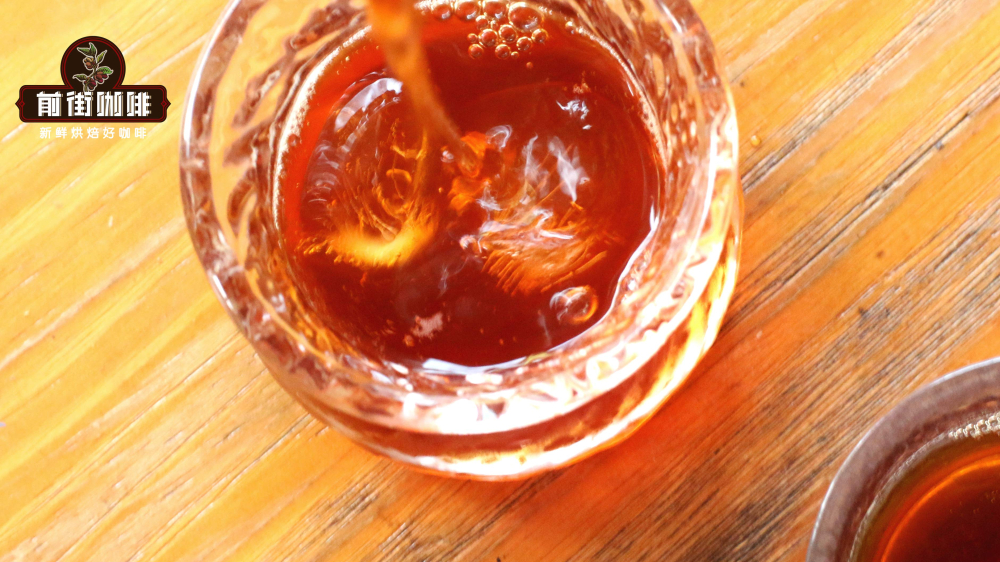
Following this method, the brewed iced pour-over Flower Butterfly will showcase bright lemon and grapefruit notes, along with a soft nutty sweetness, achieving an overall balanced acidity and sweetness, with a refreshing and non-cloying mouthfeel. It should be noted that since the bottom ice may not fully melt, it’s recommended to enjoy the coffee before the ice completely dissolves to achieve the best flavor expression.
The above content is compiled by CoffeeHunters, a coffee news website.


