







Introduction:Jamaica Blue Mountain coffee is hailed as one of the world’s finest coffees, yet the market is often flooded with counterfeit or mislabeled products. This article delves into the true origin of Blue Mountain coffee, the official CIB certification standards, the washed processing method, and the four-tier grading system. It also explores the flavor profile of Blue Mountain No. 1 and recommends ideal pour over parameters, while providing practical tips to distinguish authentic beans—helping you truly savor the legendary charm of this exceptional coffee.
Jamaica Blue Mountain coffee has long been regarded as the pinnacle of the coffee world. Yet the market is riddled with products claiming “Blue Mountain flavor” or “Blue Mountain blends,” making it difficult for consumers to discern authenticity. So, where exactly is coffee grown in the real Jamaica Blue Mountains? How is it graded? And what rigorous processing methods are used? The following will comprehensively introduce every aspect of this premium coffee—from regional background and planting history, to processing techniques and grading standards—while sharing the cupping flavor profile of Blue Mountain No. 1 and recommended pour over parameters, as well as teaching you how to tell the genuine from the fake.
The worldwide fame of Jamaica Blue Mountain coffee stems not only from its distinctive flavor but also from its strict regional limitations and production regulations. Tracing its roots, coffee cultivation in Jamaica began in 1723, when French officer De Clieu brought Arabica coffee seedlings from Martinique, later introduced by then-Jamaican Governor Nicholas Lawes. After successful trial planting in the Saint Andrew area, cultivation gradually expanded to the Blue Mountain range, giving rise to the legendary Blue Mountain coffee we know today.
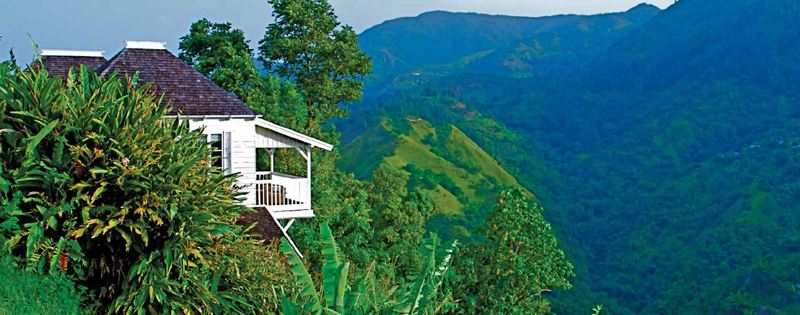
The Blue Mountains are located in eastern Jamaica, not only home to the highest peak in the Caribbean, but also blessed with undulating terrain, year-round cool and foggy climate, abundant rainfall, and fertile volcanic soil—all of which create an ideal microclimate for coffee growing. Local farmers often intercrop coffee with banana trees, which not only provide shade but also enhance agricultural diversity. Aside from coffee, Jamaica’s main cash crops include bananas and sugarcane.
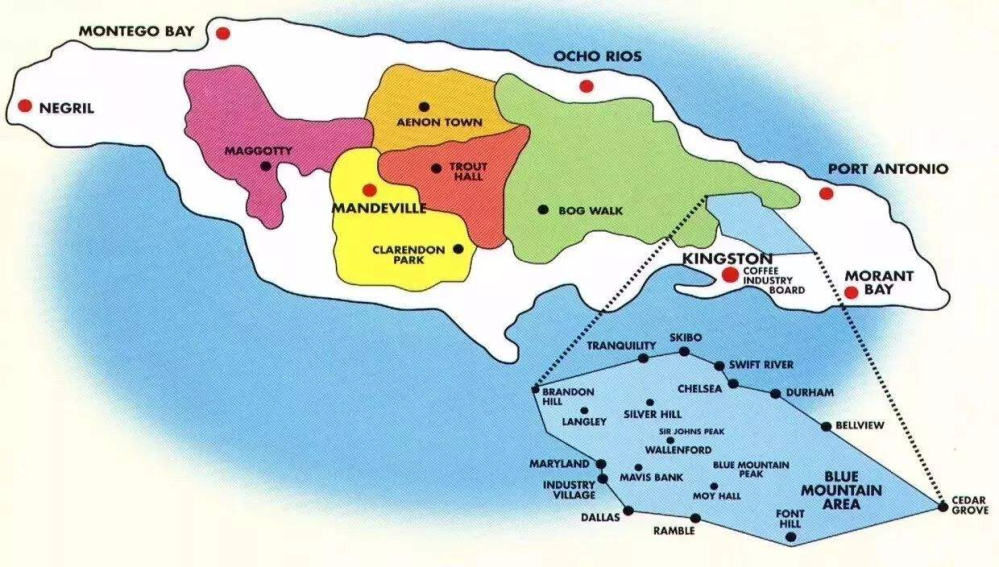
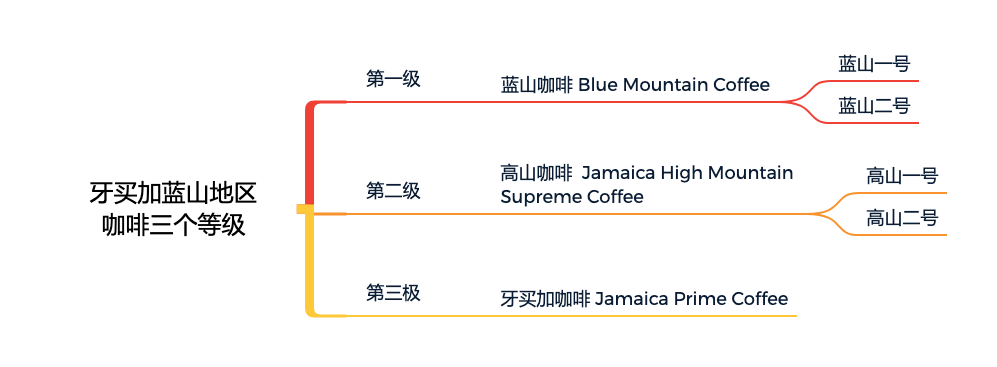
According to Jamaican official regulations, the core producing area of Blue Mountain coffee covers four administrative regions: Saint Andrew, Saint Thomas, Portland, and Saint Mary. Moreover, the coffee must be grown at altitudes between 910 and 1700 meters using Typica variety coffee trees to be officially called “Jamaica Blue Mountain (Jamaica Blue Mountain).” These four regions span approximately 6,000 hectares, only one-third of the total suitable Blue Mountain growing area. The remaining 1,200 hectares are used to produce Jamaica High Mountain Coffee and Jamaica Prime Coffee. In fact, each year, less than 15% of Jamaica’s total coffee output earns the coveted Blue Mountain certification label.
The processing method for Blue Mountain coffee is primarily washed, a technique that fully showcases the beans’ clean flavors and delicate nuances. During harvesting, skilled local women typically select only fully red-ripe coffee cherries to ensure consistent maturity. The harvested cherries first undergo floatation to remove under-dense defective beans, then the pulp and fruit flesh are removed, followed by a 12 to 18-hour fermentation process. The fermented beans are then washed with water and friction to eliminate residual mucilage—a step crucial for the final purity of flavor.
After washing, the coffee beans are still enclosed in their parchment and have a moisture content as high as 50%. They must be sun-dried in shaded conditions until their moisture level drops to 12%–14% before they can be stored or exported. Excess moisture can cause molding or continued fermentation, severely compromising quality. For this reason, every step of the washed process must be strictly controlled to ensure the stable, high quality of Blue Mountain coffee. This method also imparts a bright acidity, rich body, and layered aromas to the coffee.
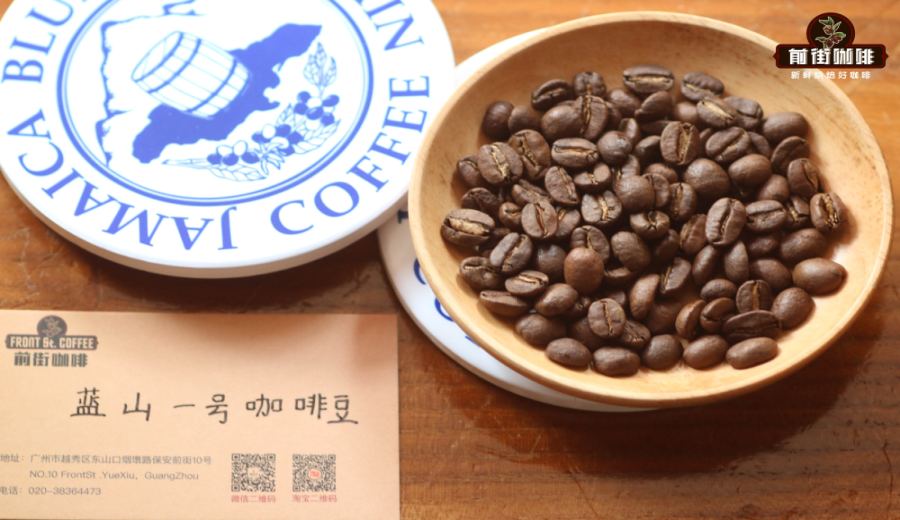
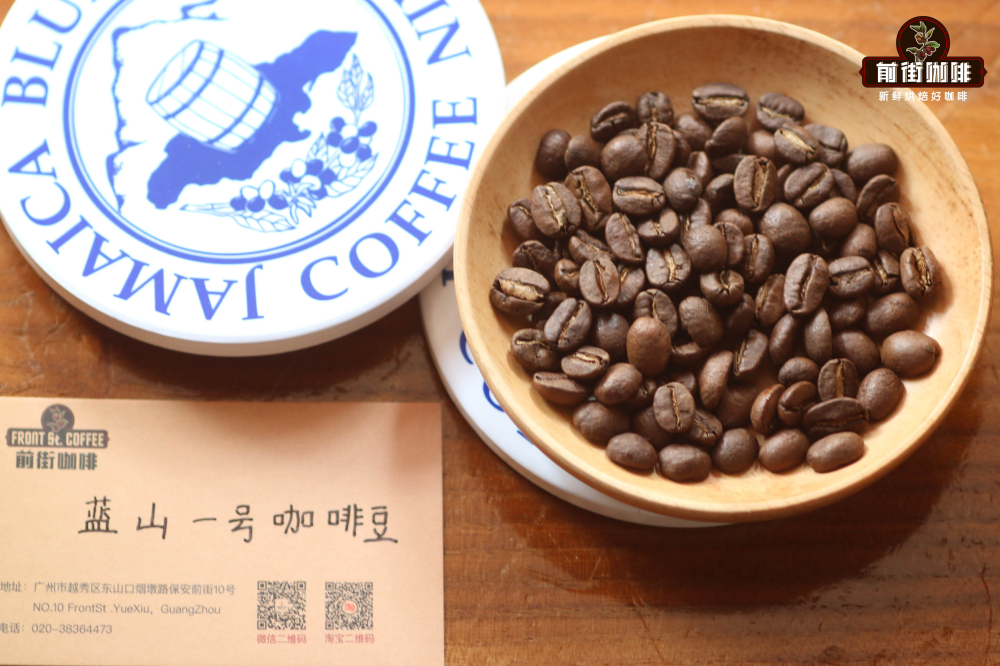
Once washed and dried, Blue Mountain coffee beans are classified into four grades based on bean size and defect rate: Blue Mountain No. 1, Blue Mountain No. 2, Blue Mountain No. 3, and Blue Mountain Peaberry. Grading is mainly determined by sieve tests to check if beans meet specific mesh sizes and ensure defect rates remain below 2%.
Blue Mountain No. 1 (藍山一號): Over 96% of beans must pass through a 17/18 mesh sieve, with a defect rate under 2%;
Blue Mountain No. 2 (藍山二號): Over 96% must pass through a 16 mesh, with a defect rate under 2%;
Blue Mountain No. 3 (藍山三號): Over 96% must pass through a 15 mesh, with a defect rate under 2%;
Blue Mountain Peaberry (藍山圓豆): Over 96% must be 10 mesh single round beans, with a defect rate under 2%, and are considered a rare and special variety.
Top-tier Blue Mountain No. 1 green beans, in addition to meeting the 17+ mesh specification and defect rate below 3%, with a moisture content of around 13%, must also demonstrate low acidity, full body, pronounced sweetness, and a long aftertaste in cupping. To ensure quality during transportation, Jamaica Blue Mountain coffee is often packed in traditional wooden barrels—an iconic hallmark of its authenticity.
When evaluating Blue Mountain coffee, authenticity can be assessed from two main aspects: aroma and taste. Authentic Blue Mountain coffee boasts a rich and lingering roasted aroma, with balanced acidity, sweetness, and bitterness upon tasting—smooth and mellow, without any single flavor overpowering the rest. Both sweetness and cleanliness are excellent. If in doubt about a product, it is advisable to request certification documents, authorized sales proof, and origin certificates issued by the Jamaica Coffee Industry Board (CIB), and to check whether traditional wooden barrel packaging is used.
To fully experience the classic flavors of Blue Mountain No. 1, a medium-to-dark roast is recommended, along with appropriate pour over parameters. It is suggested to use a KONO filter, with a grind size based on a 75% passing rate through a standard 20-mesh sieve. Water temperature should be controlled at 88°C, with a coffee-to-water ratio of 1:15 and approximately 15 grams of coffee powder. Use a three-stage pouring method: the first stage involves pouring 30 grams of water for a 30-second bloom; the second stage pours 95 grams of water in a circular motion from the inside out, and when the water level drops to two-thirds of the filter, continue with the third stage of 100 grams of water. Maintain a fine stream throughout, completing the drip in about 2 minutes. This approach fully highlights the chocolate, nutty, and caramel aromas of Blue Mountain coffee, while bringing out its full body, low acidity, and long-lasting finish.
The above content is compiled by CoffeeHunters, a coffee news website.


