







Introduction:Cold brew coffee is known for its low-temperature, long-duration extraction method, but the length of the steeping time directly affects its flavor profile. This article delves into how different steeping durations—ranging from 4 to 24 hours—influence the strength, acidity-sweetness balance, and complexity of cold brew coffee. It also provides practical home-brewing tips, including coffee-to-water ratios, grind size, and recommended coffee bean types, to help you brew a cup that suits your taste best.
Cold brew coffee has become a popular trend in recent years. Its brewing principle involves soaking ground coffee in cold water for an extended period, extracting flavors slowly at low temperatures. However, many people mistakenly believe that "the longer the steeping time, the better the flavor," which isn't necessarily true. This article will analyze the differences in strength, acidity-sweetness performance, and overall complexity among 4-hour, 8-hour, 12-hour, and 24-hour cold brews based on experimental data from various timeframes. It will also share key parameters for making cold brew and suggest suitable coffee bean varieties.
Cold brew (Cold Brew Coffee) refers to a brewing method where ground coffee is steeped in cold water for at least 12 hours. Some advanced techniques use a mixture of ice and water, further extending the brewing time. For example, ice drip coffee extracts flavor as ice slowly melts and drips onto the coffee grounds, a process that can take more than a day, with some special methods even extracting for over 48 hours.
Making cold brew at home is actually quite simple and doesn’t require any specialized equipment. Common household items such as glass bottles or sealed mineral water bottles can serve as brewing containers—the key is that they must have a good seal. It’s recommended to grind the coffee slightly finer than what you’d use for pour over, aiming for about 85% of the particles to pass through a #20 sieve. Taking 50 grams of coffee powder as an example, you can combine it with 400 milliliters of room-temperature water and 200 grams of ice (if no ice is available, cold water can be used entirely instead). The overall coffee-to-water ratio is advised to be set at 1:12.
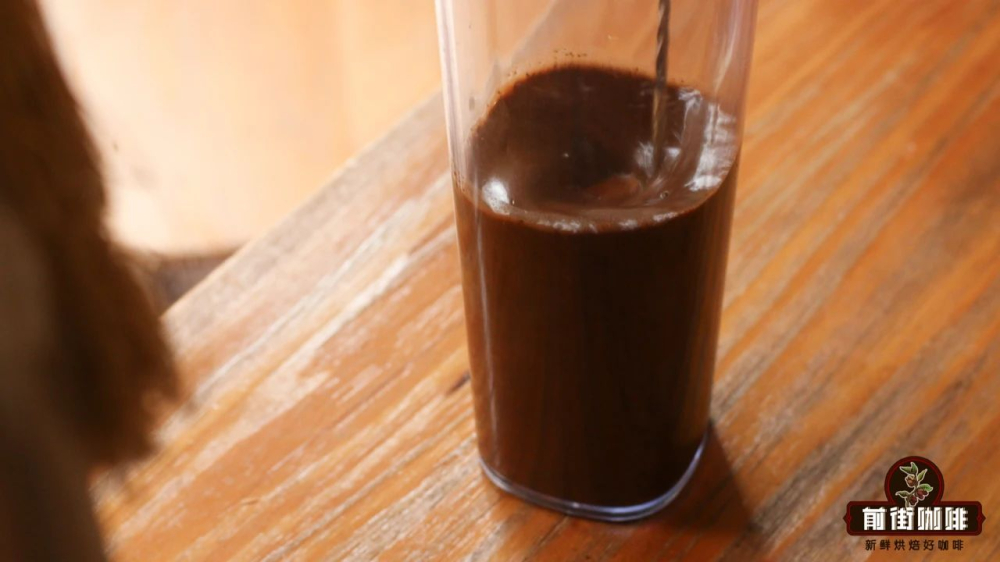
After evenly mixing the coffee grounds and water, it’s recommended to gently stir with a stirring stick to ensure full contact between the coffee and water. Then seal the container and place it in the refrigerator. The steeping time is suggested to be between 12 to 24 hours. Once the time is up, filter out the coffee grounds using filter paper to obtain a clear cold brew coffee liquid. To make the flavor smoother, it’s recommended to pour the filtered coffee into a clean, sealed bottle, let it sit in the refrigerator for about 4 hours before drinking, resulting in a smoother mouthfeel.
Many people wonder: is it true that the longer you steep cold brew coffee, the better it tastes? The answer is not absolute. Generally speaking, the longer the extraction time, the more soluble substances are released from the coffee, increasing both concentration and flavor intensity. However, this may also amplify undesirable off-flavors or the risk of over-extraction. Therefore,experimental suggestions indicate that cold brew time should not exceed 24 hoursto avoid compromising the overall flavor balance.
Experimental data shows that 24-hour steeped cold brew has the richest and most complex flavor, as the longest extraction time allows for the most thorough interaction between water and coffee grounds, achieving maximum saturation. In comparison, 12-hour cold brew, while slightly less complex, still maintains a clear layering. The flavor transitions from acidity and sweetness to a sweet finish, with nutty notes detectable in the aftertaste, offering an overall balanced and delicate profile.
If you opt for an 8-hour steeping time, the flavor tends to be fresher and cleaner, with fruitiness more pronounced. The overall acidity-sweetness is bright, and although the complexity is not as rich as in 12- or 24-hour brews, the balance is excellent, with a soft cane sugar-like sweetness in the aftertaste. As for 4-hour cold brew, although it has the lowest overall concentration, it preserves more of the aromatic qualities, with acidity often exhibiting citrus characteristics and nutty flavors being less noticeable. It’s suitable for those who prefer a lighter-tasting cup.
Overall, the flavor direction of cold brew coffee is closely related to the steeping time, but whether it “tastes good” ultimately depends on individual taste preferences. If you enjoy a refreshing, low-acidity flavor, you can increase the coffee-to-water ratio or extend the steeping time. If you prefer a richer, more fermented-tasting coffee, you might shorten the time or choose beans with more pronounced fruity notes to enhance the overall complexity.
In terms of bean selection, it’s recommended to prioritize light-roasted coffee beans, which typically feature bright acidity and lower bitterness, making them especially suitable for iced cold brew. For example, washed-process Yirgacheffe, Kenyan small tomatoes, or naturally processed Huaguang can deliver refreshing fruit acids and floral notes. If you prefer a cold brew with a rich sweetness and strong juice-like character, you might consider beans like Strawberry Candy or Mozart.
For those who don’t like pronounced acidity and seek a balanced, mellow flavor, medium-to-dark roasted balanced beans such as Papua Paradise Bird or Costa Rica Tarrazú can be considered. These beans can showcase a stable coffee essence and a rich mouthfeel during the cold brew process.
The above content is compiled by CoffeeHunters, a coffee news website.


