







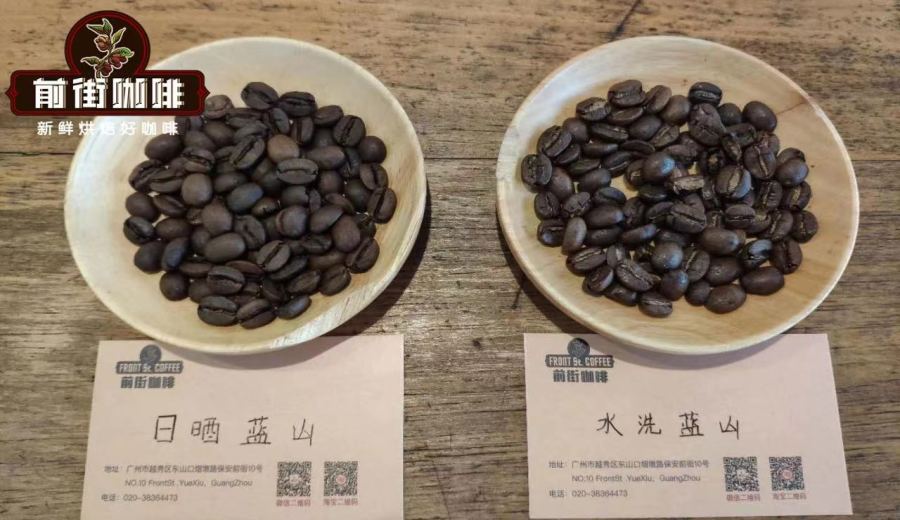
Introduction:Blue Mountain coffee is hailed as one of the world’s top-tier coffees, yet the commonly seen 'Blue Mountain-flavored coffee' on the market often confuses many consumers. What exactly is genuine Blue Mountain coffee? And what are the fundamental differences between it and the merely name-borrowing 'Blue Mountain-flavored coffee'? This article will delve into the origins, flavor profiles, and pricing rationale behind both, helping you identify them accurately and avoid overspending.
When it comes to Blue Mountain coffee, many coffee enthusiasts immediately think of the exceptional growing environment of Jamaica’s Blue Mountains and its delicate, balanced, and ultimate flavor. However, when you walk into a supermarket or browse an e-commerce platform, you often come across products labeled as 'Blue Mountain flavor' at much more affordable prices — but these are entirely different from authentic Blue Mountain coffee beans.
So-called authentic Jamaican Blue Mountain coffee refers exclusively to coffee beans grown in specific high-altitude regions of the Blue Mountains in Jamaica. These areas boast fertile volcanic soil, suitable rainfall, and temperature variations that create the unique flavor structure of Blue Mountain coffee. Such beans must go through a rigorous grading system, and only those that meet the highest grade can be called 'Blue Mountain coffee.' Moreover, each batch of Blue Mountain coffee comes with a certification issued by the Jamaican government to ensure its origin and quality.
In contrast, many products on the market labeled as 'Blue Mountain flavor coffee' actually contain no Blue Mountain coffee beans at all. These products are often instant coffee or blends, which simulate a Blue Mountain-like aroma and taste by adding flavorings or other cheap coffee beans — but they have absolutely no connection to the actual Jamaican Blue Mountain. This is also why their prices can be so low, as their cost structure is entirely different.
So, what does real Blue Mountain coffee taste like? Its most distinctive feature is the perfect balance it achieves among acidity, body, and aroma. Upon tasting, it often presents subtle floral notes and bright citrus acidity, followed by rich aftertastes of nuts and chocolate. The overall mouthfeel is smooth and refined, with almost no bitterness, and this layered complexity is precisely why Blue Mountain coffee is so highly regarded.
For beginners looking to try Blue Mountain coffee, it is recommended to choose products made from officially certified Blue Mountain coffee beans and check whether the packaging bears the certification mark from the Jamaica Coffee Industry Board (CIB). Additionally, due to the extremely limited production of Blue Mountain coffee beans — with only a small quantity exported each year — prices are generally quite high. A pound (approximately 454 grams) may cost several thousand New Taiwan Dollars, so it's important to pay attention to whether the price is reasonable and avoid being misled by false advertising.
In summary, Blue Mountain-flavored coffee and genuine Jamaican Blue Mountain coffee beans differ vastly not only in raw materials but also in flavor expression, pricing, and quality assurance. If you’re seeking a premium coffee experience, it’s advisable to opt for authentic Blue Mountain coffee and understand its origin, grade, and certification background — only then can you truly appreciate the unique charm of Blue Mountain coffee.
The above content is compiled by CoffeeHunters, a coffee news website.


