








Introduction:Do you know why high-altitude-grown coffee is often considered specialty? This article delves into the critical influence of altitude on coffee flavor and provides a botanical breakdown of the fundamental differences between Arabica and Robusta. From growing elevations and flavor profiles to market share, it helps you build a professional perspective on bean selection, while also recommending two practical Robusta-inclusive blends to meet different brewing needs.
Coffee belongs to the evergreen shrubs of the Rubiaceae family, with commercial cultivation primarily focused on the two original species: Arabica and Robusta. The specialty coffee market mainly centers around classic cultivars under Arabica, such as Typica, Bourbon, and Caturra, which mostly grow in tropical high-altitude regions between 25 degrees north and south latitude. It takes 3 to 5 years from sowing to the first flowering, and the complete growth cycle involves many key stages that influence flavor.
Altitude is one of the core factors determining coffee quality.. In high-altitude regions, the large diurnal temperature variation and intense ultraviolet light prompt coffee cherries to ripen slowly, accumulating richer sugars and aromatic compounds. This environment is particularly suitable for Arabica, whose ideal planting elevation typically ranges between 1,000 and 2,000 meters.

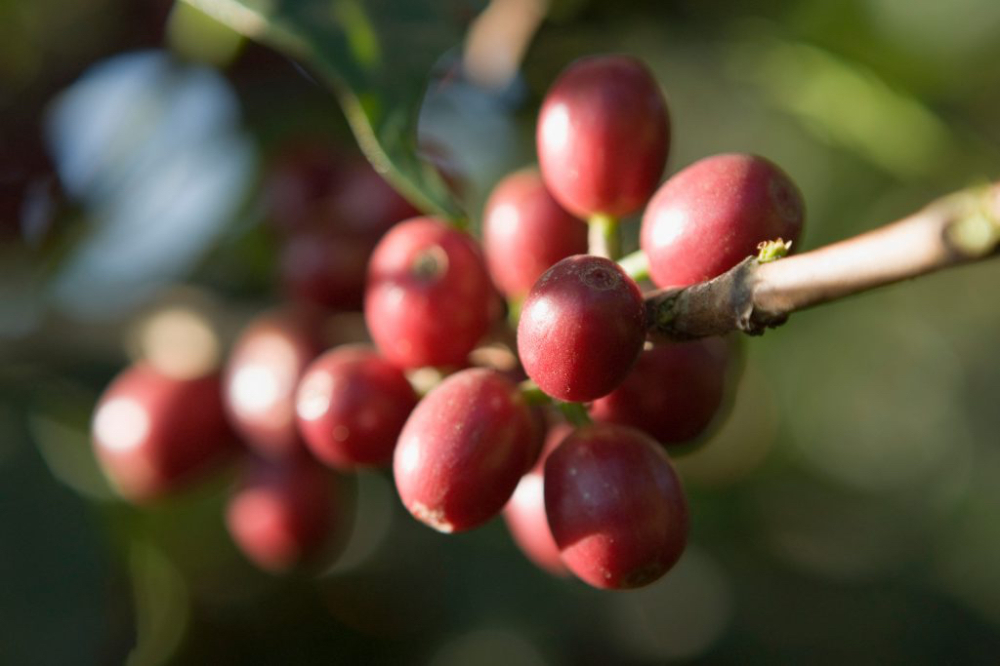
Coffee cultivation begins with nursery propagation. After removing the outer skin, the seeds require a 1–2 month germination period. They can be transplanted only after the root system is stable and 12–16 true leaves have emerged (around 9 months). After transplanting, the coffee trees need another 3–5 years to bloom with fragrant white five-petaled flowers. It’s worth noting that the coffee flowering period lasts only about 72 hours. Once pollination is successful, the resulting fruit takes 6–8 months to mature — starting as hard green berries and gradually turning red (some varieties like Yellow Bourbon may turn yellow), which is what the industry commonly refers to as “coffee cherries.”
In contrast,Robusta exhibits distinctly different adaptive characteristics.. This variety is mainly distributed in low-altitude regions such as Indonesia, Vietnam, and India (typically below 800 meters). With its robust disease resistance and fast growth cycle, it accounts for about 30% of global production. Its dark roast profile shows distinct woody notes, rich body, and high bitterness, with common flavor profiles including walnuts, herbs, and caramelized aromas.
This physiological difference is directly reflected in brewing performance:Arabica is bright in acidity (pH 5.0–5.5) with a fat content of 15–18%,making it suitable for extraction methods like pour over and siphon that highlight layers of flavor;Robusta has extremely low acidity (pH 4.5–5.0) and a caffeine content of up to 2.7%,and after medium to dark roasting, it can produce a silky crema, making it a classic base bean for espresso.
For consumers seeking a richer taste, it is recommended to try professional blends that include Robusta.A classic blend combining Brazilian beans, Sumatra Mandheling, and an appropriate amount of Robusta,releases buttery aromas and a toasted bread finish after medium to dark roasting, with fine and stable oil extraction;another commercial blend emphasizes a rich foundation,suitable for daily commuting use with automatic coffee machines. Both formulas have undergone rigorous proportion testing, maintaining smoothness while reducing the intensity of any single variety.
The above content is compiled by CoffeeHunters, a coffee news website.


