







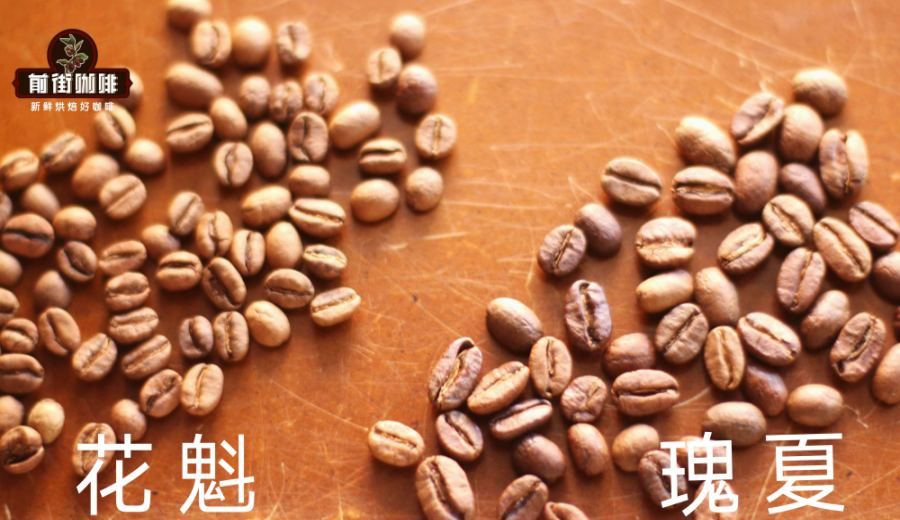
Introduction:Since winning the TOH (Top of Ethiopia) competition’s natural category in 2017, the Huakui coffee has gained widespread fame, yet it is often mistakenly thought to be Geisha. This article provides an in-depth look at the variety background of Huakui, its differences from Geisha, the significance of its production region and numbering system, and detailed insights into its roasting profile and pour over parameters, helping coffee enthusiasts fully grasp the characteristics and charm of this popular bean from origin to brewing.
The Huakui coffee quickly rose to prominence after winning the natural category at the TOH (Top of Ethiopia) competition in 2017, but many coffee enthusiasts often confuse it with Geisha. In fact, Huakui is a natural Ethiopian heirloom variety produced by the Buku Abel washing station in the Hambella area of the Sidama region’s Guji zone. On the international market, it is typically labeled as coming from the Hambella region. This article will start from the origin of the variety, clarify the differences between Huakui and Geisha, detail the naming origins, regional definitions, and numbering rules, and include professional roasting and pour over recommendations to help you deeply understand the highlights and allure of this much-talked-about coffee bean.
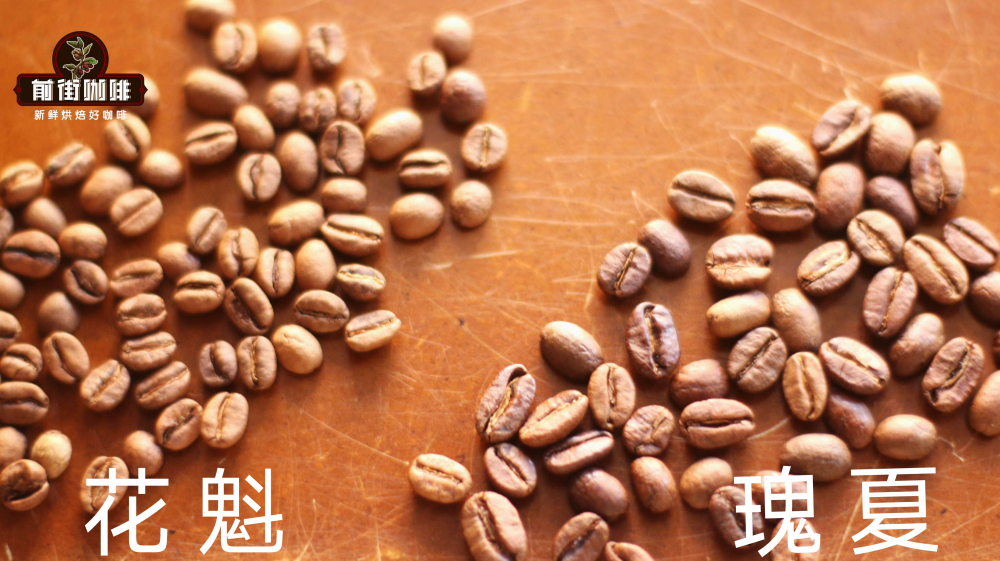
In the Chinese-speaking context, the name “Huakui” is frequently misused and even equated with Geisha. It’s important to clarify that “Huakui” is a proprietary term used in the Chinese market for a natural Ethiopian heirloom variety produced by the Buku Abel washing station in the Hambella region of Ethiopia. The sacks of this batch of beans are labeled overseas as being from the Hambella region, not Huakui. The frequent confusion is related to another Chinese translation of Geisha — “Yìjì kāfēi” (艺伎咖啡). This translation originated in Taiwan due to its phonetic similarity to the Japanese word for geisha, while the mainland Chinese name “Guīxià” (瑰夏) was given by Yuan Xian, former head of Kamollo Coffee Beans.
Geisha (Geisha) is originally an independent variety within Arabica and is not limited to a specific producing region. Its fame comes from the cultivated version grown in Latin America (designated as Geisha T2722), known for its intense floral and fruity aromas. In contrast, Huakui represents a local Ethiopian heirloom variety, which is a naturally occurring mixed population, and its flavor profile is distinctly different from that of the cultivated Geisha. Understanding this is the first step in correctly distinguishing the two.
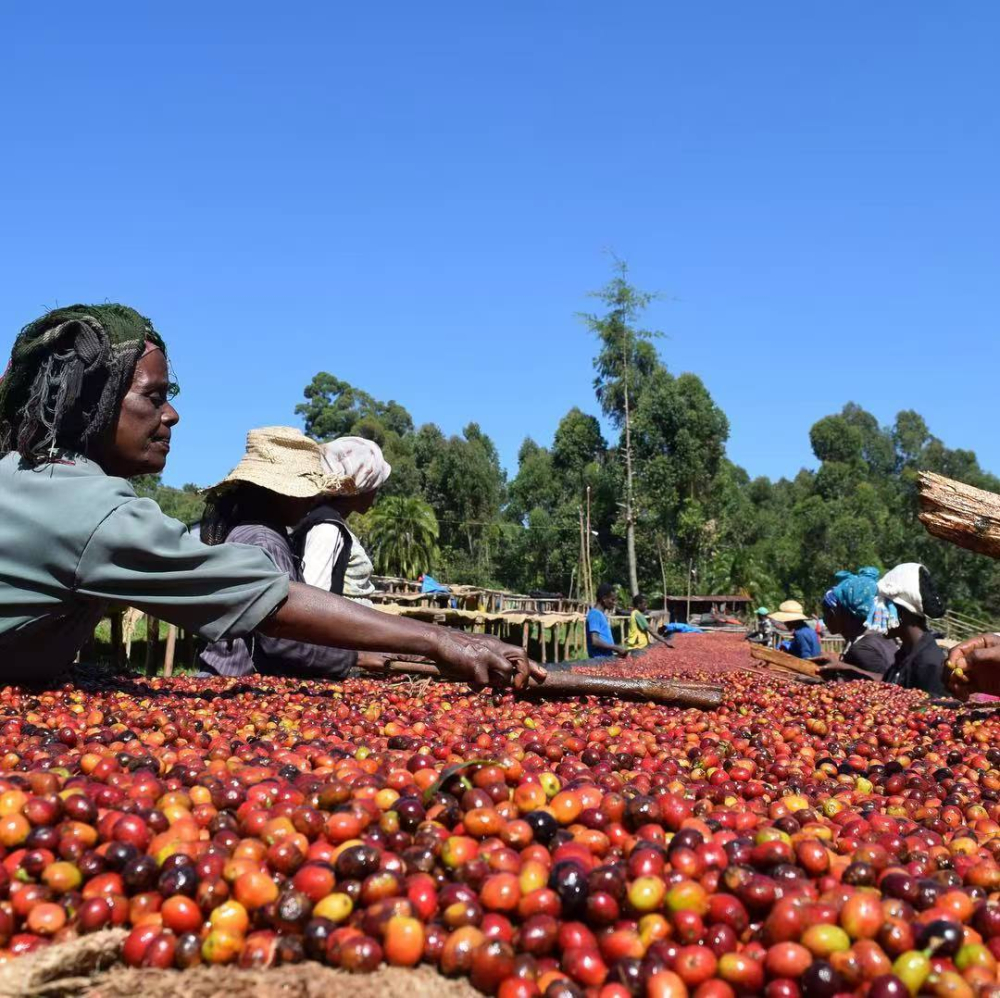
To discuss the origins of Geisha, we must go back to 1929, when the British sent a colonel to the Banko Gotiti area of Ethiopia — a village on the map labeled Gesha — to collect coffee samples and also purchase other seeds from the local market. As there was no systematic method of variety differentiation at the time, in 1931 he sent all the samples mixed together to a British plantation in Kenya. In 1935, he mistakenly spelled the place name as “Geisha” in a letter, and this name was later widely adopted. Today, the Geisha variety grown in Latin America, after multiple generations of selection, has become one of the star varieties known for its high flavor performance.
In contrast, the Gesha area in Ethiopia where the original samples were collected still retains a large number of native coffee varieties. These may be distantly related to Geisha T2722, but their flavor profiles are vastly different, often showcasing notes of berries, nuts, and spices. To clearly differentiate them, the Ethiopian government has officially referred to the local native varieties as Gesha, rather than using the commercially cultivated name Geisha.
As for the widely used term Ethiopian Heirloom, it actually refers to the mixed planting and harvesting of various uncategorized coffee tree varieties throughout Ethiopia. As Ethiopia has the world’s richest coffee gene pool — with diverse varieties and difficult identification — the government, for protection reasons, does not publicly disclose specific cultivars. Therefore, Ethiopian beans on the market are commonly referred to as Heirloom, meaning “family heirloom.” It can be observed that such beans usually have inconsistent shapes and flavors dominated by floral, fruity, and citrus notes.
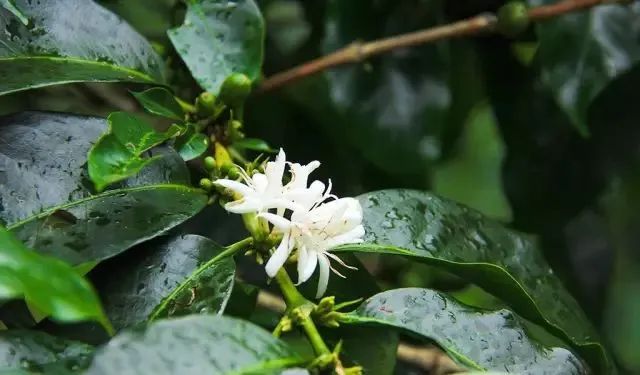
So, where does the name Huakui come from? Actually, this bean was originally the champion of the natural category in the Hambella region at the 2017 TOH competition, and at that time it was just an ordinary “Ethiopian Hambella natural coffee.” Later, it was introduced to China by a Beijing-based green bean importer, who gave it the highly oriental name “Huakui,” meaning “the queen of flowers” or “peerless beauty.” What truly made Huakui famous was during the 2017 China Coffee Brewing Championship, where the runner-up, Li Jianfei, used this batch of beans to defeat many competitors using Geisha. At a time when Geisha almost dominated the competition, this result was astonishing and instantly made “Huakui” a household name.
It’s worth mentioning that although Huakui originates from the Hambella region, not all coffee from this area can be called Huakui. The DW company operates several washing stations in the Dimtu area at the core of Hambella, such as Buku Abel, Buku Saysay, Haro Soresa, and Tirtiro Goye, with a total production of about 1,100 tons. However, based on regional and washing station information, only the specific small sub-region processed by the Buku Abel washing station includes the fields where the original championship-winning Huakui beans were grown that year. Therefore, the industry generally agrees that only the natural Ethiopian heirloom variety processed by Buku Abel qualifies as authentic Huakui.
Regarding the “X.0” numbering system behind Huakui beans, it is designed to distinguish flavor variations caused by factors such as climate, soil, and rainfall each year. Based on the 2017 championship batch, subsequent years were numbered as Huakui 2.0 (2018), Huakui 3.0 (2019)… up to Huakui 6.0 in 2022. This numbering system helps consumers identify the year and potential flavor evolution.
Additionally, many people wonder if “small-bean Huakui” is part of the Huakui family? The answer is yes. Cupping tests have found that in certain years (such as 2018 and 2019), some small beans in Huakui batches showed very similar characteristics to the 2017 championship batch. Though slightly inferior in body and aftertaste, their aroma performance was comparable. After confirming this phenomenon in 2019, starting in 2020, Huakui was divided into “4.0” and “small-bean Huakui” categories. Although small-bean Huakui is not part of the X.0 series, it still retains the Huakui lineage and flavor characteristics.
If you wish to roast Huakui at home, pay attention to its green bean characteristics: it has a strong fermented coffee flower aroma, distinctly different from typical grassy notes; the beans are uneven in size, mostly pointed, with a moisture content of about 11%, and are of medium hardness. It is recommended to use a Yangjia 800N roaster, with an inlet temperature of 190°C, yellowing point around 151°C (5 minutes 51 seconds), raising the temperature to 193°C before first crack and dropping the beans, maintaining the first crack development time within 1 minute and 30 seconds, and adjusting the air vent appropriately to control the heating rate. When the aroma of strawberry jam becomes noticeable (around 193°C), it’s time to drop the beans. The entire process is recommended to be completed within 11 minutes to preserve the maximum aromatic compounds.
For pour over, our shop uses the V60 dripper, with a medium-fine grind (close to caster sugar, about 80% through a #20 sieve), water temperature at 90°C, a 1:15 coffee-to-water ratio, and a three-pour method. The steps are as follows: first, bloom with 30 grams of water for 30 seconds; then pour up to 125 grams, waiting about 10 seconds; finally, pour up to 225 grams. Total extraction time is about 2 minutes. Remove the dripper after the dripping has completely finished. It is recommended to gently swirl before drinking. Under these parameters, Huakui exhibits rich berry and tropical fruit aromas, balanced acidity and sweetness, and a lingering aftertaste with the mellow sensation of oolong tea.
The above content is compiled by CoffeeHunters, a coffee news website.


