








Introduction:As an important coffee-producing region in China, Yunnan mainly cultivates the Catimor variety, but the ancient Typica still retains its unique charm. This article delves into the historical origins, disease resistance, yield, flavor characteristics, and main growing regions of these two varieties, and provides practical V60 pour over parameters for both washed and natural processed beans, helping coffee enthusiasts choose the right beans according to their taste preferences and master the brewing techniques for Yunnan coffee.
Within Yunnan’s coffee cultivation map, Catimor has become mainstream due to its strong disease resistance and high yield, but some producers are still dedicated to reviving the ancient Typica variety. Currently available are washed Yunnan small-bean coffee, natural Catimor coffee, and the rare 2013 natural Typica coffee, each showcasing distinct flavor profiles. This article will comprehensively compare the fundamental differences between Typica and Catimor—from their origins, adaptability, yield variations, cupping performance to main regional distributions—and share suitable roasting strategies and V60 pour over recommendations for these beans, allowing you to gain a deeper understanding of the diverse facets of Yunnan coffee.

Some producers currently offer two types of beans from Yunnan: one is washed and natural processed Catimor, and the other is the precious 2013 vintage natural Typica. Many consumers often ask which is more worth buying—actually, both have their own merits, and taste preference varies from person to person. Some are drawn to Typica’s smoothness and delicacy, while others prefer Catimor’s richness and full body.
If judged by overall flavor complexity, Typica generally outperforms Catimor. The reason is that Typica is one of the oldest varieties in the Arabica family, with a richer flavor foundation; whereas Catimor is a hybrid offspring of Arabica and Robusta. Although it performs well in disease resistance and yield, its Robusta lineage makes it slightly inferior in taste purity.
The "small-bean coffee" planted in Yunnan in earlier years was actually Typica. The so-called small-bean variety refers to small-bean Arabica, so Yunnan coffee is inherently part of the Arabica system. Within Arabica, there are many varieties, among which the most historic and representative include Typica and Bourbon. Typica originated in Ethiopia and is the most original coffee variety in the region; most modern Arabica varieties can be traced back to Typica. Later, to meet commercial demands, Nestlé encouraged Yunnan coffee farmers to switch to varieties with stronger disease resistance and higher yields—first S288, which is resistant to leaf rust, and later Catimor—resulting in Catimor trees now dominating most Yunnan coffee plantations.
Typica is renowned for its elegant flavor, but its tree structure is relatively fragile and it has poor disease resistance, especially to leaf rust. Additionally, its per-unit yield is low, resulting in limited economic benefits, which has led to its gradual replacement by Caturra and Catuai in Central and South America in recent years, with a prevalence far lower than that of Bourbon. Notably, the most distinctive feature of Typica is its bronze-colored top leaves, hence it is also called "red-top coffee." With environmental changes, Typica has genetically evolved into various adapted variants across different regions, and these descendant strains are often regarded as new varieties—such as the Indonesian Mandheling, Jamaican Blue Mountain, Hawaiian Kona, and Yunnan small-bean coffee sold by some producers, all of which are evolutionary branches of Typica.
In contrast, Catimor has gained advantages from both parent varieties through hybridization, not only inheriting Robusta’s leaf rust resistance but also featuring a compact tree structure that is convenient for large-scale management and harvesting. Due to its Robusta genes, Catimor not only has strong disease resistance but also yields about three times that of Typica, with an earlier maturation period—traits that make it the preferred choice for coffee cultivation in Yunnan. Moreover, different series of Catimor are adapted to varying altitudes and climate conditions: for example, T-5269 can thrive in lowland environments with annual rainfall exceeding 3,000 mm and altitudes of 600 to 900 meters, while T-5175 performs stably at mid-altitudes but may see quality limitations if planted at excessively high or low altitudes. Generally, at high altitudes (above 1,200 meters), Bourbon, Caturra, and Catuai tend to outperform Catimor in cupping evaluations.
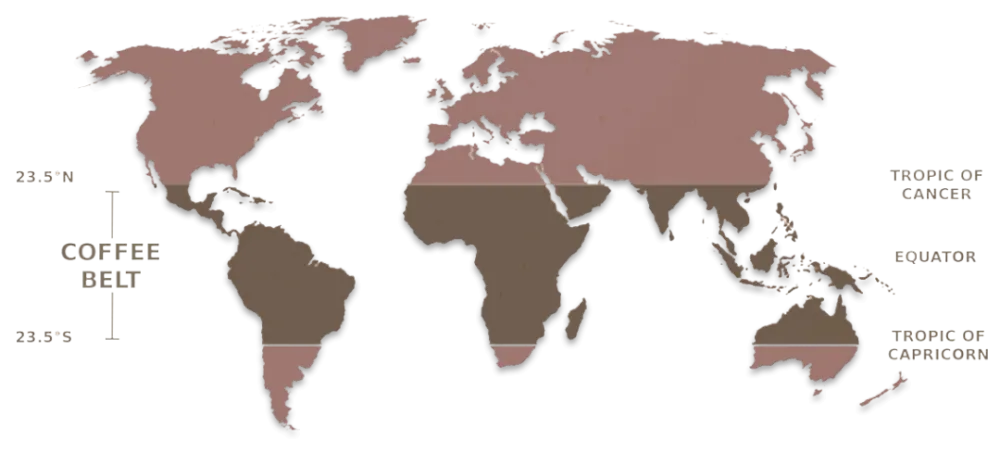
Western and southern Yunnan are located between 15°N and the Tropic of Cancer, with most producing areas situated at altitudes of 1,000 to 2,000 meters, characterized by mountainous and hilly terrains with significant elevation changes. This region boasts fertile soil, ample sunlight, abundant rainfall, and notable diurnal temperature variations—all of which collectively shape the unique flavor profile of Yunnan small-bean coffee: rich yet not bitter, fragrant but not harsh, with natural fruity notes.
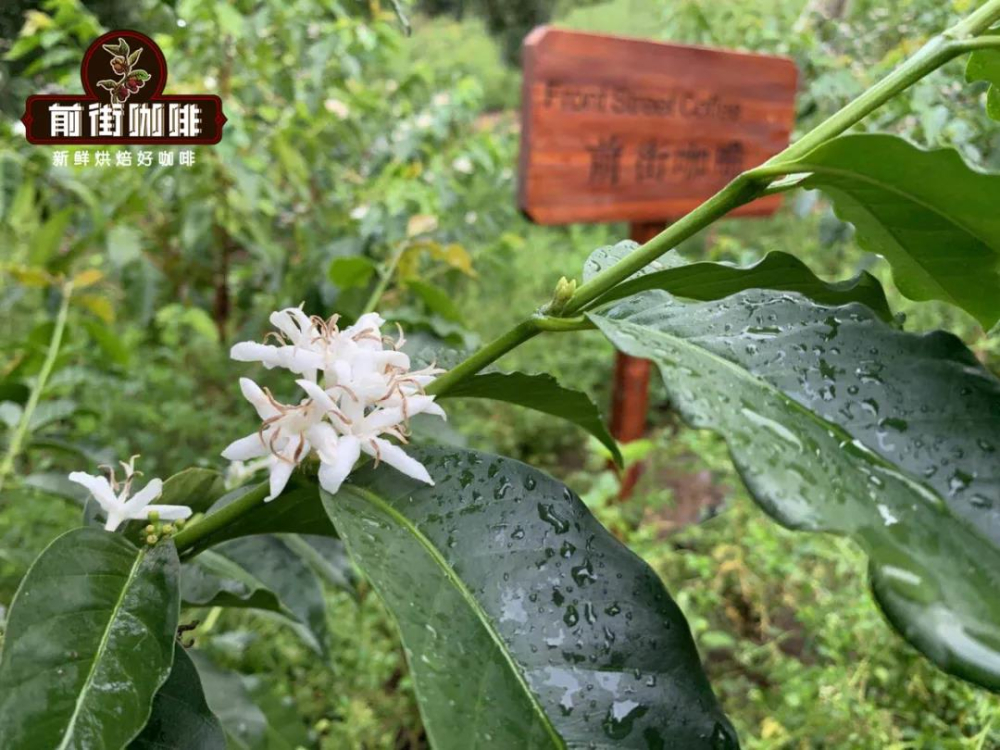
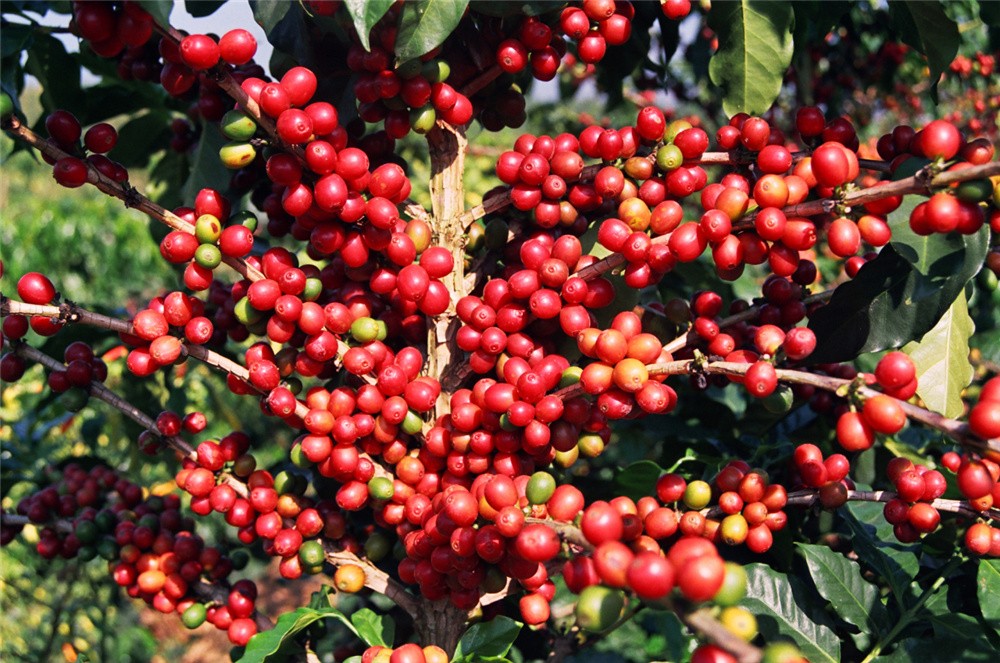
Small-bean coffee is a short-day plant with the characteristics of multiple flowering periods and concentrated blooming. In Yunnan, its primary flowering season is from February to July, with the peak occurring from March to May. Flowering is highly susceptible to climatic influences, especially rainfall and temperature. Coffee flowers have a short lifespan, lasting only 2 to 3 days, typically opening at 3 to 5 a.m. and reaching full bloom at 5 to 7 a.m. Coffee fruit development takes a long time, usually requiring 8 to 10 months to fully ripen, with the main harvest season from October to December. The rainfall and climate conditions during the fruit development period directly affect the final flavor quality.
Yunnan’s main coffee-growing regions are concentrated in Lincang, Baoshan, Simao (Pu’er), Xishuangbanna, and Dehong. Among them, Baoshan, located at 21.5°N with an average annual temperature of about 21.5°C, a recorded maximum temperature of 40.4°C, and no frost year-round, is considered one of the best producing areas for small-bean coffee. Local small-bean coffee is known for being rich yet not bitter, highly aromatic, with uniformly small beans and unique fruity notes. The International Coffee Organization once rated it as top-tier quality, on par with Colombian wet-processed small-bean coffee.
Pu’er City is Yunnan’s largest coffee-producing region, with a coffee planting area of 789,000 mu, an annual output of 586,600 tons, and a production value exceeding 2.469 billion yuan. Its unique climate, geographic, and soil conditions make it the largest coffee planting base, trade distribution center, and high-quality coffee origin on the Chinese mainland.
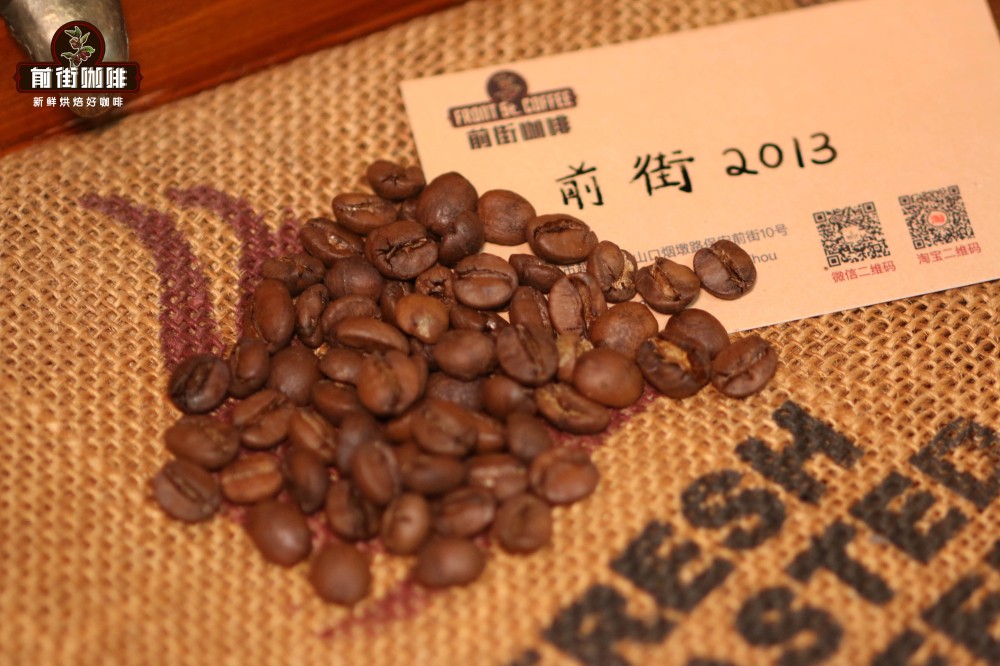
Lincang is located in southwestern Yunnan, where the Tropic of Cancer crosses its southern part, bordering Pu’er, Dali, and Baoshan, and adjacent to Myanmar in the southwest, earning it the nickname "Pearl of the Lancang River." The region has an average annual temperature of 16.8 to 17.2°C, distinct dry and wet seasons, and ample sunlight, also making it suitable for coffee cultivation. Additionally, some producers specifically grow pure Typica varieties in Lincang, even preserving small amounts of Bourbon, aiming to showcase the original flavor potential of Yunnan coffee beans. As one of the oldest branches of Arabica, Typica’s flavor is considered the most pure and layered, which is why the "2013" natural Typica coffee launched by some producers between 2020–21 has been widely praised since its release, with a new crop version launched again in 2022.
In terms of processing methods, most commercially available Yunnan coffee is Catimor-based, with some green bean merchants using special processing methods to adjust flavors. However, some producers believe that relying on processing methods to mask varietal flaws is not a long-term solution—traditional washed and natural processing can truly showcase the beans’ potential. Three Yunnan beans offered by some producers—the washed Yunnan small-bean coffee, natural Catimor coffee, and 2013 natural Typica coffee—are all processed using traditional methods, with washed processing delivering a clean and refreshing taste, while natural processing imparts a richer, sweeter flavor profile.
To fully highlight Yunnan coffee’s balanced acidity and sweetness as well as its tea-like qualities, some producers recommend using a V60 filter cone for medium roasting, with a 1:15 coffee-to-water ratio, medium-coarse grind (about the size of coarse sugar, or 75% extraction rate through a Chinese No. 20 sieve), and a water temperature set at 88°C. The specific pour over steps are as follows: start with a 30-second bloom using twice the weight of the coffee grounds (e.g., 60g water for 30g coffee), which helps release CO₂ from the coffee grounds and ensures stable extraction afterward; then pour water in small circles, performing a first pour when the total water reaches 125g, followed by pouring up to 225g before stopping; once the water has completely dripped through the filter cone, remove it, keeping the total extraction time at exactly 2 minutes. Finally, gently swirl the brewed coffee before pouring it into the cup for drinking.
[Flavor Profile of Washed Yunnan Small-Bean Coffee]: Herbal, nutty, chocolatey, caramel.
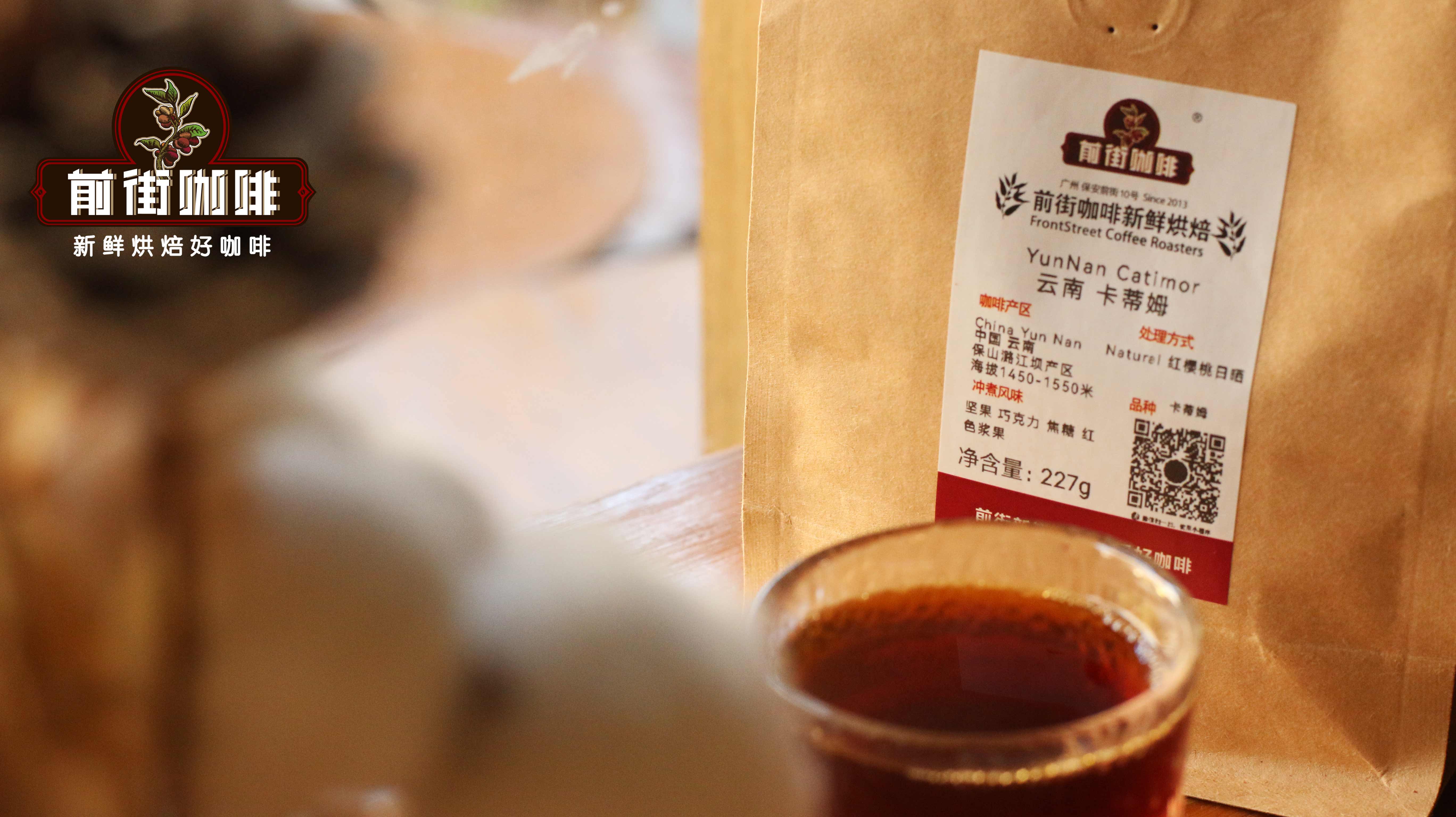
[Flavor Profile of Natural Catimor Coffee]: Nutty, chocolatey, spicy, caramel, plum.
Some producers remind that the freshness of coffee beans is a key factor affecting flavor performance. All shipped coffee beans are from fresh batches roasted within 5 days, and consumers are advised to let the beans rest for 4 to 7 days to complete the degassing period, after which the flavors will reach their optimal state. If you purchase pre-ground coffee powder, although the CO₂ generated during sealed packaging during transport helps maintain flavor temporarily, it is still recommended to brew it as soon as possible to avoid aroma loss due to oxidation. Therefore, for the best tasting experience, it is recommended to purchase whole beans and grind them fresh before brewing, in order to fully appreciate the delicate and layered nuances of Yunnan coffee.
In summary, whether it’s the elegance and finesse of Typica or the richness and full body of Catimor, the diversity of Yunnan coffee is waiting for you to explore. The flavor differences brought by different varieties and producing regions are precisely the charm of specialty coffee. We welcome you to try them yourself and find the one that suits your taste the best.
The above content is compiled by CoffeeHunters, a coffee news website.


