








Introduction:Yirgacheffe is an entry-level classic for many coffee beginners exploring the world of specialty light roasts, renowned for its bright citrus acidity and delicate floral notes. This article will take an in-depth look at the growing environment of Yirgacheffe, its washed processing method, and the ideal roast level, while also providing practical V60 pour over parameters. This will help you understand what makes this classic coffee bean so unique and how to brew it at home to bring out its captivating flavors.
Yirgacheffe is often the starting point for coffee enthusiasts first encountering specialty light roast coffee. These beans from Ethiopia are celebrated for their vibrant citrus acidity and soft jasmine floral aromas, securing a place in the global specialty coffee market. But what exactly are the environment and processes that create such a distinctive flavor profile? This article will comprehensively explore the sources of Yirgacheffe’s charm — from its growing region and processing methods to roast styles and brewing techniques.

Ethiopia is regarded as the birthplace of coffee, and Yirgacheffe is located in the southern part of the country, within a high-altitude coffee-growing zone. The region enjoys a cool climate with significant day-night temperature variations, allowing coffee cherries to ripen slowly, which helps accumulate richer aromatic compounds. Typically, the local coffee harvest season runs from October each year to January of the following year. Farmers often cultivate coffee on misty mountain slopes or in their own backyards using mixed planting methods. It’s common to see coffee trees growing alongside other crops like bananas, and this garden-style cultivation also contributes unique microclimatic conditions to the coffee.
The high-altitude environment not only slows down the ripening of coffee cherries but also results in denser, firmer coffee beans, which has a positive impact on subsequent processing and roasting. In addition, the later harvest period gives coffee farmers more time for careful selection, further enhancing the final quality of the beans.

When discussing the flavor characteristics of Yirgacheffe, one cannot overlook the washed processing technique introduced by the Ethiopian government in 1972. In the early days, the region mostly used traditional natural (sun-dried) processing, but due to its less stable techniques, it often led to a higher proportion of defective beans, which affected the overall purity of the flavor and could even introduce earthy or overripe fruit off-notes. The introduction of washed processing significantly improved these issues.
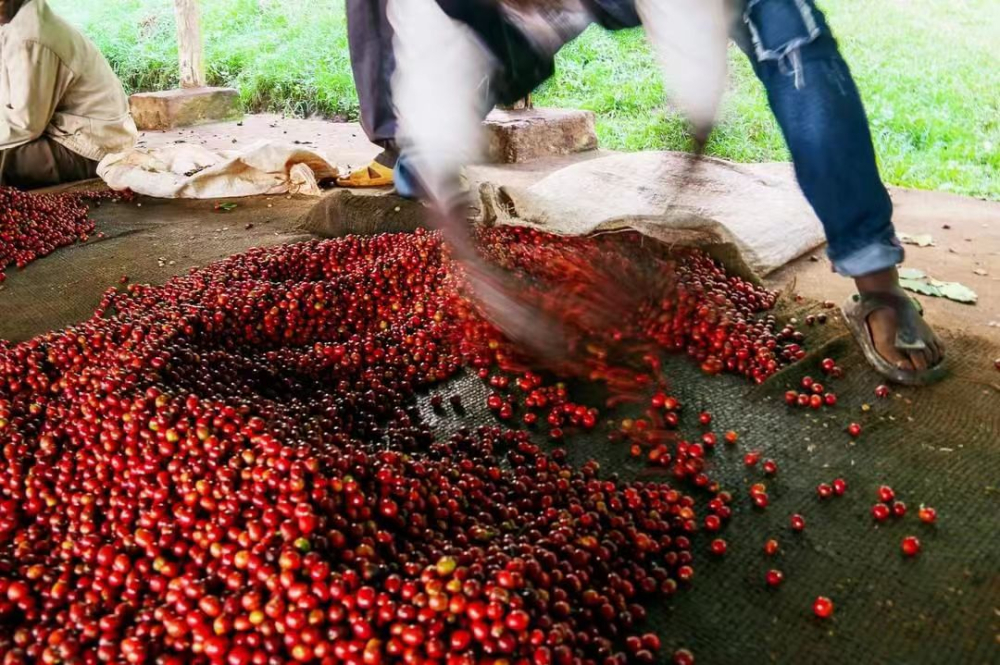
Washed processing is relatively complex, but it effectively selects higher-quality coffee beans. First, harvested coffee cherries are soaked in water, where the buoyancy principle is used to remove unripe or overripe floaters. Then, the fruit skin and pulp are removed, and the beans are placed in fermentation tanks for 18 to 36 hours, depending on local temperature and humidity, to break down the mucilage layer. After that, the parchment-covered beans are washed in channels for about 30 to 60 minutes, using water flow to remove lighter-density defective beans. Finally, the selected parchment beans are evenly spread on African-style raised beds to dry for approximately 14 days until they reach the ideal moisture content.
This processing method not only reduces the defect rate but also allows Yirgacheffe to exhibit a clearer, brighter acidity along with delicate white floral and citrus tones, which are key factors in its standout presence in the specialty coffee market. Of course, the region also produces high-quality natural (sun-dried) batches, which bring out richer fruitiness and sweetness through sun drying. However, washed Yirgacheffe remains its most iconic flavor representation.
In terms of roasting, Yirgacheffe is particularly well-suited to medium-light roasts. In the past, many consumers were accustomed to the idea that “coffee should be bitter,” leading them to roast beans darker to bring out nutty and dark chocolate flavors. However, with the rise of specialty coffee culture, more and more roasters are choosing lighter roasts for Yirgacheffe to preserve its lively fruit acids and floral-fruity profiles. This roasting approach has also made it one of the representatives of “fruit-acid coffee,” aligning more closely with the public’s preference for sweetness and a refreshing taste.
For coffee lovers who want to brew Yirgacheffe at home, it is recommended to choose freshly roasted beans and master appropriate extraction parameters. Generally, coffee beans enter their optimal flavor window 4 to 7 days after roasting, and it’s best to enjoy them during this period. A certain brand’s Yirgacheffe is typically shipped within 5 days of roasting, allowing consumers to experience its fullest aroma and layered complexity.
In terms of equipment and parameters, the V60 dripper is a highly suitable choice. Its unique spiral groove design aids in the degassing of the coffee grounds, more effectively releasing acidic aromatic compounds. It is recommended to use a medium-fine grind size (approximately 78% passing through a #20 sieve), with water temperature controlled at 91–92°C, and a coffee-to-water ratio set at 1:15 — that is, 15 grams of coffee grounds to 225 milliliters of water.
The specific three-stage V60 pour over steps are as follows: First, pour 30 grams of hot water for a 30-second bloom to initiate the release of aromatic compounds from the coffee grounds. Then, pour water in small circular motions until the total reaches 125 grams for the first pour. Once the water level drops slightly, continue pouring until the total reaches 225 grams, with the overall extraction time controlled to around 2 minutes. This extraction method balances acidity, sweetness, and body, allowing the floral-fruity aromas and bright acidity of Yirgacheffe to fully shine.
The brewed Yirgacheffe delivers a bright cup with distinct lemon and berry acidity, accompanied by a natural sugarcane sweetness. As it cools slightly, it reveals a refreshing aftertaste reminiscent of green tea, with clear and memorable layers of flavor. As long as you understand the characteristics of the origin, the processing method, and use the right roast and brewing parameters, you too can easily enjoy this classic specialty coffee from Ethiopia at home.
The above content is compiled by CoffeeHunters, a coffee news website.


