








Introduction:Have you ever thought that more expensive coffee must taste better? In reality, the pricing of coffee involves multiple factors such as variety characteristics, green bean grade, and regional yield. This article will delve into the key elements that influence coffee pricing and, by combining real-world consumer scenarios, help you understand the relationship between price and flavor—so you can make more informed choices about the coffee that best suits your taste.
Many people tend to intuitively believe that "higher price = better quality," especially in the specialty coffee market, where this notion is even more prevalent. However, whether a cup of coffee is delicious cannot be determined solely by its price. This article will break down the logic behind coffee pricing from three main perspectives: variety differences, green bean grading systems, and regional yields, while also exploring the true relationship between price and flavor. This will help you make smarter decisions when buying coffee beans or ordering at a café.

Many people are accustomed to equating money spent with the quality of what they get in return—a consumer mindset that holds true in many areas. But in the world of coffee, things aren’t so straightforward. One customer, while ordering at a coffee shop, saw a Jade Red Label pour over coffee priced at 75 yuan and immediately assumed it must taste better than a regular pour over at 30 yuan. This instinct to directly link price with flavor is actually a common misconception.
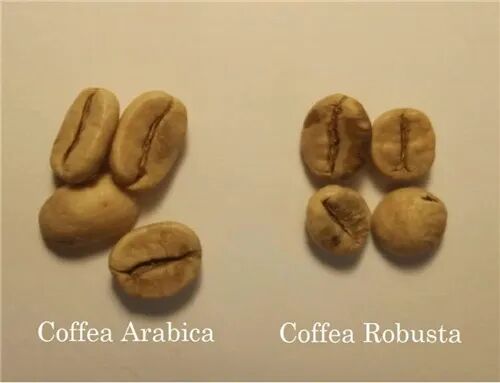
So, what exactly are the factors that influence the price of coffee? Let’s first look at the differences among coffee varieties. The mainstream coffee beans on the market are mainly divided into two categories: Arabica and Robusta. The Arabica family includes numerous varieties such as Typica, Bourbon, and Caturra. These varieties are typically grown at altitudes above 800 meters and not only offer delicate and varied flavors but also exhibit unique fruit acidity and aromas. However, Arabica is extremely picky about growing conditions, has weak disease resistance, and relatively low yields, which leads to higher cultivation and management costs—and thus a naturally higher price.
In contrast, Robusta varieties are mostly grown at lower altitudes below 800 meters. They have stronger disease resistance and adaptability, can be planted at high density, and yield large quantities. Due to their typically stronger, more bitter flavors—often with woody or nutty notes—Robusta is commonly used in instant coffee or dark-roasted espresso blends, and its price is generally more affordable.
Secondly, the green bean grading system is another important factor affecting coffee prices. As an agricultural product, each producing country has its own set of grading standards, usually based on bean size, altitude (or hardness), and defect rate. Generally speaking, the higher the grade, the better the bean quality—and the higher the price.
For example, countries like Kenya and Colombia determine grades based on bean screen size. The larger the screen number, the fuller and more mature the bean, which helps achieve even development during roasting. Meanwhile, countries such as Panama, Costa Rica, and Guatemala use altitude-based grading: the higher the altitude, the denser the beans and the more concentrated the flavors. As for regions like Ethiopia and Indonesia, grading is often based on the ratio of defective beans—the fewer the defects, the higher the price.
Beyond official standards, some renowned estates also have their own strict internal grading systems. Take Panama’s Hacienda La Esmeralda as an example: its Geisha variety is divided into Red Label, Green Label, and the even more exclusive auction lots. The Red Label typically comes from specific premium plots, while the auction lots go through a bidding process, are produced in limited quantities, and often come with high price tags—they’re the holy grail sought after by coffee enthusiasts.
Lastly, yield is also a key factor influencing coffee prices. The saying “scarcity creates value” applies to the coffee market as well. Take Jamaican Blue Mountain coffee, once hailed as the “Hermès of the coffee world.” Its production is limited to just about 6,000 hectares in the Blue Mountains, and the planted varieties are mostly Typica, which already have inherently low yields. Add to that high-altitude cultivation, labor-intensive harvesting, and high management costs, and you get an extremely limited supply. This scarcity, combined with long-term acclaim in the Japanese market, once drove Blue Mountain coffee prices sky-high—with single cups sometimes costing over a thousand yuan. However, in recent years, some Blue Mountain green beans have been directly imported into Chinese-speaking markets, and prices have gradually become more accessible—around 60 yuan can get you a cup of Blue Mountain pour over.
Taking all these factors into account, we can see that the price of coffee actually reflects a complex interplay of supply chain and market mechanisms. However, a higher price doesn’t necessarily mean better flavor—the key lies in whether it matches your personal taste preferences. One customer who regularly drinks dark roast tried a Gold Label Geisha but was sorely disappointed by its pronounced fruit acidity. In truth, whether it’s a light-roasted Yirgacheffe or a dark-roasted Brazilian bean, there are recommended options in every price range. For light roasts with prominent acidity, there are affordable African beans as well as pricey auction-lot Geishas; for bold, rich dark roasts, besides Blue Mountain, there are also many budget-friendly choices like Brazilian or Sumatran beans.
In summary, the price of coffee reflects the various costs and scarcities involved in its production process. But the definition of a “good cup of coffee” ultimately depends on whether it suits your palate. Whether you’re a beginner or a coffee aficionado, understanding these pricing dynamics will empower you to choose the cup that’s truly right for you with greater confidence.
The above content is compiled by CoffeeHunters, a coffee news website.


