








Introduction:Geisha coffee has become a darling of the specialty coffee scene in recent years, but many wonder if it’s suitable for espresso. This article delves into the origins and characteristics of the Geisha variety, analyzes why it’s favored in competitions, and explains in detail the roast profile and extraction settings for Geisha SOE. With practical parameter suggestions, it helps readers brew flavorful Geisha Americanos or lattes at home.
The Geisha (Geisha) coffee variety has rapidly risen to fame over the past decade, becoming a dream bean for many coffee enthusiasts. However, many have one question: can this coffee, famous for pour over, also be used to make espresso? This article will start with the background of the Geisha variety, explore its unique flavor traits, discuss its feasibility in espresso brewing, and provide practical SOE bean selection and extraction parameters to help you easily master the art of brewing Geisha at home.

Geisha coffee is arguably one of the most talked-about coffee varieties of the past ten years, known for its complex flavor profile, especially in Panama. Among Panamanian Geishas, those from Hacienda Esmeralda are often regarded as the benchmark, with its Green Label Geisha being a top choice for many newcomers to this variety. The reason this coffee is so highly praised lies not only in its origin and processing method but also in its distinctive aromatic expression — including jasmine, citrus, pomelo, and caramel, among other layered flavors that leave a lasting impression.
However, in everyday drinking, Geisha is mostly presented via pour over. This is because its light roast profile best preserves the delicate floral and fruity notes. A customer once suggested making the Hacienda Esmeralda Green Label Geisha into an Americano, but was declined by a professional barista, mainly due to concerns that its bright flavors might be lost under espresso’s high-pressure extraction, or even result in unbalanced acidity.

Interestingly, in international barista competitions, Geisha has become a popular choice among competitors. These competitions include espresso, milk-based coffee, and signature drinks — all of which require an espresso base. The reason competitors favor Geisha isn’t its high price, but rather its highly recognizable floral and fruity aromas. In competitions, baristas must not only extract precisely but also clearly articulate the coffee’s flavor profile, and Geisha’s distinct citrus, tea-like, and floral notes help judges identify and score these attributes.
So, is Geisha really suitable for making espresso? The answer is yes. In fact, with the right roast level and bean selection, Geisha can also showcase captivating espresso flavors. The key lies in the fact that Geisha is typically light roasted, and using it directly for traditional high-pressure extraction can easily lead to under-extraction or overly prominent acidity. Therefore, if you want to try Geisha espresso, it’s recommended to choose a medium-roast SOE (Single Origin Espresso) bean designed for that purpose, to balance acidity, sweetness, and aroma.
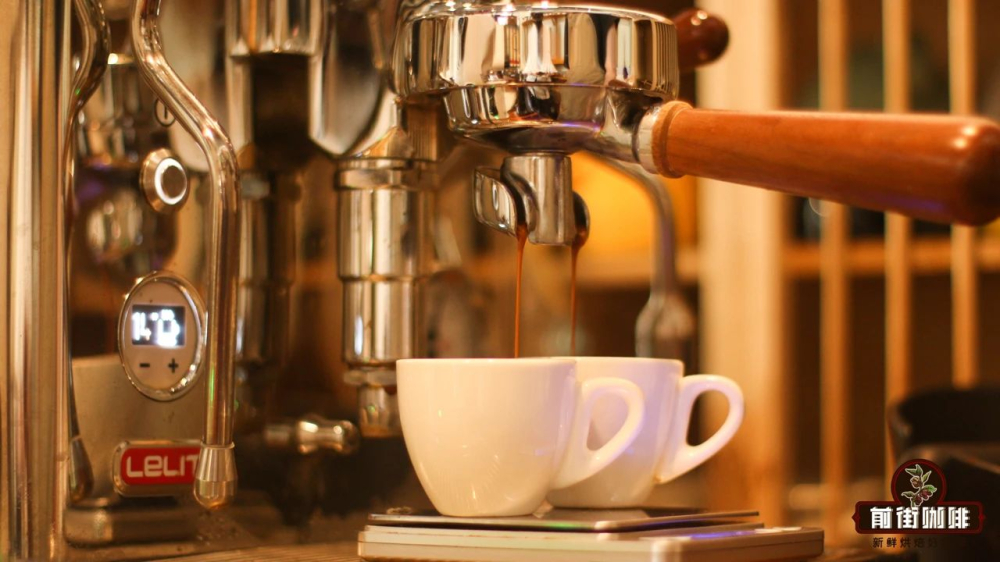
Take the commonly available Granja La Esperanza Geisha SOE as an example. This bean is medium roasted, with flavor notes centered around pleasant floral and yellow fruit tones, such as citrus and green tea aromas being quite pronounced. In terms of mouthfeel, it offers a medium-to-high acidity paired with moderate sweetness and low bitterness, making it very suitable for Americanos or lattes. Extraction is recommended at a 1:2 brew ratio, with about 20 grams of coffee, and a brew time of 28 to 30 seconds, yielding approximately 40 grams of espresso.
For further variation, this Geisha SOE can be used to make an Americano: simply add 160 grams of hot water to enjoy a refreshing Geisha Americano; or if you prefer a milk coffee, add 200 grams of fresh milk to create a well-balanced Geisha latte. However, it’s worth noting that due to Geisha’s naturally vibrant acidity, it’s advisable to use fresh, high-quality milk to minimize flavor interference.
In summary, although Geisha coffee best showcases its nuanced layers in pour over form, when the right roast level is chosen and extraction parameters are appropriately adjusted, it is also suitable for espresso preparation. Whether you’re aiming to challenge yourself with a competition-grade Geisha SOE or simply want to enjoy a clear-flavored Geisha Americano at home, mastering the key parameters and bean selection will allow you to easily brew a satisfying coffee experience.
The above content is compiled by CoffeeHunters, a coffee news website.


