







Introduction:The Guji region in Ethiopia has emerged as a rising star in the specialty coffee scene over the past decade, renowned for its distinctive regional flavors and diverse processing methods. This article takes an in-depth look at three of Guji’s most well-known sub-regions — Hambella, Gedeo (Shakiso), and Uraga — dissecting their terroir characteristics, processing techniques, and flavor profiles. It also details the processing specifics and pour over parameters for the classic "Huaca" natural-processed beans, helping you fully grasp the essence of Guji coffee from flavor to brewing.
Guji is the second specialty coffee region in Ethiopia to be independently delineated from Sidamo, following Yirgacheffe. In just over a decade, it has made a name for itself on the international market thanks to its strongly identifiable regional flavors. The region features a complex terrain that includes high mountains, plateaus, and deep valleys, with volcanic soils nearly two meters thick, often dark brown or brownish in color. The high altitude (generally over 1800 meters) combined with significant day-night temperature variations slows the ripening process of coffee cherries, allowing them to accumulate a wealth of aromatic compounds and develop unique flavor traits in each sub-region.
In 2010, Ethiopia’s unique ECX trading system separated Guji from Sidamo, making it an independent region administratively under Oromia. This move enabled Guji to officially enter the specialty coffee map with its outstanding and representative flavors. The region is further divided into multiple smaller areas, among which Hambella, Gedeo, and Uraga have gained widespread attention for their exceptional coffee quality.
Hambella is the birthplace of the "Huaca" coffee beans and a key sub-region that has helped boost Guji’s global reputation. Its geographical location is unique, with a highland plateau about 30 kilometers wide and 3200 meters above sea level separating it from Kochere in Yirgacheffe to the west. The terrain is varied and the altitude relatively high (2100–2300 meters), with the harvest season typically concentrated between November and January of the following year. The coffee here is characterized by prominent floral notes and sweet fruit aromas, with a rich and balanced flavor profile. Notably, Hambella is surrounded by large areas of untouched virgin forest, where fallen leaves and plant roots provide natural nutrients to the coffee trees, further enhancing the complexity of the flavors.
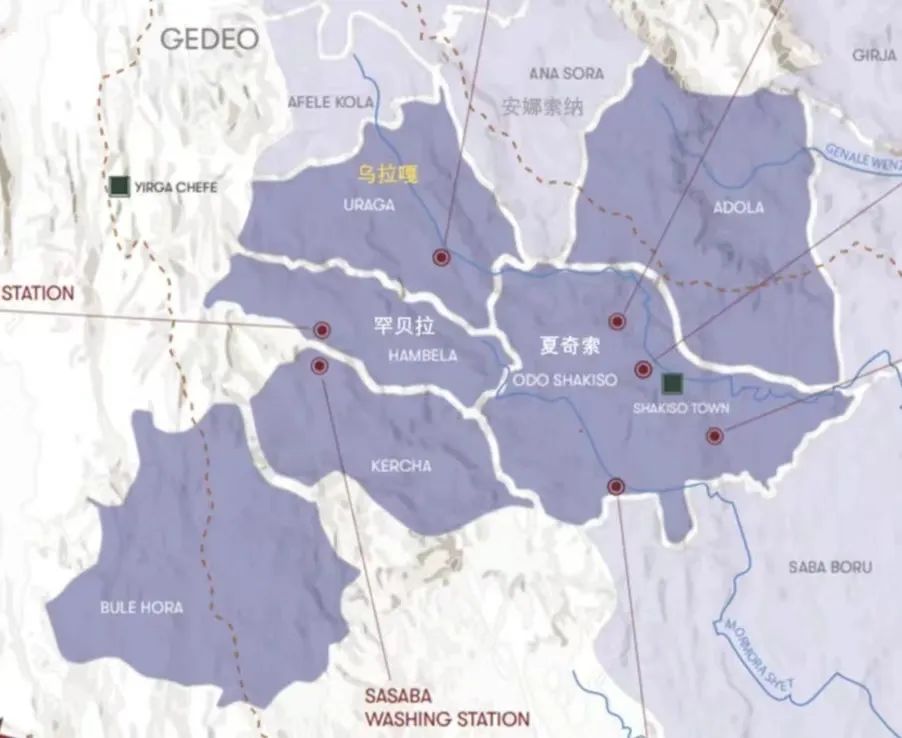
Gedeo (Shakiso) has an average altitude of 1800–2200 meters, and its coffee flavor is described in The World Atlas of Coffee as having a “sweet lemon-honey profile,” known for its bright acidity and honey-like sweetness. Uraga is located at the northernmost part of Guji, with altitudes reaching up to 2300 meters. The soil is fertile black earth, and the region is close to Yirgacheffe. Coffee from Uraga is noted for its pronounced tea-like body, rich floral and fruity notes, and excellent acidity, only gradually entering the market spotlight after a washed lot won an award at the 2019 TOH competition.
Flavor analysis by the Dutch green coffee company Trabocca shows that Guji coffee generally features citrus fruit aromas, followed commonly by stone fruits, berries, flowers, and chocolate notes, along with vibrant and bright acidity and a juicy mouthfeel. The body is medium, and the texture is smooth. Its flavor profile falls between that of Yirgacheffe and Sidamo, but with a more complex and diverse aroma structure.
Looking back at Guji’s journey to independence, in the early days of the ECX’s establishment in 2008, coffee from this region was classified as “Sidama A.” As multiple high-quality Guji lots emerged over time, its uniqueness gained recognition, and it was officially separated from Sidamo in 2010 to become the second region with independently traceable origin status. Among these, Hambella, as the highest-altitude sub-region (administratively under Oromia), is the birthplace of the classic "Huaca" natural-processed beans.
These Huaca beans come from the Dimtu area in the core of Hambella, produced by the "Buku Abel" processing facility under DW Company. In 2017, a natural-processed lot from this factory won the Ethiopia National Taste of Harvest Competition, drawing the attention of Chinese green coffee importers with its intense strawberry and cream aromas. It was then named “Huaca.” Currently, DW Company has added several more processing facilities in Hambella (such as Buku Saysay and Haro Soresa), with an annual output of around 1100 tons. However, only the fully red cherry natural processed beans from “Buku Abel” can be considered the authentic "Huaca."
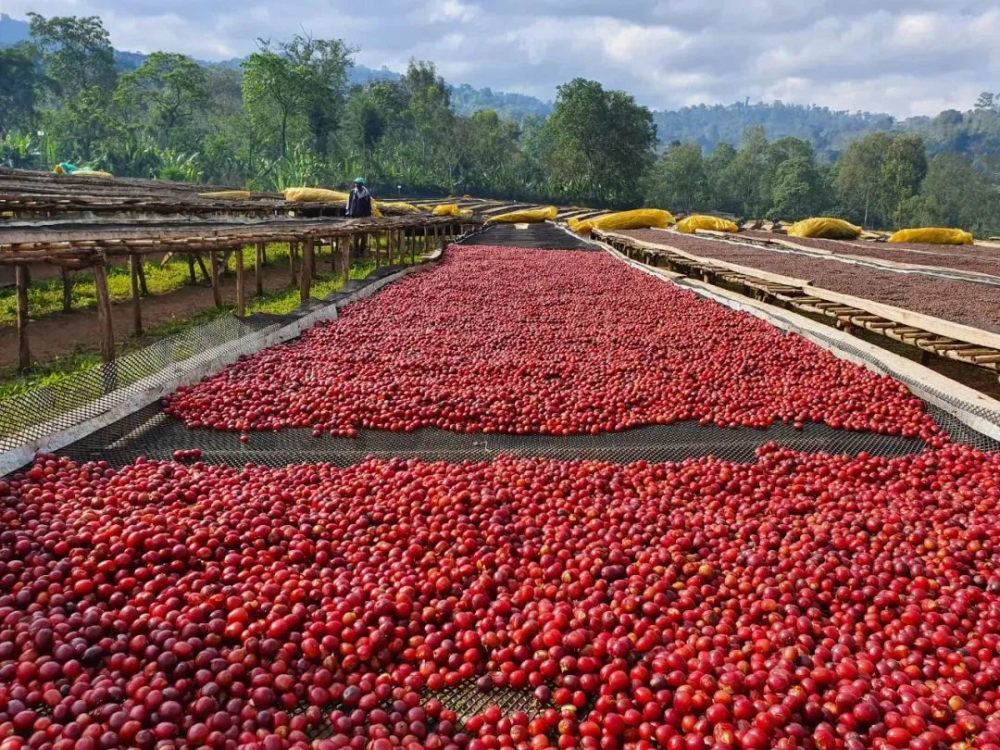
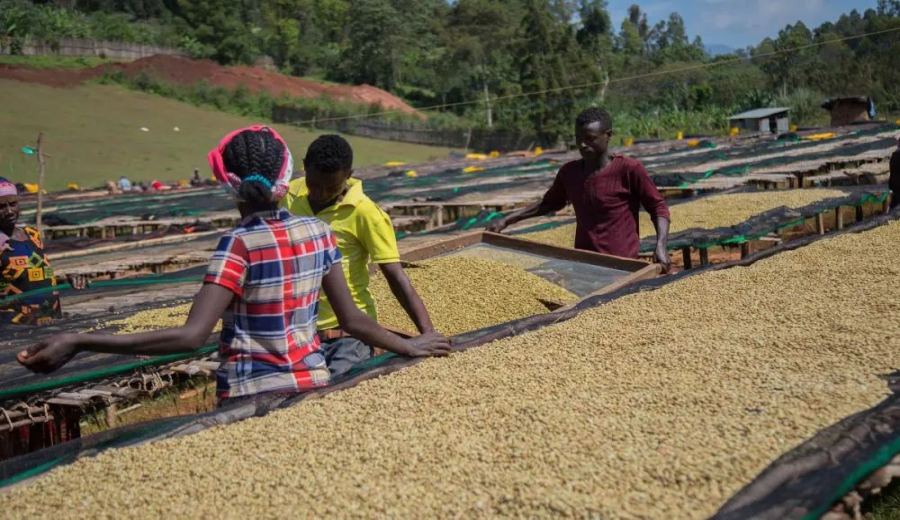
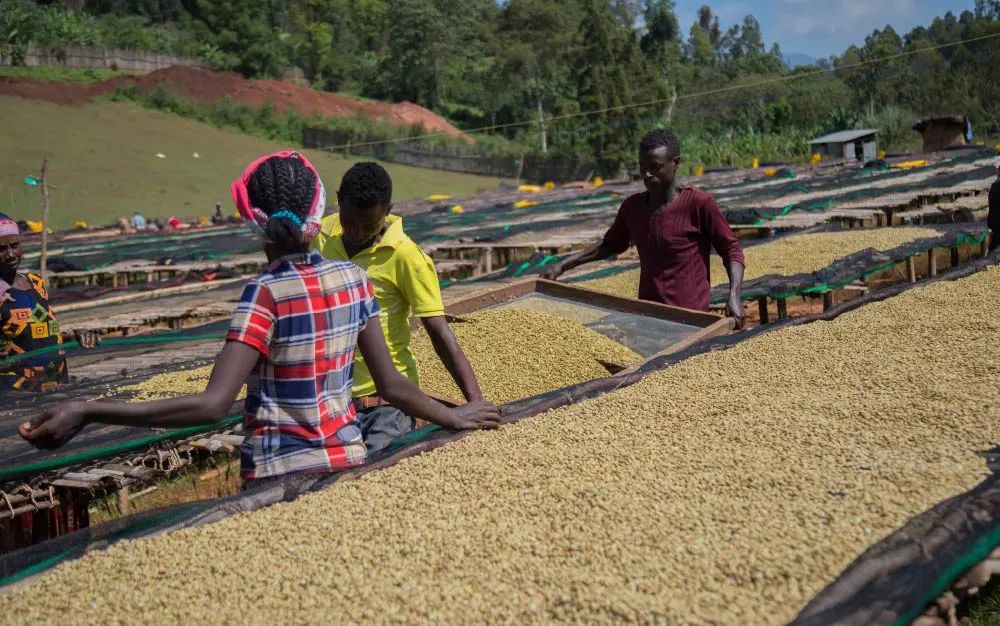
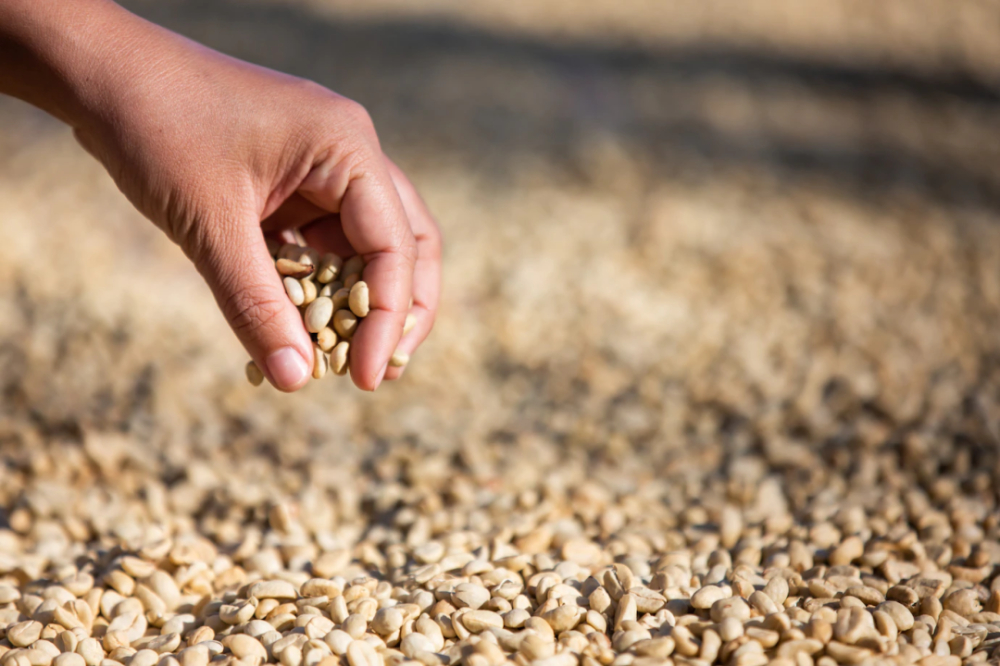
The processing of Huaca is extremely meticulous: during the harvest period, only fully red cherries are selected, with sugar content required to reach 30 or above. They are then placed on African raised beds for 18 days of sun drying. Due to the significant day-night temperature variations in the area, farmers use shade nets at noon to control the temperature and avoid over-fermentation, while covering the cherries with plastic sheets at night to prevent rain. Throughout the process, the cherries are continuously turned to ensure even drying without stacking too thickly, preventing sunburn or undesirable fermentation flavors. The final green coffee beans have a moisture content reduced to 13%, and are then bagged for storage.
When brewing Huaca, it is recommended to use a medium-light roast to highlight its floral and tropical fruit characteristics. Due to the lower water absorption of high-altitude hard beans, a medium-fine grind size (80% through a #20 standard sieve) is suggested, paired with a V60 filter, 92°C water temperature, and a 1:15 coffee-to-water ratio (15 grams of coffee to 225 milliliters of water). Specific steps: start with a bloom using twice the amount of coffee by weight (about 30 grams) for 30 seconds. The first pour is to 125 grams, then wait until the coffee bed has drained halfway before continuing to pour up to 225 grams. The total brew time is about 2 minutes (with a 10-second margin of error). This parameter setup helps enhance the layered fruitiness.
The 2025 new crop Huaca pour over yields a cup with intense tropical fruit sweetness such as passionfruit and mango, complemented by berry and citrus acidity. The mouthfeel is as smooth as cream, and the aftertaste is long and tea-like, reminiscent of black tea. It is recommended to choose freshly roasted beans (within 5 days post-roast, arriving around the start of the optimal flavor window), and allow 4–7 days of resting time to fully develop the flavor potential.
The above content is compiled by CoffeeHunters, a coffee news website.


