







Introduction:The Huakui coffee beans, with their rich berry and creamy profiles, have made their way from the TOH competition to the international market, and even appeared on the menu of Luckin Coffee. This article delves into the origins of the Huakui series' naming, the background of the Guji-Hambella region, provides a detailed comparison of the flavor characteristics of versions Huakui 4.0 through 8.0, and offers professional brewing recommendations for both pour over and espresso methods to help you understand the multiple flavor potentials of this star bean.
In the world of specialty coffee, there are no shortage of poetic or story-rich coffee bean names. Among them, 'Huakui,' a naturally processed Ethiopian bean, not only boasts a striking name but has also captured public attention with its unique berry and creamy flavors—from the competition stage to the mainstream market—eventually even being selected by Luckin Coffee. Where does the name 'Huakui' come from? What are the characteristics of its origin region? What flavor differences exist between versions such as Huakui 4.0, 5.0, 6.0, 7.0, and 8.0? More importantly, can this bean, renowned for pour over brewing, also be used for espresso? This article will answer these questions one by one, and provide practical pour over and brewing parameters to give you a comprehensive understanding of this much-talked-about coffee bean.
The Huakui coffee beans originate from the Guji region within Ethiopia’s Sidama Province, more precisely, the Hambella sub-region under Guji. Many coffee beginners are familiar with 'Sidama' and 'Yirgacheffe'; in fact, Yirgacheffe was originally part of Sidama but was later designated as a separate region due to distinct flavor profiles. The Guji region, on the other hand, is an emerging specialty coffee area that has rapidly risen in prominence in recent years, achieving outstanding results especially in international competitions such as TOH (Taste of Harvest) and COE. In 2020, the washed coffee champion of the Ethiopia TOH competition came from this very region, and the Huakui coffee beans were born here. Starting in 2010, the Ethiopia Commodity Exchange (ECX) separated Guji from Sidama, gradually making this region a focal point in the specialty coffee market.
The origin of the name 'Huakui' dates back to the 2017 TOH competition. That year, Ethiopian green bean supplier DW Company entered naturally processed coffee beans from the Buku Abel washing station in the Hambella sub-region to the competition. These beans, with their intense strawberry and creamy flavors, won the favor of international judges and claimed the title of washed coffee champion for the Ethiopia region at TOH. In the same year, Beijing-based green bean importer Hongshun brought this champion batch to the Chinese market. Due to its distinctive and bold flavors, the importer had high hopes for it, wishing it could rival or even surpass the well-known Geisha variety. Thus, it was given the name 'Huakui,' meaning 'the foremost flower among blooms,' symbolizing its exceptional status among many coffee beans.
As for the numbers following 'Huakui,' such as Huakui 4.0 and 5.0, they represent different harvest seasons. Just as wine varies in flavor by vintage, so does coffee. The Huakui series is named 'Huakui X.0,' where the number X increases with each year: 2019 was Huakui 3.0, 2020 was Huakui 4.0, 2021 was Huakui 5.0, and so forth—with 2023 being Huakui 7.0 and 2024 being Huakui 8.0. Since coffee requires some time for processing and transportation after harvest, new season Huakui typically arrives around April of that year. Coffee enthusiasts are advised to keep an eye out for updates on new batch releases.
Although all belong to the Huakui series, beans from different harvests still show subtle differences in flavor expression. For example, the 2018 and 2019 Huakui batches, while retaining some of the original Huakui flavor traits, are slightly inferior in body and aftertaste compared to the original 2017 version. It's worth mentioning that the 2017 Huakui included a particularly small-sized coffee variety, believed to be a key contributor to its captivating berry and creamy aroma. Later, DW Company processed these small beans separately and launched the 'Small Bean Huakui' brand. In contrast, the 2021 Huakui 5.0 features larger and more uniformly sized beans, with a flavor profile that trends brighter—showcasing clear berry notes, citrus acidity, honey sweetness, along with hints of tropical fruit and an oolong tea-like finish.
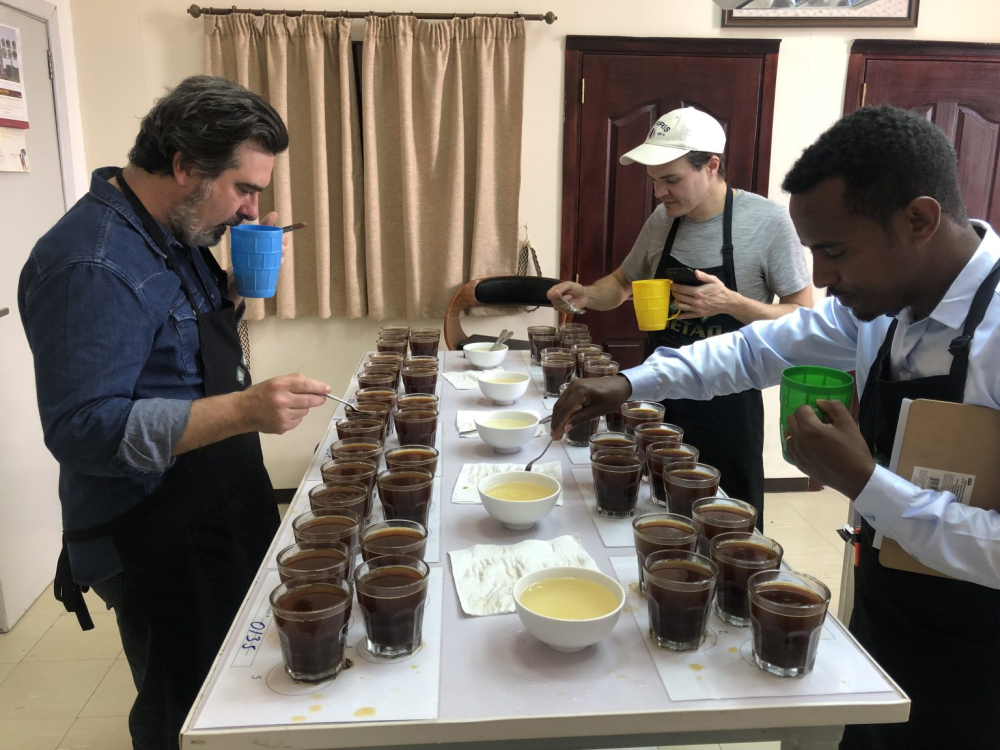
To date, commonly available versions of Huakui on the market include Small Bean Huakui, Huakui 5.0, and the subsequent 6.0, 7.0, and 8.0. According to cupping results, Small Bean Huakui continues the berry and creamy flavor characteristics of the 2017 TOH champion beans; Huakui 5.0 presents a cleaner, more vibrant profile of citrus and berry tones with a tea-like mouthfeel; Huakui 7.0 emphasizes citrus and berry aromas, with layered notes of passionfruit and black tea upon sipping; the newly released Huakui 8.0 features even richer tropical fruit flavors, with pronounced juiciness, a rounded mouthfeel, and distinct layering.
Many coffee enthusiasts wonder whether this pour over-famous Huakui coffee bean can also be used to make espresso. The answer is yes. Espresso made using single-origin beans is commonly referred to as SOE (Single Origin Espresso). Due to the high extraction pressure of espresso, overly sharp flavor profiles can easily amplify sourness or astringency, so medium to dark roasts are usually recommended. However, because Huakui is naturally processed and originally has intense flavors, it can still perform excellently as an SOE with appropriate roast adjustments. For instance, one roaster has designed two roast profiles for Huakui: one suitable for pour over and cold brew at a medium-light roast level, and another tailored for home espresso machines or moka pots at a medium roast level, allowing enthusiasts of different brewing methods to explore the multifaceted nature of Huakui.
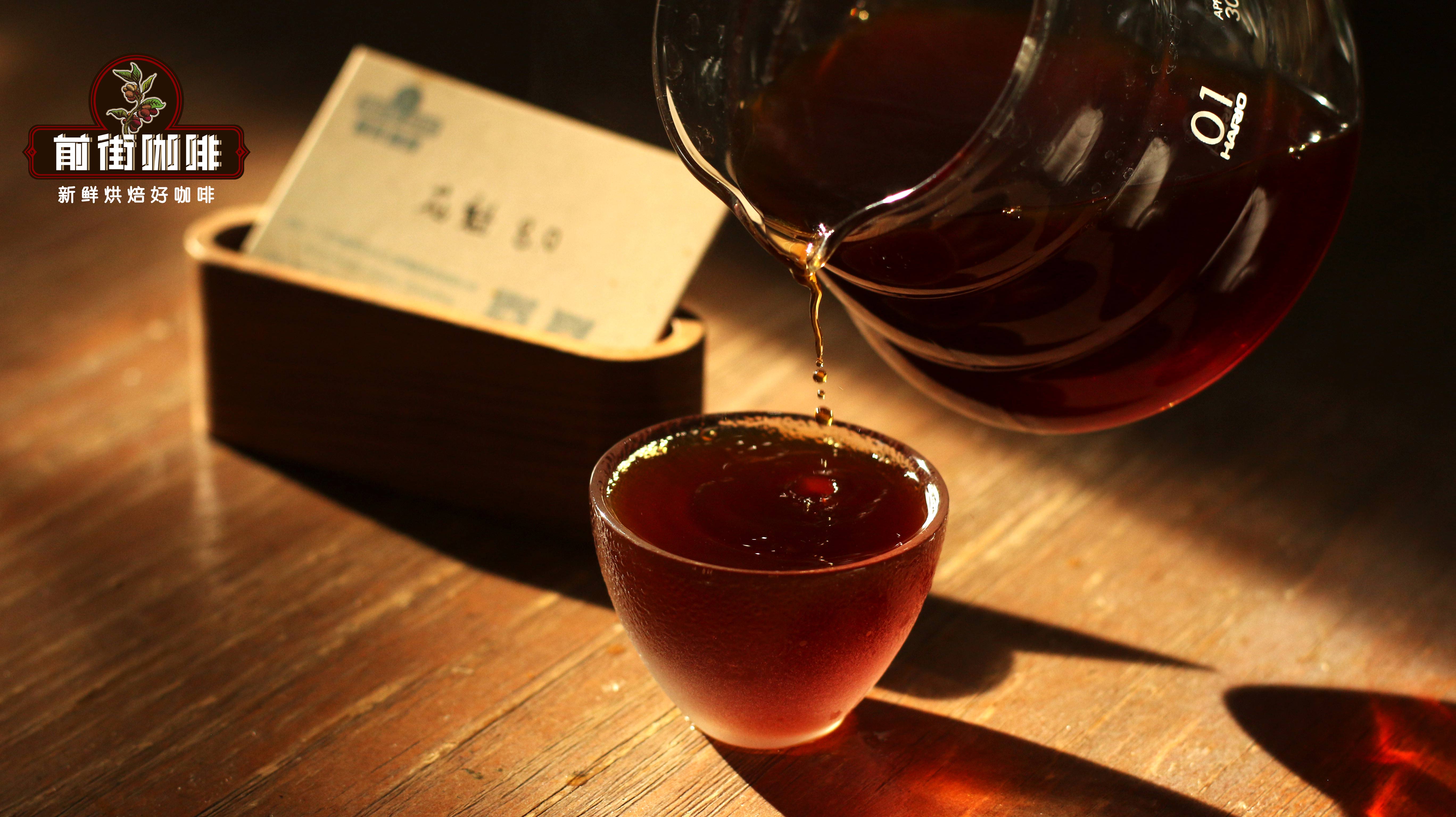
If you want to brew Huakui at home to bring out its most captivating flavors, pour over is a great choice. Since Huakui is typically light roasted, it is recommended to use a finer grind size and slightly higher water temperature to fully highlight its berry, creamy, and citrus profiles. Practical recommendations are as follows: use a Hario V60 dripper, control the water temperature at around 91°C, use about 15 grams of coffee, maintain a 1:15 coffee-to-water ratio, and aim for a grind size that allows about 80% of the particles to pass through a Chinese standard No. 20 sieve (for light roasts). The specific steps are: start with a 30-gram bloom for 30 seconds to degas and activate the flavors; then slowly pour in a circular motion from the center outward until you reach 125 grams for the first pour, and finally pour up to 225 grams to complete the extraction, with a total brew time of about 2 minutes. Note that once ground, coffee releases its flavors more quickly, so it is recommended to buy whole beans and grind them fresh for optimal flavor. Additionally, coffee beans typically arrive after 4 to 7 days of rest, just in time to start enjoying them.
The above content is compiled by CoffeeHunters, a coffee news website.


