







Introduction:Is Blue Mountain coffee sweet or bitter? Why do some people find its taste fresh and honey-like, while others think it’s rather plain? In fact, this is closely related to climate, processing methods, and grade. This article delves into the variety characteristics, growing environment, processing techniques, and grading system of Jamaican Blue Mountain No. 1, helping you understand what true Blue Mountain coffee really is. It also provides expert pour over recommendations and parameters so you can easily brew a balanced and elegant cup of Blue Mountain flavor at home.
Is Blue Mountain coffee bitter or sweet? Why do some describe it as light and clean like water, while others say it’s as sweet as honey? Actually, both descriptions make sense. Coffee is an agricultural product, and its flavors naturally vary slightly from year to year due to differing climate conditions. This article will take you through a comprehensive understanding of authentic Blue Mountain No. 1 coffee—from variety, growing environment, processing methods, to grading—while sharing practical pour over tips so you can also brew a cup with balanced acidity and bitterness, and rich layers of flavor at home.
Many coffee enthusiasts often encounter polarized reviews when choosing Blue Mountain coffee. Some cups taste as light as water, while others exhibit enchanting honey sweetness and fruity notes. This actually reflects the characteristic of Blue Mountain coffee varying with the vintage and climate. Overall, Blue Mountain No. 1 coffee features a rich and well-balanced flavor profile, with clear fruit notes, moderate acidity, and a long aftertaste. The four elements—acidity, bitterness, sweetness, and body—are perfectly integrated, which is hard to match by coffees from other regions.
When talking about Blue Mountain coffee, the first thing to clarify is what “true Blue Mountain” is. The so-called “Blue Mountain flavor” blends commonly found in the market are actually unrelated to real Blue Mountain; they’re just other origin beans roasted dark to imitate Blue Mountain characteristics. This practice originated in the early days when Blue Mountain was scarce and expensive, so producers simulated its profile through blends. Therefore, reputable sellers will clearly label their products as “Blue Mountain flavor,” “Blended Blue Mountain,” or “Blue Mountain-style coffee,” rather than genuine Blue Mountain coffee.
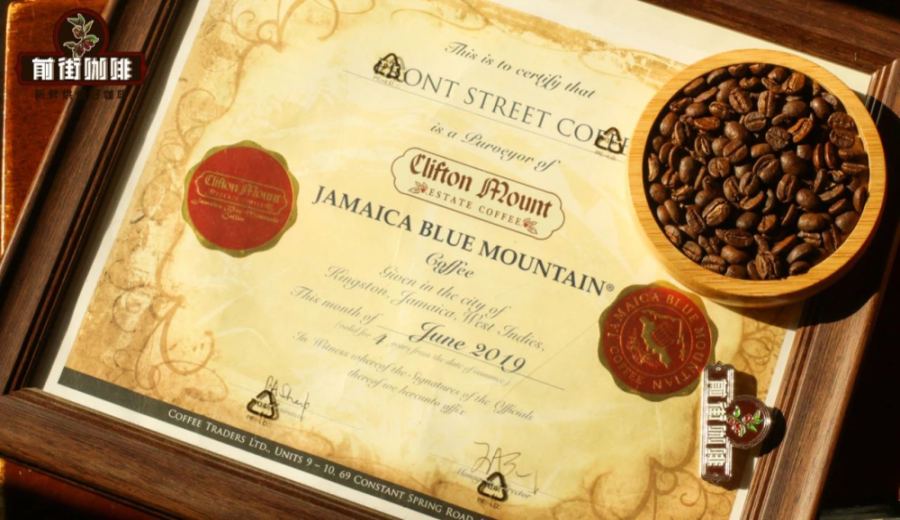
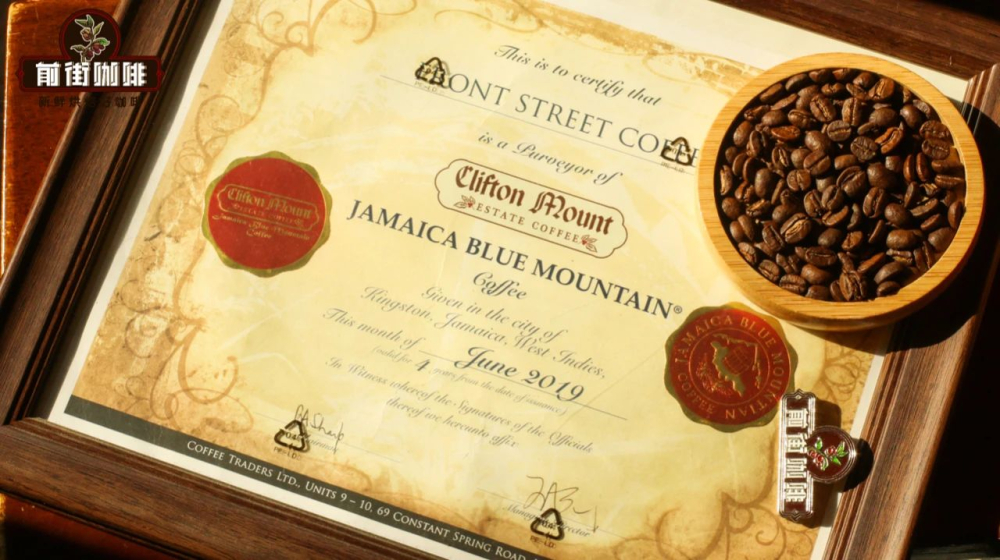
Before the millennium, a cup of black Blue Mountain coffee in China could cost dozens or even hundreds of yuan—not only highly priced but also possibly counterfeit. As the Jamaican government increased the Blue Mountain quota, it has now become much easier for the Chinese public to taste the authentic product. Currently, commercially available Blue Mountain No. 1 coffee, such as the washed Blue Mountain from the Clifton Estate offered by a certain retailer, is priced at around 158 yuan per 100 grams, with a tasting price of 60 yuan in-store, marking a significant improvement in cost-performance. This coffee uses the Typica variety and is processed via washing, showcasing the most classic flavor traits of Blue Mountain coffee.
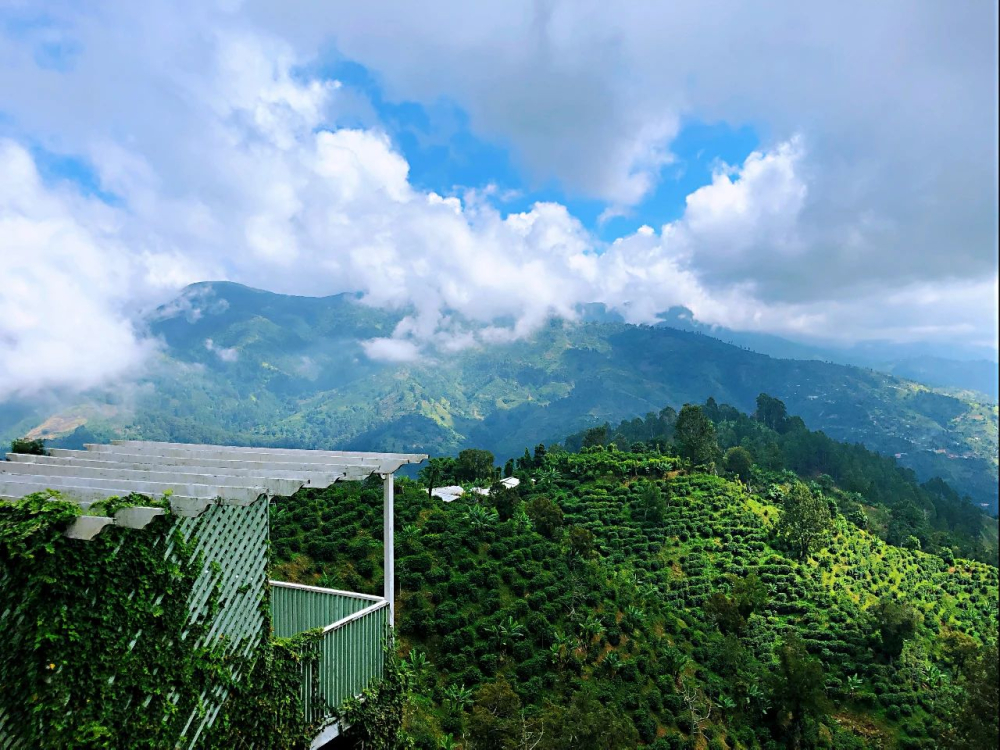
The exceptionally high quality of Blue Mountain coffee is inseparable from its unique growing environment. The Blue Mountains are surrounded by the Caribbean Sea, forming a distinctive island-type tropical rainforest microclimate. Rainfall is concentrated during the rainy season but drains well, and the volcanic soil is rich in minerals, reducing the need for excessive artificial irrigation. The high-altitude areas have cool climates, complemented by year-round mist and ample sunlight, creating ideal growing conditions for coffee trees. Local farmers often intercrop coffee trees with banana trees, which helps maintain ecological balance and microclimate stability.
The Jamaica Coffee Industry Board (CIB) strictly delineates approximately 6,000 hectares of core Blue Mountain production area. Only the Typica variety grown within this zone qualifies to be labeled as “Blue Mountain coffee.” Coffee grown in other areas is collectively referred to as “High Mountain coffee.” The growing altitude of Blue Mountain coffee ranges between 910 and 1,700 meters, mainly distributed across Saint Thomas, Saint Mary, Saint Andrew, and Portland, covering only one-third of the entire Blue Mountain cultivation region. Therefore, not all coffee labeled as “Blue Mountain” truly comes from this core area.
Currently, the main growers of Blue Mountain coffee are small family farms like the Clifton Estate, many of which have been passed down for two centuries. After cupping and comparison, a certain retailer believes that the Blue Mountain No. 1 from the Clifton Estate performs particularly outstanding and is a classic representative of Blue Mountain coffee. The Blue Mountain No. 1 supplied by the retailer uses the Typica variety, an ancient Arabica type originating from Ethiopia, which spread to Yemen around the 15th–16th century and was then introduced to the world by European merchants. Typica coffee beans are slender with pointed ends, offering citrus acidity and a sweet aftertaste, with a clean and elegant taste. However, it has low yield and is prone to leaf rust disease, so it has largely been replaced by more disease-resistant varieties.
Typica was introduced to Jamaica by Sir Nicholas Lawes in the 18th century, and later took root in the Blue Mountains, adapting to the local island climate and developing stronger disease resistance, especially notable resistance to coffee berry disease. High-quality variety, unique environment, rigorous green bean selection, and refined processing together create the exquisitely balanced and delicate flavor of Blue Mountain Typica coffee.
In terms of processing, a certain retailer previously only offered washed Blue Mountain No. 1 coffee. The washed method involves fermenting and cleaning with running water: first removing the pulp and flesh, then fermenting for 12 to 18 hours, followed by using water flow and friction to remove the mucilage, and finally drying the beans still enclosed in the parchment layer to a moisture content of 12% to 14%. This process requires strict control to avoid mold. The dried green beans also undergo screening and storage, with each step influencing the final flavor.
In recent years, a certain retailer has also introduced sun-dried Blue Mountain coffee certified by the Jamaican authorities. Although the washed method better preserves the original flavor traits of Blue Mountain, the sun-dried process can present different flavor dimensions to meet diverse taste preferences. Producing sun-dried Blue Mountain coffee is more challenging, requiring precise control over sunlight exposure and turning frequency to achieve optimal flavor balance.

Regarding the grading system of Blue Mountain coffee, it is established and strictly enforced by the CIB. Blue Mountain coffee is divided into four grades: Blue Mountain No. 1, Blue Mountain No. 2, Blue Mountain No. 3, and Blue Mountain Peaberry. Grading criteria include bean size, defect rate, color uniformity, moisture content, and cupping performance. Among them, Blue Mountain No. 1 is the highest grade, requiring beans of 17 mesh size or larger, a defect rate below 3%, a moisture content of about 13%, and demonstrating rich aroma, smooth mouthfeel, low acidity, and a long-lasting aftertaste in cupping. To ensure green bean quality, Jamaica uses traditional wooden barrels for transport, which has become one of the hallmarks of Blue Mountain coffee.
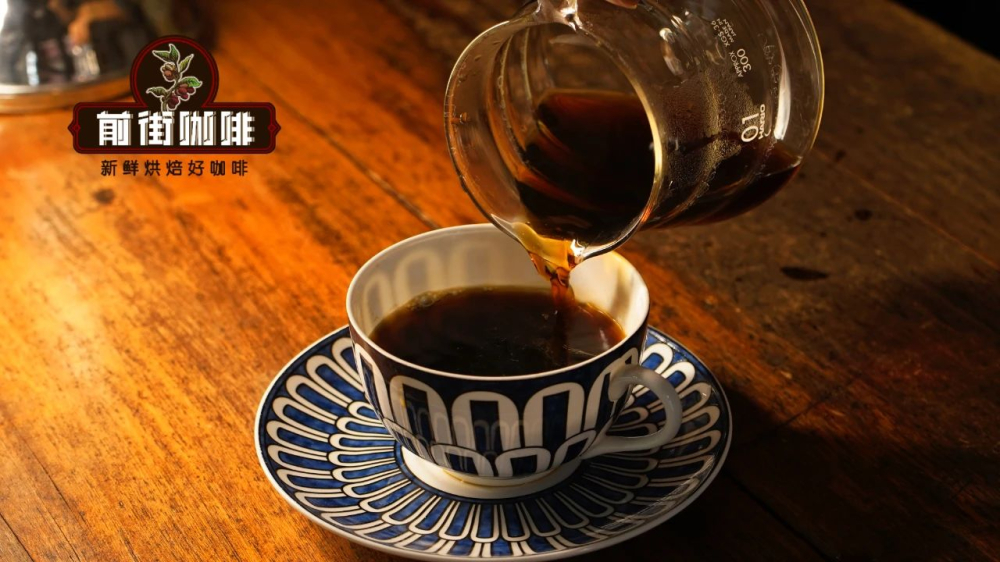
When brewing Blue Mountain coffee, it is recommended to use freshly roasted beans, best consumed within 4 to 7 days post-roast. The Blue Mountain coffee produced by a certain retailer is shipped within 5 days of roasting to ensure consumers receive it at peak flavor. A Kono filter is recommended, with water temperature controlled at 88°C, 15 grams of coffee, a 1:15 coffee-to-water ratio, and a medium-fine grind (75% passing through a 20-mesh sieve in China). Use a staged extraction method: first bloom with 30 grams of water for 30 seconds, then pour in water up to 125 grams in a slow stream, continue pouring to 225 grams, then stop. Total extraction time is around 2 minutes. Gently swirl the coffee liquid before pouring into the cup for drinking.
In terms of flavor, the sun-dried Blue Mountain coffee from a certain retailer features mild berry acidity, similar to dark plum and mulberry, alongside intense notes of dark chocolate and nuts, accompanied by slight fermentation aromas. The washed version centers on dark chocolate and nuts, with a creamy-smooth mouthfeel, elegantly balanced acidity, sweetness, and bitterness, and a long-lasting aftertaste. With the right knowledge and brewing techniques for Blue Mountain coffee, you too can enjoy this top-tier coffee experience from Jamaica at home.
The above content is compiled by CoffeeHunters, a coffee news website.


