







Introduction:Colombia is a globally renowned specialty coffee origin, celebrated for its stable production and diverse flavor profiles. This article delves into the distribution of Colombia’s major coffee-growing regions, the unique flavor characteristics of commonly cultivated varieties, and offers practical pour over parameters and roasting suggestions to help coffee enthusiasts master how to select and brew Colombian beans with the best possible flavors.
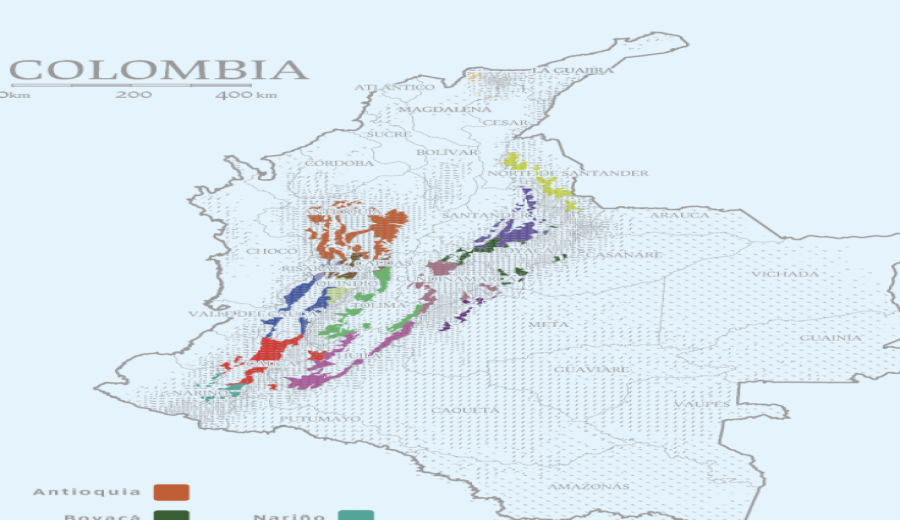
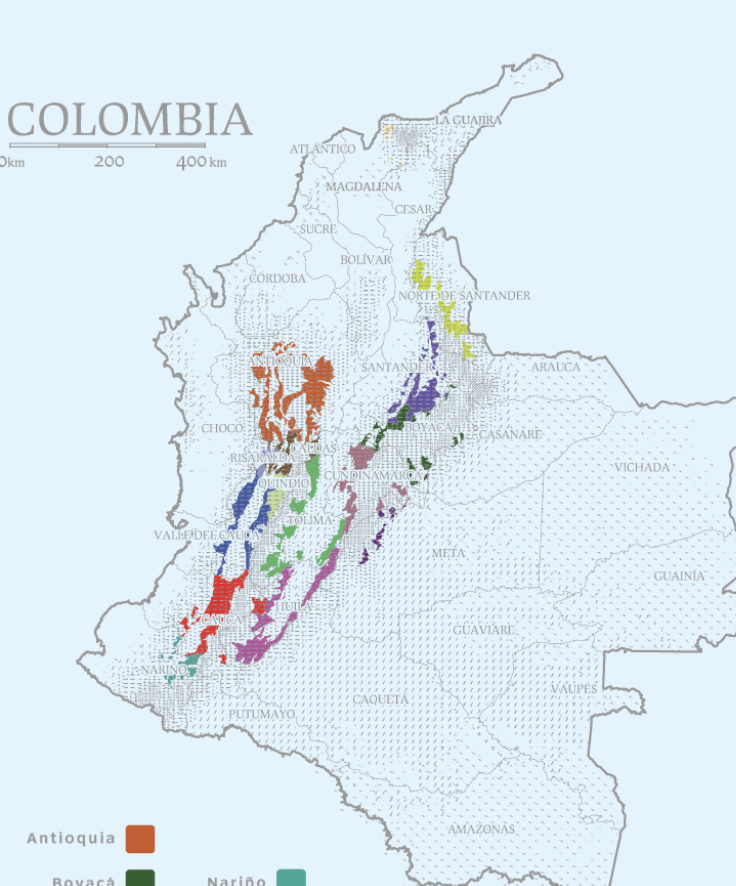
Colombia is the world’s third-largest coffee exporter, and nearly all the coffee it produces is of the Arabica variety. Thanks to its numerous high-altitude mountainous regions, fertile volcanic soils, and diverse climate, the country offers an ideal natural environment for growing specialty coffee. Particularly in the central and southern mountainous areas, where elevations generally range between 1,200 and 1,900 meters, coffee trees enjoy nearly perfect growing conditions.
Colombia’s specialty coffee mainly comes from the southern mountainous regions, including well-known areas such as Huila, Cauca, Narino, and Tolima, all of which have elevations typically exceeding 1,500 meters. Coffee grown at these altitudes often features bright acidity, sweet berry-like notes, and rich undertones of caramel and chocolate, with particularly outstanding sweetness and complexity.
In terms of varieties, Colombia cultivates not only common Arabica types such as Caturra, Catuai, and Bourbon, but also two locally developed disease-resistant varieties—Castillo and Colombia. Among them, Bourbon is a mutation of Typica, with relatively round beans, and its flavors are characterized by gentle acidity and clear sweetness. Caturra, a natural mutation of Bourbon, has higher yields without compromising on flavor, making it one of the leading varieties in Colombia.
Caturra is a hybrid of Mundo Novo and Caturra, bred by Brazil’s agricultural research institutions in the 1940s and widely planted since the 1970s. It is known for its soft berry acidity and pronounced fruity aromas. When paired with Caturra, it can impart more complexity and a fuller body to the coffee. Additionally, the Colombia variety, developed by Cenicafé in the 1980s to resist leaf rust and improve yield based on Catimor, has gradually diluted its Robusta genes and become one of the country’s main export varieties.
As for Castillo, it is a disease-resistant new variety jointly selected and bred by the Colombian Coffee Growers Federation and the National Coffee Research Center. Although it offers advantages such as high yield and disease resistance, its inclusion of Robusta genes occasionally leads to perceptions of slight flavor compromise. However, under proper processing and high-altitude conditions, Castillo can still deliver a drinking experience with noticeable fruity aromas and a refreshing lemon-like acidity.
The flavor differences among varieties are often closely related to altitude and processing methods.Some coffee merchants have cupped multiple Colombian specialty beans, and the results showed that Bourbon varieties grown at high altitudes typically exhibit rich sweetness, well-balanced acidity and sweetness, smooth mouthfeel, and long-lasting aftertaste.
In terms of practical selection, most of the Colombian specialty coffee beans available on the market today come from the Huila and Cauca regions. For example, Caturra washed beans grown at 1,500–1,800 meters in Huila offer clean flavors that highlight the region’s characteristic soft fruit acidity, nutty tones, and dark chocolate aroma, with a caramel sweetness in the finish. Another offering from the same region, the Caturra anaerobic natural bean “Flower Moon Night” grown at 1,800 meters, undergoes anaerobic fermentation to bring out intense strawberry wine aromas and jammy sweetness, with a finish that transitions into rich caramel chocolate—ideal for those who enjoy strong fruitiness and sweetness.
In addition, the “Hanami Coffee Bean” launched by the Mont Blanc Estate in Huila, grown at an altitude of 1,900 meters with a mixed planting of Caturra, Catuai, and Geisha, presents unique chamomile and pink pepper spiciness after washed processing, paired with yuzu-like acidity and honey sweetness, and a smooth almond-like aftertaste. Meanwhile, the “Sakura Coffee Bean” from the higher-altitude Paradise Estate in Cauca, featuring the Castillo variety and double anaerobic washed processing, showcases complex flavor layers, including mugwort, berries, spices, and strawberry jam notes, making it suitable for advanced coffee enthusiasts to explore.
Regarding brewing recommendations, since most Colombian specialty beans are medium roasted,it is advised to set the grind size to medium-coarse, roughly the size of white sugar granules (75% passing rate through a Chinese No. 20 sieve), and use water at 90°C for extraction.For specific operation, you may refer to the following V60 three-stage pouring parameters: 15 grams of coffee, a 1:15 coffee-to-water ratio, first pour double the coffee weight (about 30 grams) for a 30-second bloom; then continue pouring in small streams in circular motions from the inside out until reaching 125 grams, pause, wait for the coffee bed to descend to the middle of the filter, then pour the remaining water up to 225 grams, with total extraction time controlled within approximately 2 minutes. This method effectively highlights the sweetness, fruit acidity, and aromatic layers of Colombian beans, and is suitable for the majority of pour over enthusiasts to try.
The above content is compiled by CoffeeHunters, a coffee news website.


