







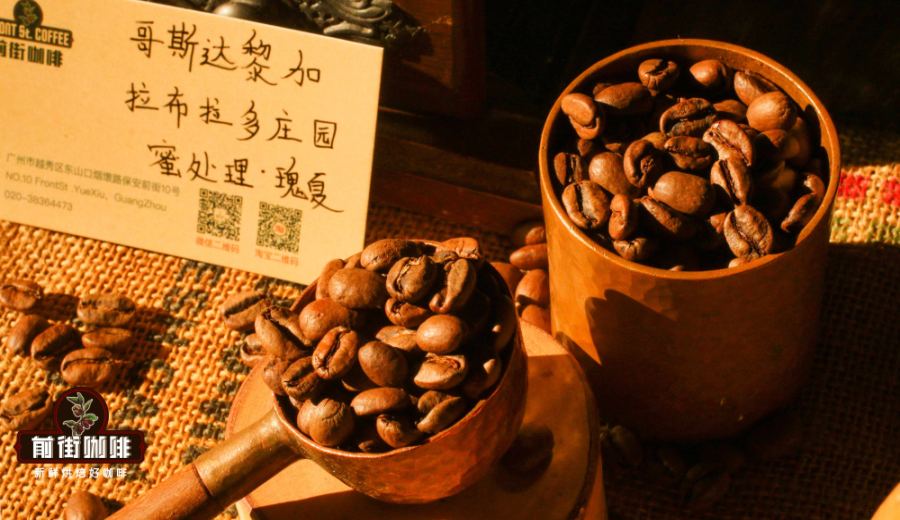
Introduction:Delve into the unique charm of Costa Rican coffee, from beans nurtured in high-altitude volcanic soil to the sweet complexity brought by honey processing. This article details the SHB (Strictly Hard Bean) grade standards, highlights key producing regions, and uses the Blueberry Coffee Beans from Piedra Grande Estate as an example to provide practical pour over settings—helping you brew premium coffee rich in fruity aroma at home.
Costa Rican coffee holds a pivotal position in Central America’s specialty coffee scene, thanks to its high-altitude cultivation environment and diverse, innovative processing techniques. These coffees are typically grown in mineral-rich volcanic soils, coupled with cool mountain climates that extend the beans’ growth cycle, resulting in more intense and layered flavors. This article will use real purchased beans as examples to introduce Costa Rica’s eight major producing regions, the green bean grading system, and explore in depth how honey processing enhances the sweetness and fruitiness of the coffee.
Among various processing methods, washed, natural, and honey processing are the three most common approaches on the market. First, understand the basic structure of the coffee cherry: it includes the outer skin, pulp, mucilage layer rich in sugar and flavor, the protective parchment, and the inner green bean. Traditional natural processing involves drying the entire coffee fruit with its skin intact, taking about two to four weeks until the moisture content drops to 12% before hulling. This method allows the sugars from the pulp to fully penetrate the bean, often resulting in higher sweetness and a heavier body.
In contrast, washed processing emphasizes clean, bright acidity and a clear flavor profile. The process involves removing the skin and pulp first, then fermenting to remove the mucilage, followed by washing and drying. Although the workflow is more complex, it best showcases the terroir characteristics of the growing region. An entry-level bean offering from one brand includes washed coffee from the Tarrazú region, favored by many coffee enthusiasts for its stable performance and affordable price. Even in honey-processing-dominated Costa Rica, washed beans retain an irreplaceable status, ideal for those seeking to experience the essence of regional flavors.
Located in the Central American isthmus, Costa Rica enjoys a tropical climate tempered by sea breezes from both the Pacific and Atlantic Oceans, resulting in mild and stable weather. The country is home to volcanic mountain ranges exceeding 2,000 meters in altitude, where fertile volcanic ash soil provides ideal growing conditions for coffee. Coffee trees grow slowly in this high-altitude environment, aiding in nutrient accumulation and flavor concentration—giving Costa Rican coffee its generally bright acidity, rich layers, and distinctive aromas.
The country’s coffee-growing regions are mainly distributed across eight renowned areas: Tarrazú (Tarrazu), West Valley, Central Valley, Tres Ríos (Three Rivers), Brunca, Guanacaste, Orosi, and Turrialba. Among them, the combined output of Tarrazú and West Valley accounts for over half of the national production, with Tarrazú being hailed as one of the world’s top coffee origins due to its consistently excellent quality.
When discussing the highlights of Costa Rican coffee, honey processing cannot be overlooked. This method involves deliberately retaining the mucilage layer after removing the skin and drying it, allowing sugars and flavor compounds to gradually permeate the bean, thereby enhancing its sweetness and fruity notes. The star of this article—the Blueberry Coffee Beans from Piedra Grande Estate—employs anaerobic heavy honey processing, showcasing unique blueberry and tropical fruit profiles. The estate is located in the Brunca region of southern Costa Rica, surrounded by rich microclimates and diverse terrain, and is named after the prehistoric stone spheres once discovered there.

These Blueberry Coffee Beans from Piedra Grande Estate are grown at altitudes of 1,700–1,800 meters, using Bourbon and Catuaí varieties, and undergo anaerobic heavy honey processing. In Costa Rica, coffee grades are primarily classified by altitude, with SHB (Strictly Hard Bean) being the highest grade, representing beans grown between 1,500–1,700 meters. These beans are dense and can withstand high brewing temperatures, making them ideal for expressing complex flavors. Other common grades include HB (Hard Bean, 1,350–1,500 meters), SH (Semi-Hard Bean, 1,200–1,350 meters), Extra Prime (1,000–1,200 meters), Prime (850–1,000 meters), and Good Washed (700–850 meters). Notably, Costa Rica is one of the few countries in the world to completely ban the cultivation of Robusta, ensuring that all coffee on the market is high-quality Arabica.
For this high-altitude SHB Strictly Hard Bean, if you want to brew at home to bring out its captivating fruit layers and rich sweetness, we recommend the following pour over setup: Use a V60 dripper, set the water temperature to 90–91°C, use 15 grams of coffee, maintain a 1:15 coffee-to-water ratio, and grind the beans to a consistency similar to fine sugar (approximately 82% extraction through a #20 sieve). Employ a three-pour technique: the first pour adds twice the coffee’s weight in water (about 30 grams) for a 30-second bloom, the second pour slowly circles in water up to 125 grams before stopping, wait briefly as the bed settles, then continue pouring to a total of 225 grams. The total brew time should be around 2 minutes, allowing a margin of about 10 seconds.
By mastering the correct brewing parameters and understanding the processing methods and origin stories behind the beans, you can easily recreate the captivating flavors of Costa Rican specialty coffee at home—experiencing the full spectrum from bright acidity to sweet fruitiness, and savoring the unique coffee experience crafted by high-altitude volcanic soil and innovative processing techniques.
The above content is compiled by CoffeeHunters, a coffee news website.


