








Introduction:The Geisha coffee from Dota Goddess Estate in Costa Rica’s Dota region showcases unique fruity and floral notes through its anaerobic enzyme washed processing method. This article delves into the terroir of the producing region, the origins of the variety, details of the processing, and provides tested roasting profiles and pour over parameters to help you master the brewing essentials and flavor profile of this high-altitude coffee.
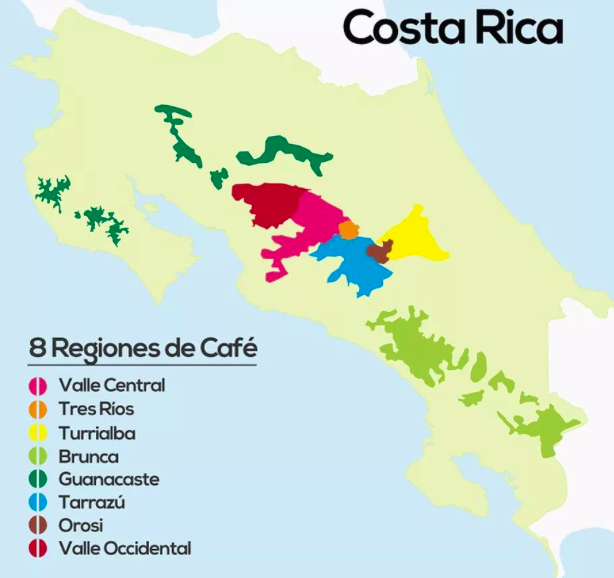
The Dota region in Costa Rica’s Tarrazú coffee-growing area is renowned for its micro-lots of Geisha cultivation, and among them, Goddess Estate (Dota EI Diosa) has earned a notable place in the international specialty coffee market thanks to its anaerobic enzyme washed Geisha beans. Grown at an altitude of approximately 1,800 meters, this coffee, through its special fermentation process, presents a layered flavor profile of rose, lemon, honey, and fruit tea.
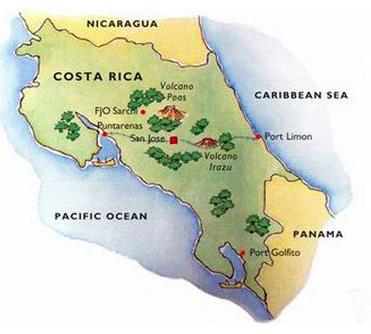
Costa Rica’s volcanic terrain and fertile volcanic ash soil, combined with a stable temperate climate and abundant rainfall, provide ideal conditions for coffee growth. The country’s coffee harvest season is mainly divided into the dry season (December to April of the following year) and the rainy season (May to November), with the dry season being the time for harvesting specialty beans. Especially in high-altitude areas, coffee beans exhibit greater density and acidity expression, and Tarrazú, as one of the country’s top-producing regions, grows nearly 95% of its Strictly Hard Bean (SHB) coffee above 1,500 meters in altitude, resulting in coffee with a tight structure and clear flavor profile.
The Dota region has been known for producing high-quality coffee since 1865, and Goddess Estate was established in the 1960s, enjoying a close relationship with Pachi Serracin, the father of Panamanian Geisha. Pachi introduced the Geisha variety from the CATIE research center in Costa Rica; this variety was originally planted as a windbreak but was later cultivated separately due to its unique aromatic potential. Goddess Estate adheres to organic farming practices, using native trees and fruit trees for natural shading, and produces its own organic fertilizer by mixing coffee cherry pulp with molasses, mineral-rich soil, and microbial fermentation. It also utilizes California red worms to improve soil quality, creating a micro-ecological environment ideal for Geisha cultivation.
Geisha, pronounced similarly to the Japanese word for “geisha,” was first discovered in 1931 in the Gesha forest of Ethiopia, then traveled through Kenya, Uganda, and Tanzania, and was finally introduced to Costa Rica in 1953. It wasn’t until the Esmeralda Estate in Panama singled it out from among many varieties and achieved outstanding success in international competitions that this variety truly gained attention. The Geisha at Goddess Estate was also initially planted as a windbreak, but due to its impressive cupping performance, it was developed into a main variety.
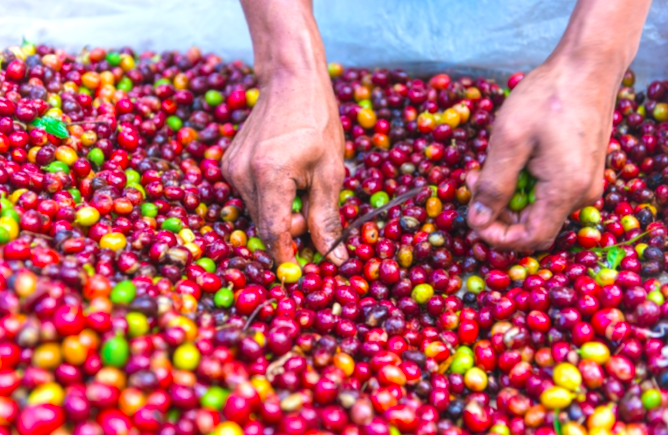
This coffee is processed using the anaerobic enzyme washed method. After harvesting fully red-ripe coffee cherries, the skin and part of the mucilage are first mechanically removed, then the beans are placed in a fermentation tank where specific enzymes are added. The anaerobic environment enhances the transformation of flavor compounds, improving sweetness and aroma complexity while preserving the Geisha variety’s distinctive bright acidity and floral foundation.
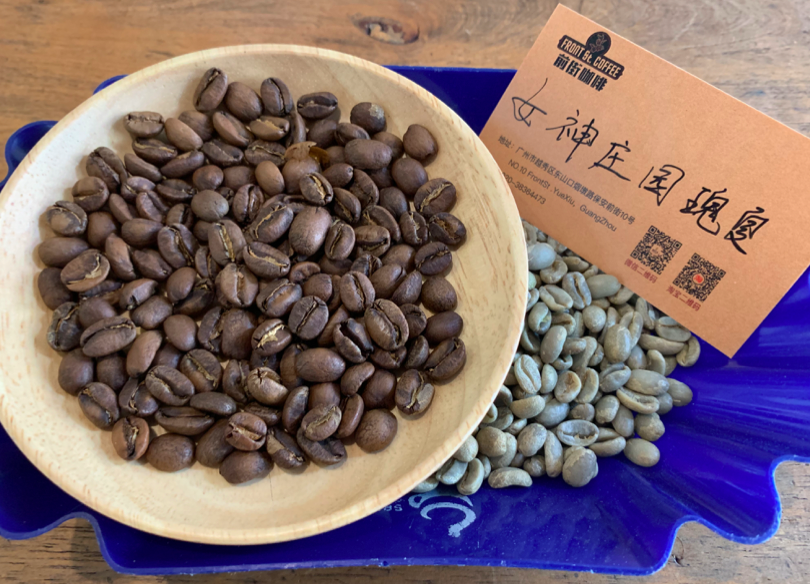
Observing the green coffee beans, their shape is slender and slightly greenish. Compared to other new varieties, they have less noticeable grassy notes and instead emit a fresh aroma of bergamot and berries. A certain roasting team, considering its high hardness and medium moisture content, opted for a high-temperature, rapid heating strategy to achieve quick dehydration and focused development, thereby enhancing the fruitiness and floral notes. In testing, a Yangjia 800N roaster (300g capacity) was used, with an entry drum temperature of 170°C, flame power at 120, and air damper at 3. At the turning point of 1 minute and 36 seconds, the drum temperature dropped to 140°C, at which point the air damper was adjusted to 4. At 149°C, when the bean surface turned yellow and grassy notes faded, it entered the main dehydration phase. At 166°C, the flame power was reduced to 110, keeping the air damper unchanged. Around 7 minutes and 09 seconds, the bean surface showed wrinkles and dark spots, and the toast-like aroma transformed into a distinct coffee fragrance, signaling the approach of the first crack. By 8 minutes and 25 seconds, the first crack began, and the air damper was immediately adjusted to 5 while closely monitoring the cracking sounds. The first crack continued to develop for 90 seconds, and the coffee was finally dropped at 190°C. The Agtron bean color value was 72.9, the roast color value 88.2, and the Roast Delta value 15.3, indicating a moderate color difference between the bean surface and core, and a well-balanced flavor.

Cupping results show that this coffee exhibits prominent aromas of rose, lemon, honey, and maple syrup. The cup is refreshing and sweet like fruit tea, with a delicate milky note in the aftertaste. The overall flavor profile is clear and well-layered.
For pour over brewing, it is recommended to use a Hario V60 filter cone, with a medium-fine grind (approximately BG 7T, 58% passing rate through a Chinese standard No. 20 sieve), a coffee dose of 15 grams, and a brew ratio set at 1:15 to 1:16. Water temperature should be controlled at 90–92°C. Begin with a 30-second bloom using 30 grams of water, then pour in a small circular motion until reaching 124 grams for the first pour. When the water level drops and is about to expose the coffee bed, continue pouring to 227 grams before stopping. Wait until the water level drops again and is about to expose the coffee bed, then remove the filter. The total extraction time is about 2 minutes and 01 second. This parameter setup helps fully express the floral profile of Geisha along with citrus and creamy mouthfeel, resulting in a refreshing cup with a long-lasting aftertaste.
The above content is compiled by CoffeeHunters, a coffee news website.


