







Introduction:Choosing the right coffee grind size is the first step to brewing an ideal cup of coffee. From the extremely fine powder used in Turkish coffee to the coarse grounds for French press, different brewing methods require vastly different grind sizes. Understanding each grind level and its corresponding extraction characteristics, as well as mastering the relationship between water flow, time, and flavor, is essential for making precise adjustments based on your equipment. This article systematically outlines eight grind sizes from finest to coarsest, matches them with mainstream coffee brewing methods, and provides practical parameters and adjustment tips.
The release of coffee flavors begins the moment the beans are ground. Selecting the appropriate grind size has a decisive impact on extraction efficiency, flavor balance, and overall mouthfeel. Different brewing devices—due to variations in heating methods, pressure conditions, and water flow rates—require distinctly different grind sizes. Grasping these differences can effectively prevent over-extraction or under-extraction, thereby enhancing the overall coffee tasting experience.
Coffee grind size primarily affects three key extraction factors: brew time (contact time between coffee and water), flow rate, and extraction yield. Simply put, the finer the grind, the larger the surface area, and the faster flavors are released upon contact with water—thus requiring a shorter extraction time. Conversely, coarser grinds offer less resistance to water flow, necessitating a longer extraction time to avoid under-extraction. Additionally, even if different grinders are set to the same setting, mechanical variations may produce different grind consistencies. It's recommended to regularly test particle distribution using sieves to ensure consistent output.
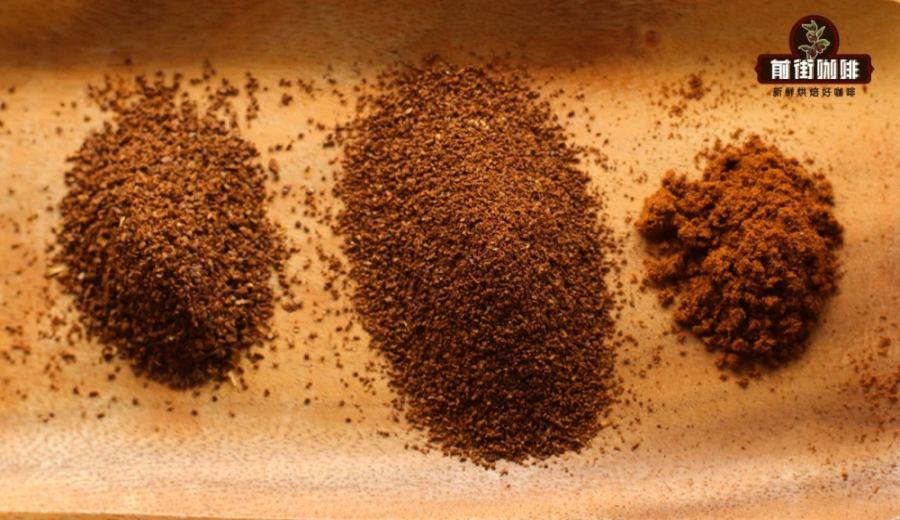
1. Turkish Coffee: Ultra-Fine Grind, Similar to Flour Texture
This is the finest grind level, with a texture as fine as talcum powder or high-gluten flour. It is typically brewed using a specialized copper cezve (moka pot) under high pressure. This grind size is almost at the finest end of espresso grinding but places greater emphasis on uniformity in Turkish coffee to avoid sedimentation or over-settling that can affect taste.
2. Espresso: Extremely Fine Grind, Emphasizing Fast Extraction Under High Pressure
Suitable for espresso machines, which brew under approximately 9 atmospheres of pressure, this falls within the extremely fine grind range. A single-shot basket usually holds 8–9 grams, while a double-basket holds 18–20 grams, aiming to extract25 to 30 secondsto produce25–30 grams for a single shot or 50–60 grams for a double shotof concentrated espresso. If too fine, it may clog the portafilter, disrupting water flow; if too coarse, extraction time shortens, resulting in incomplete flavor development.
3. AeroPress: Medium-Fine to Fine, Immersion Brewing Requires Preventing Over-Extraction
As a manual piston device, the AeroPress typically steeps for about two minutes. It’s recommended to use a grind size aboutone to one and a half stepscoarser than standard pour over, placing it between medium-fine and fine to avoid over-extraction caused by fine particles, which could affect the cleanliness of the overall flavor.
4. Siphon (Vacuum) Pot: Medium Grind, Balanced Flow Rate and Immersion
This method uses heated steam to push water vapor into the upper chamber where it brews with coffee grounds. A medium grind is advised to maintain proper flow rate while avoiding the risk of over-extraction from fine particles. The brewing process often involves stirring, so uniformity in particle size is especially important.
5. Pour Over: Medium-Fine Grind, Standard Sieve Passage Rate of 75–80%
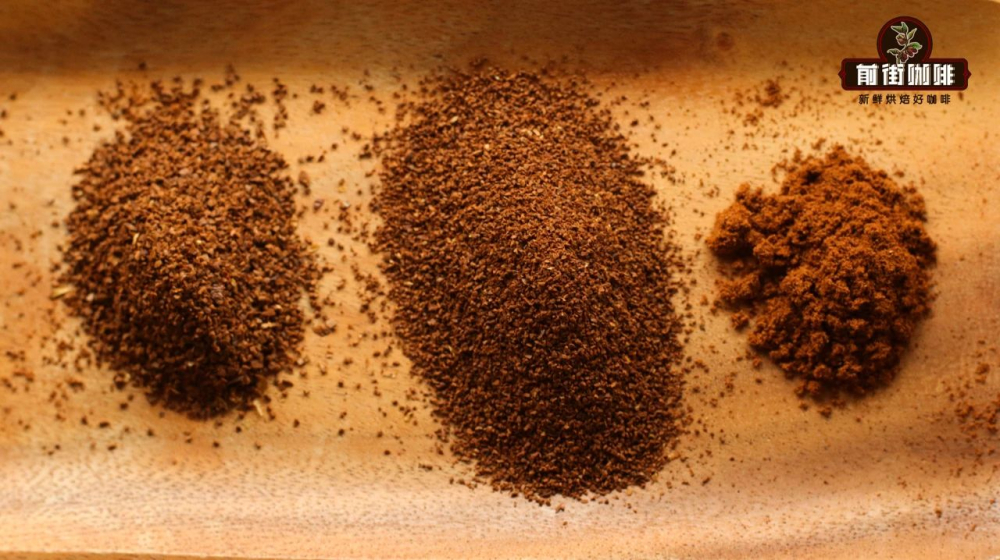
One of the most widely used brewing methods, it is recommended to use coffee particles about the size offine sugar, and to base the grind on theSCA-recommended sieve passage rate of 75–80%.The imageshows the typical medium-fine grind used for pour over. A common mistake is relying solely on visual judgment; actual sieve test values should be used to ensure stable flavor release.
6. Moka Pot: Slightly Fine Grind, Similar to Espresso but a Bit Coarser
This method uses heat to boil water and push it through pressure (approximately 1.5 bar) into the upper chamber to brew coffee. It’s a high-pressure but non-commercial device, so it’s recommended to use a grind slightly coarser than espresso but still on the finer side to balance pressure and flow rate.
7. Cold Brew and Cold Drip: Medium-Coarse Grind, Low-Temperature Long Extraction
Using ice water or room-temperature water for extended steeping (usually over 12 hours), low temperatures slow flavor release, so a medium-coarse grind increases contact area without being so fine as to cause over-extraction or clog filters. It’s best to choose a grind slightly coarser than pour over to aid filtration and highlight clean flavors.
8. French Press: Coarse Grind, Ideal for Long Immersion
As a fully immersed brewing method, coffee grounds remain in contact with water for a long time, so acoarse grind similar to brown sugaris needed to avoid over-extraction and excessive sediment, which can affect the final cup’s purity and smoothness.
In practice, even with the same grinder and setting, grind consistency may vary slightly. It’s recommended to use a sieve or refer to passage rate data (e.g., publicly available standards such as 65–70% for French press, 75–80% for pour over, etc.) to calibrate regularly, ensuring stability and consistency in every brew. Moreover, flavor preferences vary by individual, so feel free to fine-tune grind size according to your own taste to find your optimal balance.
For example, if you’re using a V60 dripper for pour over, it’s recommended to use water at about91°C[temperature], a1:15[brew ratio],and perform extraction viaa three-pour methodwith total brew time controlled between2 minutes to 2 minutes and 10 seconds,
The above content is compiled by CoffeeHunters, a coffee news website.


