








Introduction:Jamaica Blue Mountain coffee is renowned worldwide for its rarity and high quality, yet many people still hold misconceptions about its true flavor and origin. This article delves into the geographical environment, grading system, and processing differences of Blue Mountain coffee, while also providing expert pour over recommendations to help you identify authentic beans and understand their unique flavor characteristics.
Blue Mountain coffee is often mistakenly thought of as just a premium "Blue Mountain-flavored" coffee. In fact, it specifically refers to the finest coffee beans grown in the Blue Mountains of Jamaica. This globally acclaimed coffee, due to its unique origin and scarce production, has long been expensive and hard to come by, which has led to numerous confusions and misunderstandings.
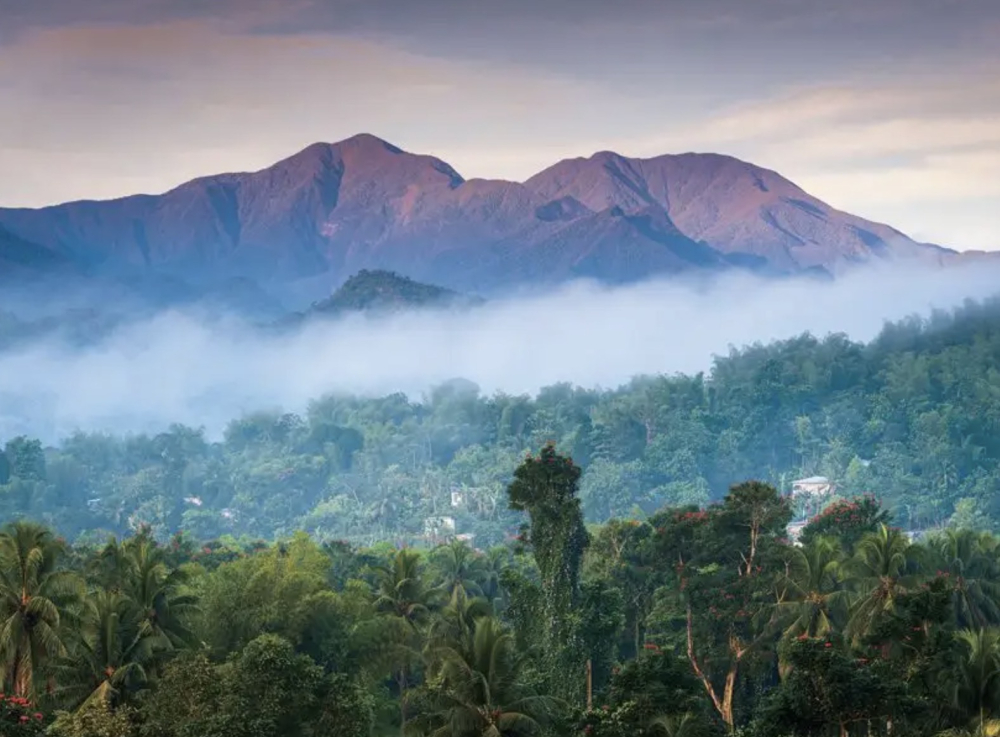
Jamaica is an island nation in the Caribbean, having undergone governance by indigenous peoples, the Spanish, and the British, before declaring independence in 1962. It remains a member of the Commonwealth. The Blue Mountains are located in the eastern part of the island, with majestic terrain surrounded by the clear waters of the Caribbean Sea. When sunlight shines on the sea and reflects onto the mountain peaks, the summits appear to be enveloped in a faint blue halo — hence the name "Blue Mountain."
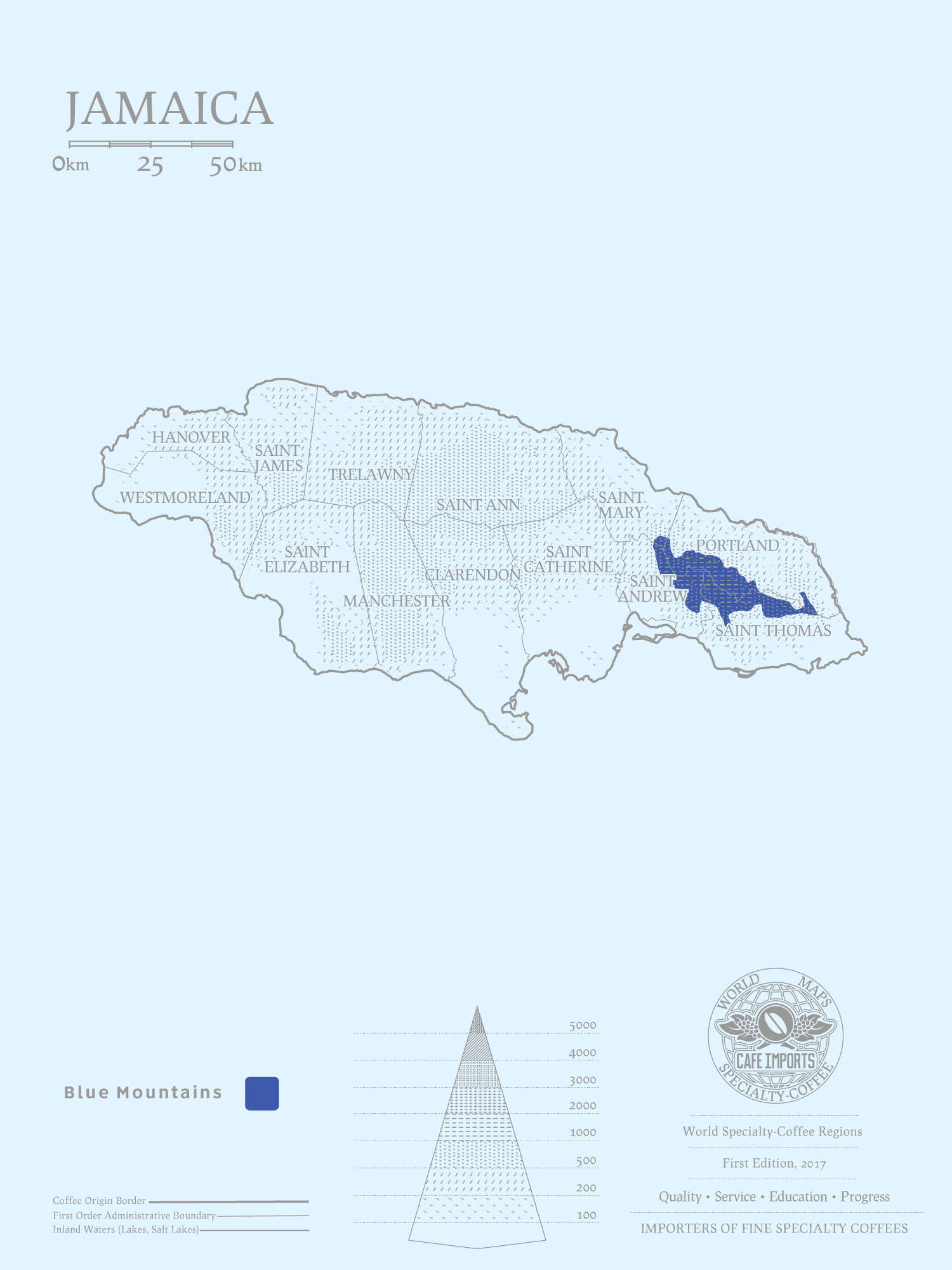
The main peak of the Blue Mountains reaches an elevation of 2,256 meters, making it the highest point in the entire Caribbean region. Its location lies precisely between 25 degrees north and 25 degrees south latitude, placing it within the coffee-growing "golden belt." The soil here originates from recent volcanic activity and is rich in nutrients. The air is fresh and unpolluted, with abundant rainfall and significant day-night temperature variations. Especially in the afternoon, clouds often shroud the mountaintops, not only providing natural shading but also maintaining suitable humidity. These conditions collectively create the exceptional balance of acidity, sweetness, bitterness, and body that defines Blue Mountain coffee.
The high price of Blue Mountain coffee is not only due to its exceptional natural environment, but more importantly, its extremely low yield. It’s important to note that not all coffee grown in the Blue Mountain region can be called "Blue Mountain coffee." Only coffee beans grown at an altitude of666 meters or abovecan be rightfully referred to as "Jamaica Blue Mountain Coffee"; those grown between457 and 666 metersare classified as "Jamaica High Mountain Supreme Coffee Beans," which, while slightly inferior to Blue Mountain in quality, are still of high standard; and beans grown below 457 meters can only be called general "Jamaica Prime Coffee Beans."
In the past, there was a misconception that Blue Mountain coffee was only produced in the mountain crown area above 1,800 meters. In reality, this area only contains one estate called Amber, spanning just 30 hectares and managed by a Chinese-descended owner surnamed Lin, with extremely limited production. Additionally, Blue Mountain coffee is strictly regulated by the Jamaican government and must be grown by certified estates designated by the official body "Coffee Industry Board of Jamaica (CIB)," following a complete regulatory process. Every stage, from planting and harvesting to post-harvest processing, is rigorously controlled.
There are only four legally authorized processing factories in Jamaica responsible for handling Blue Mountain coffee beans: Wallenford, Mavis Bank, Silver Hill, and Moy Hall. Among them, Wallenford is a state-owned estate, accounting for approximately 90% of Blue Mountain coffee exports. Notably, in 1972, Japan and Jamaica reached an agreement granting Japan priority purchasing rights for Blue Mountain coffee, resulting in most of it being exported to Japan. Therefore, obtaining Blue Mountain coffee elsewhere has been quite difficult, although supply conditions have gradually improved in recent years.
If you wish to purchase genuine Blue Mountain No. 1 coffee, it is recommended to look for several key indicators: first, the use ofwooden barrelsfor packaging, which will bear agreen frog logo— this is an official anti-counterfeiting feature of Jamaica. Additionally, each batch of Blue Mountain coffee comes with a certification issued by the Jamaican government. It’s worth mentioning that Jamaica is the only producing region in the world that still insists on shipping green beans in wooden barrels, preserving traditional methods and quality assurance.
Currently, Blue Mountain coffee on the market can mainly be divided into two processing methods: washed and natural. Washed Blue Mountain coffee generally presents a cleaner and crisper profile, with an exceptionally refined balance between acidity, sweetness, and bitterness. Natural-processed Blue Mountain coffee, on the other hand, exhibits richer fruity aromas, especially the sweet-tart notes of berries, accompanied by subtle fermented flavors. Its overall flavor profile is more expressive, though not as balanced as the washed version.
To fully showcase the rich and smooth characteristics of Blue Mountain coffee, it is recommended to roast the beans to amedium-dark level. Moreover, since Blue Mountain coffee is a high-quality dark roast bean, it is advised to let it rest for5 to 6 daysafter receiving it, allowing sufficient time for carbon dioxide to dissipate, before grinding and brewing. This approach helps release the full aroma and flavor.
In terms of extraction, it is recommended to use a lower brewing water temperature and a dripper with stable flow rate to avoid over-extraction. Specific parameters are as follows: using a Kono dripper, set the water temperature to88°C, with a coffee-to-water ratio of1:15(i.e., 15 grams of coffee grounds to 225 milliliters of water), and the grind size should be around70–75% passing through a #20 sieve.
The specific pour over steps are as follows: first, pour 30 grams of water for a 30-second bloom; second, pour up to approximately 125 grams, then continue pouring once the water level drops halfway until the total reaches225 grams, with the total brewing time controlled around2 minutes and 05 seconds, in order to fully highlight the delicate and layered qualities of Blue Mountain coffee.
In terms of flavor profile, the natural-processed version of Blue Mountain coffee typically carries mild berry acidity, reminiscent of the aromas of black plum and mulberry. The overall flavor is well-balanced, accompanied by intense dark chocolate and nutty notes, along with slight fermentation characteristics. The washed version of Blue Mountain coffee, on the other hand, showcases a creamy-smooth mouthfeel, with distinct dark chocolate and nut aromas. The balance among acidity, sweetness, and bitterness is just right, making it a classic flavor beloved by many coffee enthusiasts.
The above content is compiled by CoffeeHunters, a coffee news website.


