







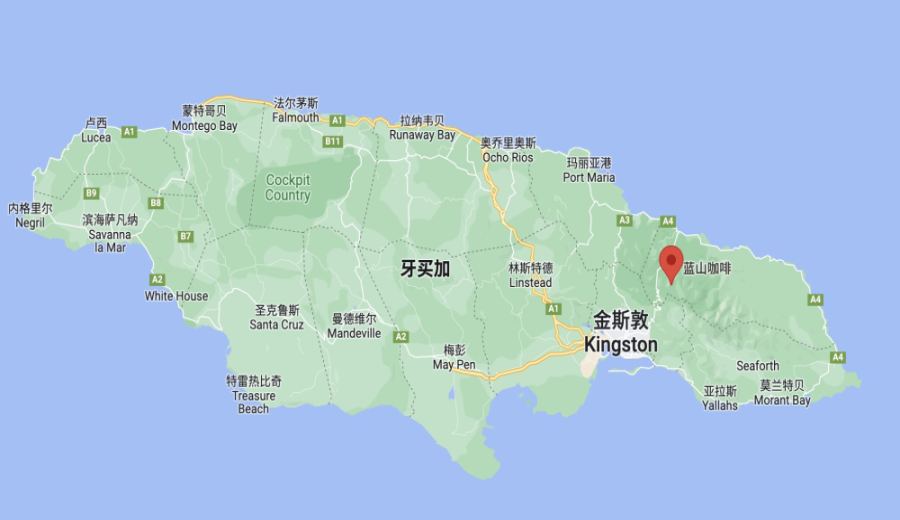
Introduction:Blue Mountain coffee is renowned for its rarity and refinement, making it a highly coveted specialty among coffee enthusiasts worldwide. However, the market is rife with counterfeits and misleading claims. How can you distinguish genuine Blue Mountain No. 1? What are the growing conditions and official certification requirements? This article delves into the unique environment of the Blue Mountains, the distribution of authentic Blue Mountain bean regions, how to identify certification labels, and introduces the innovative practices of the notable Clifton Estate. It also provides expert pour over recommendations and flavor profiles to help you truly appreciate the essence of Blue Mountain.
Blue Mountain coffee has long been hailed as the pinnacle of the coffee world, not only because it comes from the exceptionally favorable geographical environment of Jamaica’s Blue Mountain range but also due to its extremely limited annual production, which keeps the price of genuine beans on the market very high. Its delicate yet layered flavors captivate countless coffee lovers. Among the many producing regions, Blue Mountain No. 1 is the top-tier representative, but how can you ensure that what you’re buying are truly authentic beans from the Blue Mountains? The following will guide you through the core information of this legendary coffee—from terroir, altitude restrictions, certification systems to actual brewing and tasting.
The cultivation area of Blue Mountain coffee is located in the Blue Mountains of eastern Jamaica. The mountain range is named for the way its peaks reflect the deep blue of the Caribbean Sea under clear skies. The highest peak in the region reaches 2,256 meters, making it the tallest point in the entire Caribbean. It is not only a popular tourist destination but also an ideal place for growing Blue Mountain coffee.
However, not all coffee beans produced in the Blue Mountains can be called "Blue Mountain coffee." In fact, only Typica variety beans grown at altitudes between 910 and 1,700 meters can exhibit the distinctive delicate, balanced, and rich flavors of Blue Mountain coffee. Beans grown below 910 meters or outside the boundaries of the Blue Mountain range, even if flavorful, can only be classified as "Jamaica High Mountain Coffee" or "Jamaica Prime Coffee." Altitudes above 1,700 meters are designated as government-protected natural reserves where commercial crop cultivation is strictly prohibited. As a result, the true Blue Mountain coffee beans that can be called as such have an annual production of only about 900 tons. Once distributed globally, their price is naturally quite high.
Given the high profile of Blue Mountain coffee, the market is filled with products sold under names like “Blue Mountain flavor” or “Blue Mountain blend,” which in reality have no connection to authentic Blue Mountain. To protect consumer rights, the Jamaican government enforces strict regulations on all exported Blue Mountain coffee beans, which must be packed in wooden barrels and accompanied by officially issued certification documents. These include three main types of certificates: first, a quality certificate issued by the Jamaica Coffee Industry Board, which notes the batch and quantity and includes random official inspections; second, an authorized sales certificate from the Blue Mountain coffee producer; and finally, a certificate of origin for Blue Mountain coffee. Only when all these documents are present can the coffee be confirmed as genuine Blue Mountain.
Currently, authentic Blue Mountain No. 1 is mainly produced in four key regions of the Blue Mountain range: Saint Andrew, Saint Thomas, Portland, and Saint Mary. Among them, the Clifton Mount Estate in the Saint Andrew region is particularly noteworthy. This estate has a coffee-growing history of over two hundred years and is one of the oldest surviving coffee farms in Jamaica.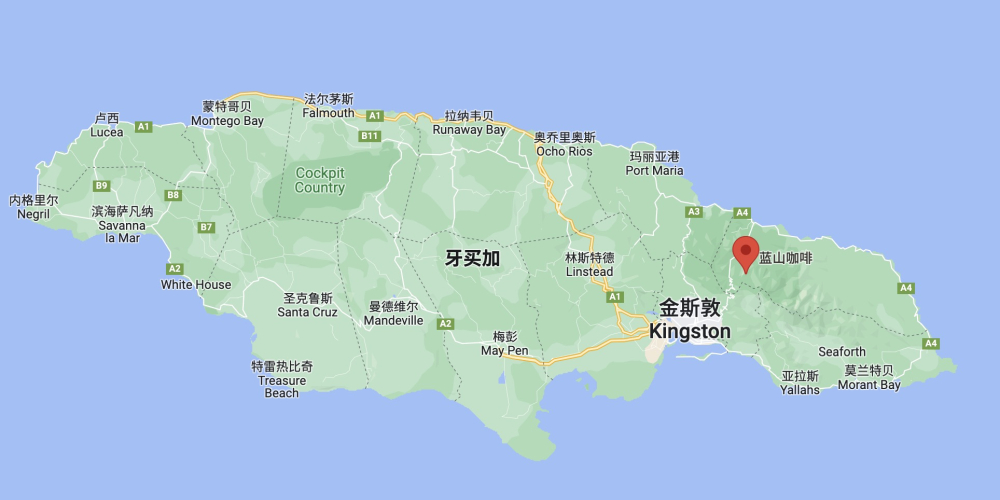
Even more significantly, Clifton Mount Estate is the only coffee farm in the entire Blue Mountain region to have received “Rainforest Alliance Certification,” which signifies outstanding performance in environmental protection, social equity, and sustainable economic development. Therefore, the wooden barrels of Blue Mountain coffee exported from this estate clearly display the green frog logo of the Rainforest Alliance certification, serving as a key visual identifier of authenticity.
In addition to traditional washed Typica varieties, a well-known estate launched innovative products between 2019 and 2020, including a natural (sun-dried) version of Blue Mountain No. 1 and the rare Blue Mountain Geisha variety, breaking the past tradition of Blue Mountain being limited to washed Typica. The currently available Blue Mountain No. 1 washed Typica beans from a certain coffee brand on the market originate from this historic estate, and relevant certification documents along with wooden barrels bearing the green frog label can be verified at physical stores.
If you want to brew Blue Mountain No. 1 at home to bring out its richness and balance, it is recommended to use a low water temperature combined with a slow-flow Kono filter. This helps fully extract the essential components of the coffee in a low-temperature environment. In practice, it is suggested to use a medium-coarse grind (similar to coarse sugar, or about 70% extraction rate on a Chinese standard 20-mesh sieve), with water temperature controlled between 88–89°C.
The specific pour over steps are as follows: First, pour 30 grams of hot water for a 30-second bloom to activate the aroma of the coffee grounds; then pour up to approximately 125 grams of water, and when the water level drops halfway, continue pouring until the total reaches 225 grams. Finally, allow the coffee liquid to fully drip through. The entire brewing process takes about 2 minutes and 10 seconds. Through this method, the signature dark chocolate and nutty tones of Blue Mountain No. 1 are fully highlighted, with a silky smooth mouthfeel and a well-balanced acidity, sweetness, and bitterness—making it an exquisite experience not to be missed by coffee lovers.
The above content is compiled by CoffeeHunters, a coffee news website.


