







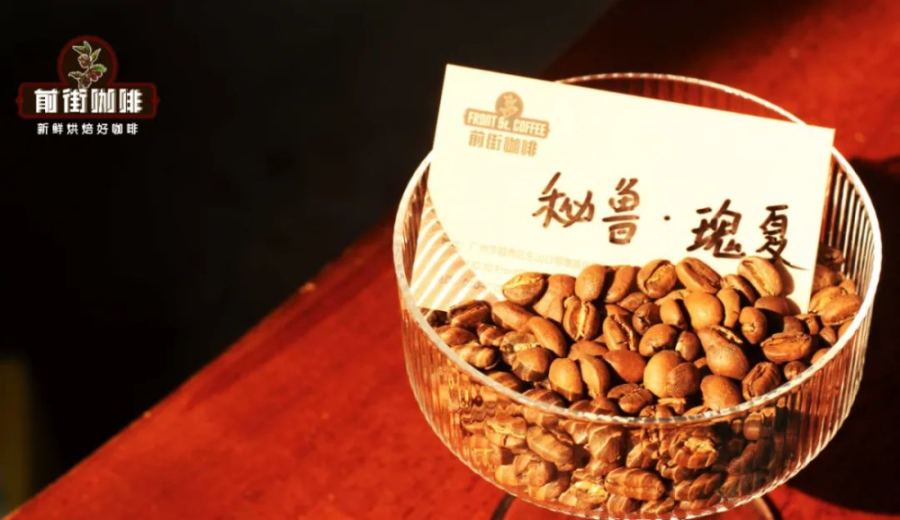
Introduction:Did you know? Although Peruvian coffee is not as well-known as Colombian or Brazilian coffee, it has been quietly rising in the international specialty market with its delicate, balanced flavors and high level of cleanliness. This article takes you deep into this hidden gem of South America—from the growing regions, industry development, to processing methods. We also taste a washed Geisha from the Cajamarca region, experiencing its captivating white floral notes, plum, and black tea layers.
When it comes to South American coffee, many people immediately think of Colombia or Brazil, often overlooking Peru nestled in the Andes. In fact, Peruvian coffee is known for its rich layers and smooth mouthfeel, and in recent years, it has stood out with its outstanding cleanliness, becoming an emerging force that cannot be ignored in the specialty coffee world. This piece explores its geography, industry background, grading, and processing techniques, and through a washed Geisha from the Cajamarca region, we savor its unique charm where floral and fruity aromas blend with black tea aftertastes.
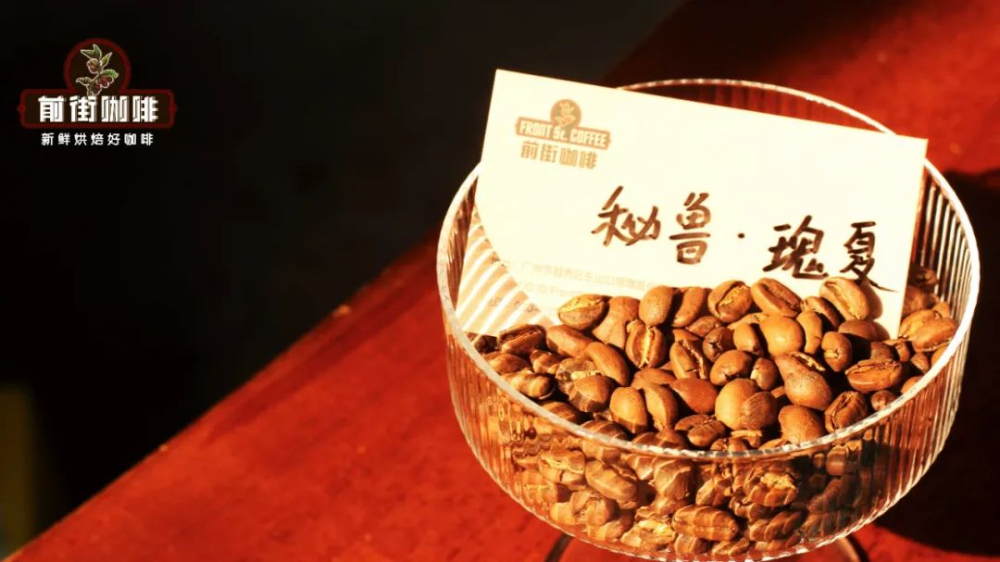
Many may find Peruvian coffee unfamiliar, perhaps because it lacks the high visibility of mainstream origins. But in truth, its quality is absolutely worth paying attention to. Compared to other South American coffees, Peruvian coffee stands out for its delicate flavors and balanced acidity and sweetness. In recent years, it has gained favor among international buyers for its exceptionally high cleanliness. This shift has gradually positioned Peru from a relatively niche origin to an important player in the specialty coffee scene.
Let’s start with geography. Peru is located on the western coast of South America, bordering Brazil, Chile, Colombia, Ecuador, and Bolivia, and faces the Pacific Ocean with over 2,400 kilometers of coastline. The terrain is diverse, featuring plateaus, mountains, deserts, and coasts, with the Andes Mountains running through the entire country as the core area for coffee cultivation. Coffee is mainly grown at altitudes between 1,200 and 2,000 meters. Thanks to abundant rainfall, significant day-night temperature differences, and fertile volcanic soils, Peru offers ideal natural conditions for specialty coffee.
Peru’s coffee cultivation can be broadly divided into three major regions: the northern region accounts for about 43% of the national planting area, at altitudes between 1,250 and 1,950 meters; the central region makes up 34%, at elevations between 1,200 and 2,000 meters; and the southern region accounts for 23%, at around 900 to 2,050 meters. Among these, northern Cajamarca, due to its high-altitude mountainous areas close to the Ecuadorian border, benefits from excellent microclimates and volcanic soils, making it one of the preferred locations for early European settlers to establish coffee plantations.
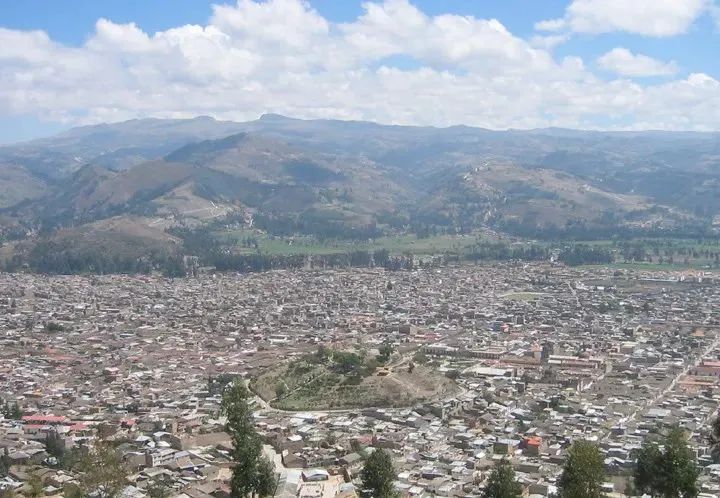
Looking back at history, coffee was introduced to Peru by Spanish colonists in the late 18th century, initially only as an ornamental garden plant. It wasn’t until Peru’s independence in 1821 that the government began promoting cash crop cultivation to replace the declining silver mining industry. In the 1850s, influenced by coffee leaf rust and bolstered by the booming Brazilian coffee industry, European immigrants established the first coffee plantations in places like Cajamarca, laying the technical and labor foundation for Peruvian coffee.
By the end of the 19th century, large estates became the main production model. It is estimated that around 1890, about 80% of Peru’s coffee production came from these large plantations. However, such a centralized production structure made the industry extremely dependent on international market prices, leading to social unrest when coffee prices plummeted during the Great Depression of 1929.
It wasn’t until 1968, under the military government of Juan Velasco Alvarado, that land reform was implemented, distributing large tracts of land to individual farmers and dismantling the large estate system. Production shifted to numerous smallholder farms. Typically, each small Peruvian farmer cultivates about 2 hectares on average. While this improved social equity, it also made technology dissemination and quality control more challenging.
A turning point emerged in the 1980s. With the help of German church organizations and fair trade institutions, coffee cooperatives were gradually established in northern Peru. Through collective purchasing and equipment sharing, they effectively reduced production costs and improved quality. After the signing of the North American Free Trade Agreement in 1994, these cooperatives also actively pursued organic and Rainforest Alliance certifications, helping Peruvian coffee break into the premium market.
In 2003, Peru became the world’s largest producer of organic coffee, with 110,000 hectares certified organic. This achievement is closely tied to the Andes Mountains’ natural characteristics, including fewer pests and a climate conducive to organic farming. Today, Peru not only leads the world in organic coffee production but has also gradually secured a place in the global specialty market.
Similar to most South American countries, Peru mainly grows Arabica varieties. However, it is unique in that its grading system primarily uses altitude (or hardness) as the key criterion. Generally, the higher the altitude, the greater the bean density and hardness, which often results in more refined flavors and brighter acidity. Due to ample water sources, Peru commonly employs the washed processing method, which not only effectively removes defective beans but also maintains a clean and bright flavor profile.
The washed processing flow generally involves: first using flotation to remove unripe or damaged coffee cherries, then removing the pulp and flesh, followed by fermenting the mucilage-covered parchment beans in water tanks to remove residual mucilage. The parchment beans are then dried on patios and finally hulled to complete the process. This method allows for precise control of fermentation levels, reducing the risk of off-flavors and over-fermentation. As a result, the coffee typically exhibits high cleanliness and gentle fruit acidity—one of the reasons it is favored by many consumers.
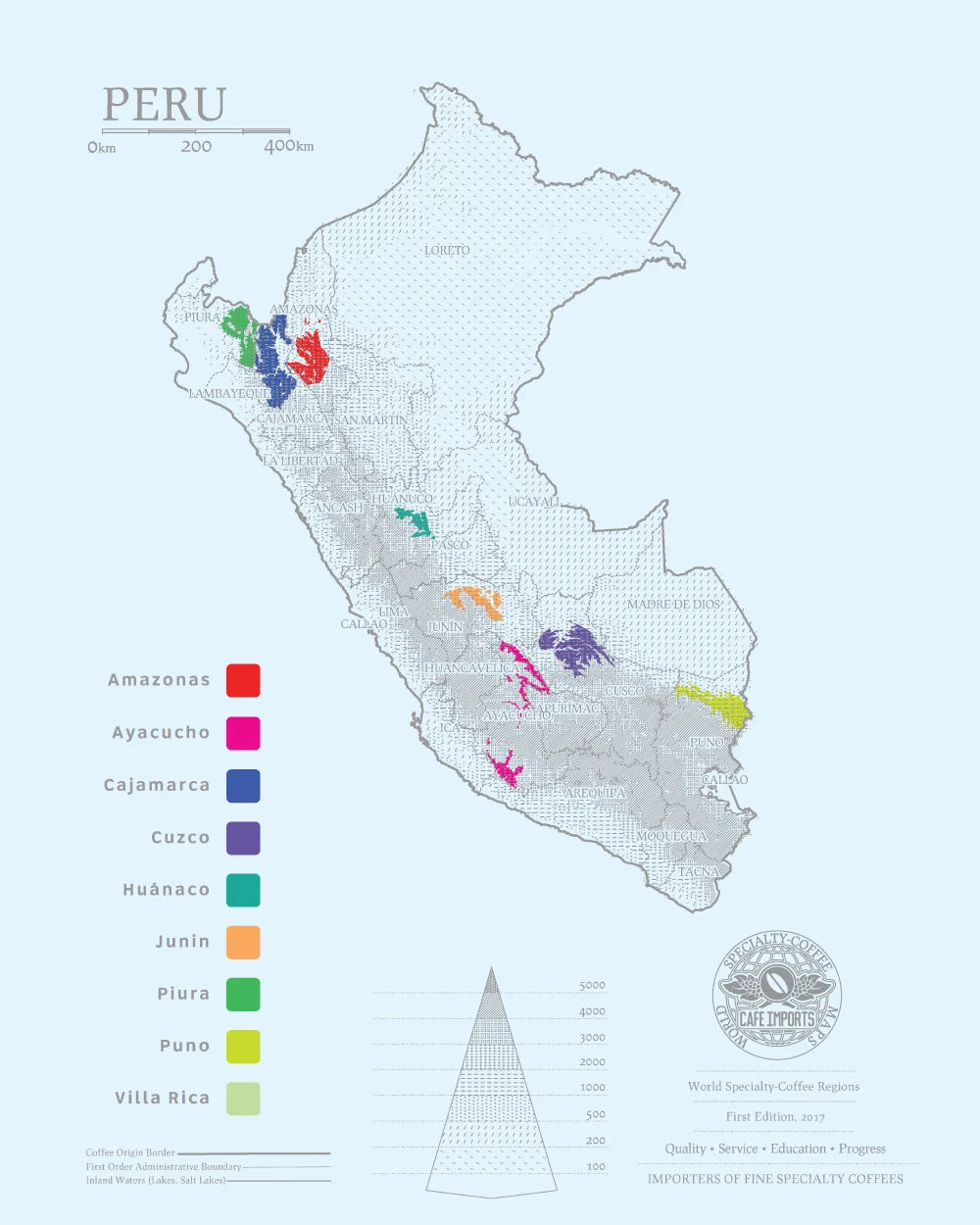
To personally experience the unique flavors of Peruvian coffee, we specially selected a washed Geisha from the northern Cajamarca region. This area, at an altitude of about 1,800 to 1,950 meters, features fertile volcanic soil and significant day-night temperature variations—an ideal environment for cultivating high-quality coffee. These beans are processed using the washed method and classified as SHB (Strictly High Grown), representing high-altitude select beans.
During cupping, the dry fragrance already reveals pronounced white floral notes, mixed with berry and citrus aromas, accompanied by a hint of sourness like preserved plums. After pouring water, sweet aromas of peach and caramel gradually emerge, building anticipation. Upon tasting, the initial impression is of gentle floral notes, followed by grape and citrus tones, paired with the full-bodied acidity of plums. The overall mouthfeel is refreshing and layered. The finish carries the richness of black tea and a sweet caramel sensation, with bright yet non-aggressive acidity. As the cup cools slightly, a rounded sweetness reminiscent of apricots and a lingering juiciness become more apparent. The overall performance is very balanced and impressively memorable.
The above content is compiled by CoffeeHunters, a coffee news website.


